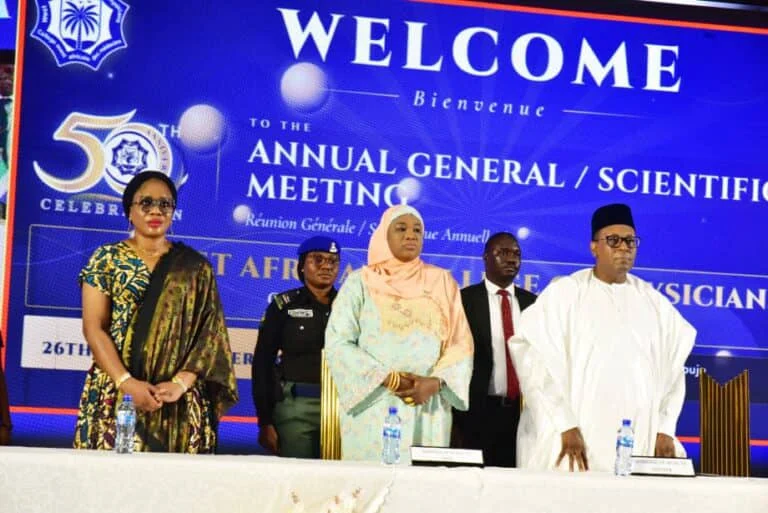
ABUJA, NIGERIA — Announcing major human resource interventions to strengthen national health security, nigeria says it recruited more than 30,000 healthcare professionals into federal health facilities over the past two and a half years. Delivering the keynote address on behalf of President Bola Tinubu at the 50th Annual General Meeting and Scientific Conference of the West African College of Physicians (WACP) in Abuja, Coordinating Minister of Health and Social Welfare Prof. Muhammad Ali Pate emphasized that healthcare workforce expansion remains central to reversing medical brain drain across West Africa.
The recruitment drive coincides with policy reforms aimed at doubling university admission quotas for medical education, expanding postgraduate specialist training, and bolstering direct funding for primary healthcare centers across the nation.
Operational Benchmarks for Nigeria Says It Recruited
Data compiled from Federal Ministry of Health disclosures, WACP conference proceedings, and health workforce statistics outline current national parameters:
Workforce & Healthcare Metric
National Public Health Benchmarks
Federal Healthcare Recruitment
>30,000 health professionals recruited over 30 months
Current Doctor-to-Patient Deficit
1 doctor per 9,083 patients (WHO benchmark target: 1 per 600)
Delta State raised clinical retirement age from 60 to 65 years
Technical Mechanics: Nigeria Says It Recruited
Understanding the health system mechanics behind why nigeria says it recruited 30,000 clinicians while addressing skilled migration requires examining workforce attrition and training pipelines:
Doctor-to-Patient Ratio Disparities: Data from the Nigerian Association of Resident Doctors (NARD) shows Nigeria operating at approximately one physician for every 9,083 citizens—a stark contrast to the World Health Organization (WHO) recommended benchmark of 1 to 600. Without aggressive retention, mass emigration continues to undermine health delivery.
Simultaneous Recruitment and Attrition Dynamics: While hiring 30,000 clinicians adds operational capacity, net health workforce growth depends on net retention. When public sector recruitment fails to keep pace with staff resignations, retirements, and overseas migration (“Japa”), operational coverage in secondary and tertiary hospitals remains strained.
Education Quota Expansion and Basic Healthcare Financing: To build long-term capacity, federal authorities doubled medical school admission quotas, expanded specialized postgraduate fellowships through WACP, and mobilized direct financing via the Basic Healthcare Provision Fund (BHCPF) to revitalize rural primary health centers.
Regional Health Governance, WACP Leadership, and State-Level Interventions
Addressing over 1,300 specialist physicians representing West Africa, WACP President Dr. Mamadou-Mourtalla Ka highlighted the college’s 50-year legacy in certifying specialist doctors since 1976. Minister of State for the Federal Capital Territory Dr. Mariya Mahmoud urged increased investments in digital health networks, clinical research, and specialist training infrastructure to modernise regional care delivery.
At the subnational level, individual states are testing innovative retention strategies. On Monday, Delta State officially extended the mandatory retirement age for clinical healthcare staff in state government facilities from 60 to 65 years. Concurrently, the West African Health Organization (WAHO) is finalizing a harmonized regional framework to incentivize health worker retention across ECOWAS member states.
Health System Retention, Data Transparency, and Sector Outlook
Public health analysts and health worker unions emphasize that hiring figures must be accompanied by detailed disaggregated data—breaking down recruits by professional cadre, regional facility placement, and attrition replacement rates.
Ensuring fair compensation packages, safe working environments, modern diagnostic equipment, and rural incentives will determine whether federal hiring initiatives successfully close health coverage gaps while nigeria says it recruited thousands of health workers across the country.
Why It Matters: Mass recruitment only closes Nigeria’s severe health workforce gap if newly hired clinicians stay in service, making transparent attrition data and improved workplace conditions essential for long-term health security.
Tinubu Urges West African Physicians to Tackle… ABUJA, NIGERIA — As tinubu urges west african physicians to formulate actionable strategies against severe medical brain drain across Sub-Saharan Africa, President Bola Ahmed Tinubu has tasked the West African College of Physicians (WACP) with…
Tinubu Pledges Stronger Primary Healthcare in… ABUJA, NIGERIA — Commemorating the nation’s 66th Independence anniversary, President Bola tinubu pledges stronger primary healthcare access for low-income citizens across Nigeria in an October 1 national broadcast. "Working with our states and local governments,…
WAHO Reviews ECOWAS Plan to Motivate and Retain… ABUJA, NIGERIA — Addressing chronic health workforce brain drain and subnational staffing deficits across West Africa, waho reviews ecowas plan proposals designed to motivate, protect, and retain healthcare personnel across all 15 Economic Community of…
Mental Health Challenges in Nigeria: Funding,… The World Health Organization (WHO) has consistently emphasized the critical importance of mental health, making it a global concern for the past three years through their World Mental Health Day themes. In 2021, the WHO…