ABUJA, NIGERIA — The Federal Government has launched a N70 billion National Oral Health Strategic Plan for 2026 to 2030, a Noma elimination plan Nigeria officials say will also bring dental care into primary health centres in all 774 local government areas, the Federal Ministry of Information and National Orientation said on 9 November.
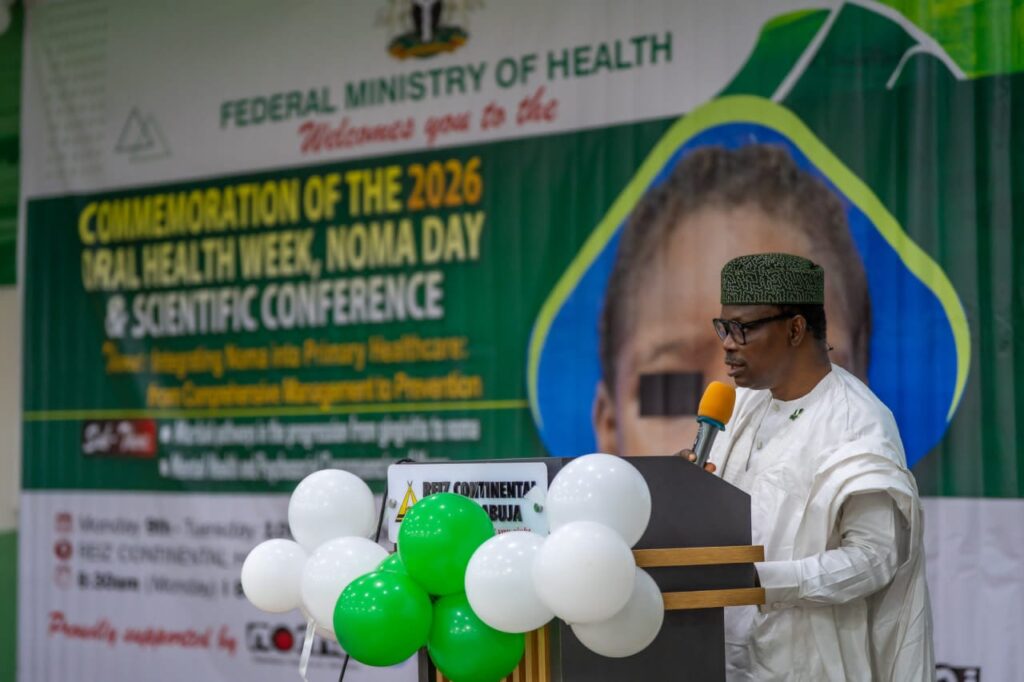
The plan was launched at a joint commemoration of National Noma Day and National Oral Health Day at the Reiz Continental Hotel in Abuja. Minister of State for Health and Social Welfare Dr Iziaq Salako described noma as “a preventable but devastating disease” that causes severe facial disfigurement, disability and death.
Salako said the government is committed to ensuring that “no Nigerian child suffers preventable death or permanent disfigurement from Noma.”
What the Noma elimination plan Nigeria covers
The plan is estimated to cost about N70 billion over five years. It covers preventive services, school oral health programmes, access to fluoride toothpaste, sugar reduction, and the integration of oral health into maternal and child health, nutrition and noncommunicable disease programmes, according to the ministry.
It also prioritises the training and fair distribution of oral health workers, including dental therapists and dental surgery technicians. The Federal Executive Council has approved the National Centre for Oral Health Establishment Bill 2026 and sent it to the National Assembly.
Noma surveillance has been integrated into the Integrated Disease Surveillance and Response (IDSR) system, and frontline health workers, traditional healers and traditional birth attendants have been trained in 19 states to recognise noma and other oral diseases. The government is also strengthening oral health in primary care through the Sector-Wide Approach (SWAp) and the Basic Health Care Provision Fund (BHCPF).
A disease of poverty
Noma is a rapidly progressing infection that destroys the tissues and bones of the face. WHO says it mainly affects malnourished children aged two to six, and WHO recognised it as a neglected tropical disease in 2023. It is not contagious.
Médecins Sans Frontières (MSF) has warned that untreated noma can kill 70 to 90 per cent of those affected. Speaking in July, MSF’s medical team leader in Sokoto, Florencia Maghanga, said the disease is linked to malnutrition, low immunisation, recurrent infections, poor oral hygiene and limited access to health services. “Noma is preventable and can be treated if detected early,” she said.
Early noma can be treated with antibiotics, wound care and nutritional support. Children weakened by malnutrition and infections such as measles are most at risk. Survivors of advanced disease often need complex reconstructive surgery and face stigma, difficulty eating and speaking, and exclusion from school.
Prevention is therefore at the heart of the Noma elimination plan Nigeria has adopted. Good nutrition, measles vaccination, clean water, basic oral hygiene and early treatment of mouth sores can stop the disease before it destroys tissue, and these measures depend on functioning primary health care in poor communities.
Many cases are seen first by traditional healers or community health workers, which is why their training in 19 states is significant. Recognising early signs, such as bleeding gums, swelling of the cheek, bad breath and a grey patch in the mouth, and referring children immediately can save lives.
Surgery in Sokoto
MSF and partners at the Noma Children’s Hospital in Sokoto have facilitated more than 1,759 major reconstructive surgeries for 1,174 patients through 35 surgical missions, the ministry said. In 2026 alone, 114 surgeries were performed on 96 patients, and 28 Nigerian surgeons and 14 anaesthetists have received specialised training through the collaboration.
Dr Aldikhari Ahmed, MSF’s country representative, and Senator Ipalibo Harry-Banigo, Chairman of the Senate Committee on Health, were among those at the launch. WHO Nigeria was also represented.
Oral health beyond noma
The plan addresses a wider gap in dental care. More than 80 per cent of Nigerians have never visited a dentist, two in three children live with untreated tooth decay, and Nigeria has about one dentist for every 38,000 people, compared with WHO’s recommended ratio of one to 7,500, according to figures cited at the launch.
Tooth decay and gum disease cause pain, infections and missed school and work. Sugary drinks and snacks, limited access to fluoride toothpaste and few dental clinics outside cities all contribute. Oral health is also linked to diabetes, which can worsen gum disease.
Funding will be the key test of the Noma elimination plan Nigeria has launched. Health experts say success will depend on budget releases, on recruiting and posting dental staff to rural areas, and on tackling the malnutrition and poverty that make children vulnerable to noma in the first place.
Why it matters: Noma kills or disfigures poor, malnourished children, yet early antibiotics and nutrition can stop it; funding will decide the plan’s impact.
Mental Health Challenges in Nigeria: Funding,… The World Health Organization (WHO) has consistently emphasized the critical importance of mental health, making it a global concern for the past three years through their World Mental Health Day themes. In 2021, the WHO…
Diabetes in Nigeria: Why Blood Sugar Control Fails Diabetes in Nigeria does not usually fail in the clinic. Among people who reach a specialist and stay in care, control is often reasonable. It fails in the years before anyone tests you, and it…
National Council on Health Opens Technical Session… LAFIA, NIGERIA The 67th National Council on Health has opened its technical session in Lafia, Nasarawa State, with the state government urging health leaders to turn commitments into measurable results at the grassroots, Vanguard reported.…
Health Insurance Coverage in Nigeria: 23 Million… For almost two decades, health insurance coverage in Nigeria barely moved. It hovered around a few percent of the population, almost all of them federal workers and employees of large companies. Since the National Health…