AZARE, NIGERIA — The Federal Government of Nigeria is increasingly leaning on six specialized federal health universities to resolve severe workforce deficits, though critical bottlenecks in clinical accreditation, infrastructure funding, and medical brain drain threaten long-term success. Disclosures published by the News Agency of Nigeria (NAN) reveal that while relying on specialised health universities in nigeria doctor shortage initiatives aims to decentralize medical education across all six geopolitical zones, university administrators warn that without dedicated teaching hospitals and retention incentives, expanding graduate numbers alone will not fix the national health crisis.
According to data from the Nigerian Association of Resident Doctors (NARD), Nigeria’s physician-to-patient ratio currently stands at 1:9,083—with remote rural communities reaching severe imbalances of 1:27,000. These metrics fall far short of the World Health Organization’s (WHO) recommended benchmark of one doctor per 600 citizens.
Operational Benchmarks for Specialised Health Universities in Nigeria Doctor Shortage
Data compiled from Ministry of Education records, Tertiary Education Trust Fund (TETFund) disclosures, and university administration metrics outline the federal institutional expansion:
Institutional Category
National Public Health & University Benchmarks
National Doctor-Patient Ratio
1:9,083 overall; rural local areas reach 1:27,000 (WHO target is 1:600)
Geopolitical Institutional Spread
6 specialized federal health universities (1 per geopolitical zone)
FUHSA Pioneer Projects
13 landmark projects unveiled by TETFund at FUHSA in Azare, Bauchi State
Simulation Center Roadmap
8 regional medical simulation centers approved for 2026/2027 rollout
Technical Mechanics: Specialised Health Universities in Nigeria Doctor Shortage
Understanding the operational barriers facing specialised health universities in nigeria doctor shortage strategies highlights essential academic and clinical parameters:
The Zonal Institutional Architecture: Established between 2021 and 2024, the specialized network includes FUHSA (Azare, North-East), FUHSI (Ila-Orangun, South-West), FUAHS (Enugu, South-East), FUHSTT (Tsafe, North-West), FUMHS (Kwale, South-South), and FUHSO (Otukpo, North-Central).
Teaching Hospital Affiliation Mandates: Professional regulatory bodies—including the Medical and Dental Council of Nigeria (MDCN)—mandate that medical universities maintain fully accredited, dedicated tertiary teaching hospitals. Without functional clinical training sites, institutions face strict accreditation caps, limiting annual student admission quotas.
Simulated Clinical Training Infrastructure: To bridge practical training gaps before full hospital construction, TETFund is rolling out eight state-of-the-art medical simulation centers across the country, with equipment installation scheduled for 2027.
TETFund Capital Investments, Pioneer Institutions, and Institutional Gaps
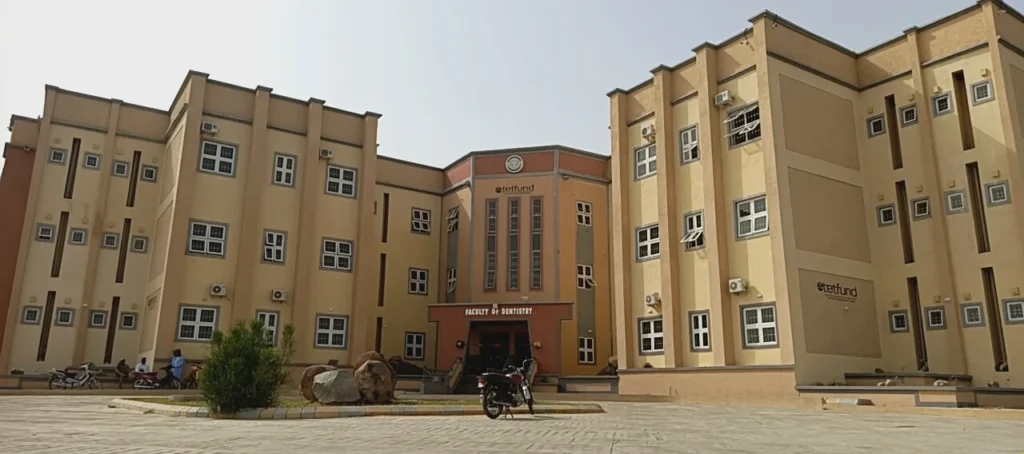
The Federal University of Health Sciences, Azare (FUHSA)—established under pioneer Vice-Chancellor Prof. Bala Audu—serves as the flagship model, becoming the first of the six institutions to commence academic programs and graduate clinical cohorts. TETFund Executive Secretary Sonny Echono recently unveiled 13 new facilities at FUHSA, including research laboratories, student hostels, and lecture theaters.
However, university officials remain candid about operational gaps. FUHSA Deputy Vice-Chancellor for Administration Prof. Alkali Mohammed and Pro-Chancellor Prof. Samuel Adejare highlighted urgent needs, including securing adequate academic lecturing staff, building a 3,000-bed student hostel, securing sustainable operational funding, and establishing a dedicated teaching hospital.
Brain Drain Mechanics, Health Workforce Export, and Policy Outlook
Addressing the doctor shortage requires looking beyond graduation numbers. Medical associations emphasize that high emigration rates (japa) are driven by poor competitive pay, excessive call hours, inadequate clinical tools, and workplace insecurity.
TETFund leadership argued that expanding health manpower production can support both domestic healthcare delivery and controlled international professional exchange. Nevertheless, health policy analysts stress that unless subnational and federal governments introduce targeted retention incentives—especially for doctors deployed to rural centers—the output of specialised health universities in nigeria doctor shortage efforts will continue to migrate overseas rather than treating Nigerian patients.
Why It Matters: Increasing the number of medical graduates helps only if Nigeria can retain them; specialized health universities must be paired with accredited teaching hospitals and competitive pay to keep doctors practicing at home.
Mental Health Challenges in Nigeria: Funding,… The World Health Organization (WHO) has consistently emphasized the critical importance of mental health, making it a global concern for the past three years through their World Mental Health Day themes. In 2021, the WHO…
Nigeria Says It Recruited 30,000 Health Workers,… ABUJA, NIGERIA — Announcing major human resource interventions to strengthen national health security, nigeria says it recruited more than 30,000 healthcare professionals into federal health facilities over the past two and a half years. Delivering…
Shortage of Oncology Nurses Threatens Cancer Care in… ABUJA, NIGERIA — Highlighting severe human resource deficits across tertiary health centers, the shortage of oncology nurses in Nigeria poses a critical threat to national cancer treatment delivery. According to estimates provided by nursing education…
Tinubu Urges West African Physicians to Tackle… ABUJA, NIGERIA — As tinubu urges west african physicians to formulate actionable strategies against severe medical brain drain across Sub-Saharan Africa, President Bola Ahmed Tinubu has tasked the West African College of Physicians (WACP) with…