Most conversations about diabetes focus on high blood sugar. Yet for people who use insulin or certain tablets, the more immediate danger is sugar that drops too low. Low blood sugar symptoms can progress from mild shakiness to collapse within minutes. The good news is that you can treat an episode quickly with items found in almost every Nigerian home.
What counts as low blood sugar?
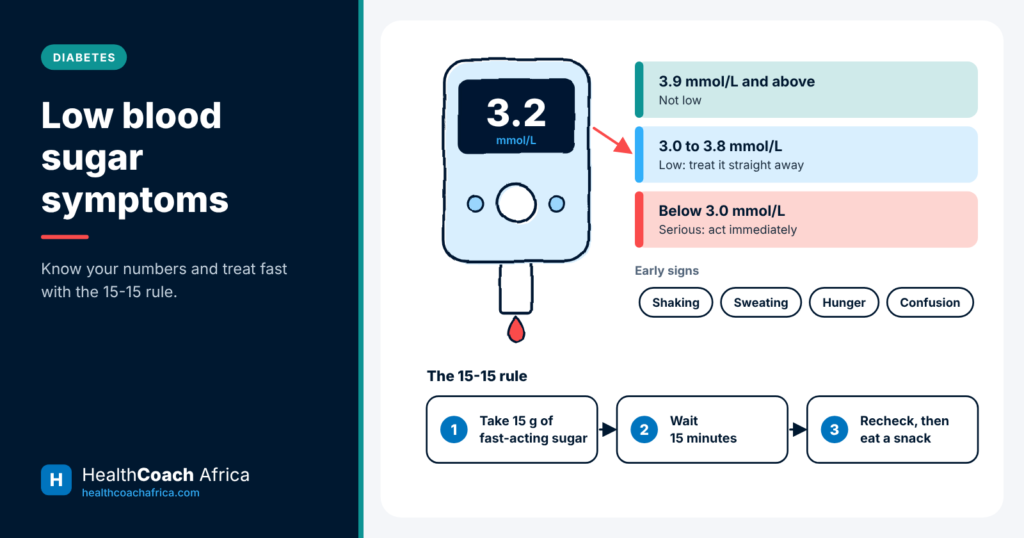
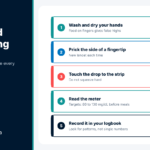
Low blood sugar, or hypoglycaemia, means a reading below 3.9 mmol/L (70 mg/dL). A reading below 3.0 mmol/L (54 mg/dL) is serious and needs immediate action. Readings can be taken with a home glucose meter in under a minute, using a small drop of blood from the fingertip. If you feel unwell and cannot test, treat first and check later.
Common low blood sugar symptoms
Early signs:
Shaking or trembling
Sweating and a fast heartbeat
Sudden, intense hunger
Anxiety or irritability
Tingling lips
Headache or dizziness
Later signs:
Confusion or unusual behaviour
Slurred speech and blurred vision
Drowsiness or poor coordination
Seizures or loss of consciousness
At this stage, a person may be mistaken for someone who is drunk. Severe episodes are dangerous for drivers, machine operators and anyone working at height. In addition, night-time episodes can cause nightmares, damp sheets and a morning headache. Some people who have had diabetes for many years stop noticing the early signs, which makes regular testing even more important.
Why low blood sugar is dangerous
The brain runs almost entirely on glucose. When the supply falls, thinking slows first. If it keeps falling, a person can have a seizure or lose consciousness. This is why low blood sugar symptoms must be treated at once, wherever you are.
There are other risks too. A sudden episode can cause a road accident or a fall. In older people, it can strain the heart. Furthermore, repeated episodes dull the body’s warning system, so the next one arrives with less notice. Some people become so afraid of going low that they keep their sugar too high, which causes long-term damage. Good care avoids both extremes.
What causes it
The usual triggers are:
Too much insulin, or insulin taken without eating
Sulfonylurea tablets such as glibenclamide, glimepiride and gliclazide
Skipped or delayed meals
More physical activity than usual
Alcohol on an empty stomach
Fasting without adjusting your medicines
Kidney problems, which keep medicines in the body for longer
Metformin taken alone rarely causes low blood sugar. Episodes are more likely during religious fasts and among older people who eat irregularly.
Treat it fast with the 15-15 rule
Never ignore low blood sugar symptoms in the hope that they will pass, because the brain depends on a steady supply of glucose.
Take 15 grams of fast-acting sugar. Good options are half a glass of fruit juice or a regular soft drink (not diet), three to four glucose tablets, or one tablespoon of sugar or honey in water.
Wait 15 minutes, then recheck. If the reading is still below 3.9 mmol/L, repeat step one.
Eat a proper snack or meal. Once you recover, eat something with starch and protein, such as bread with groundnuts, to keep your sugar stable.
Avoid chocolate and other fatty foods as a first treatment, because fat slows down the absorption of sugar.
Low blood sugar at night
Low blood sugar symptoms at night are common and easy to miss. Clues include:
Restless sleep or vivid nightmares
Waking with a headache or feeling unusually tired
Damp night clothes or sheets
A partner noticing shaking or strange behaviour during sleep
They often follow too much evening insulin, a missed dinner, alcohol or exercise late in the day. Therefore, check your sugar before bed. If the reading is below the level your doctor has set, eat a small snack that contains starch. Tell your doctor about any night episode, because your evening dose may need to change.
If the person is unconscious
Do not put food or drink into their mouth, because they could choke. Instead, lay them on their side and take them to the nearest hospital, or call 112. If a glucagon injection is available and you have been trained to use it, give it immediately. Afterwards, the person still needs a medical review to find out why the episode happened.
Fasting safely with diabetes
Many Nigerians fast for religious reasons, whether during Ramadan or church programmes. Fasting is possible for many people with diabetes, but it needs planning.
See your doctor four to six weeks beforehand. Doses and timing usually need to change.
Know who should not fast. This includes people with frequent or severe low blood sugar, poorly controlled type 1 diabetes, kidney disease or pregnancy.
Keep testing. Most religious scholars agree that a finger-prick test does not break the fast.
Never skip the pre-dawn meal, and include slow-release foods such as beans, oats and whole grains.
Break the fast immediately if your reading falls below 3.9 mmol/L or you notice low blood sugar symptoms.
Your health comes first, and most faiths make allowance for illness.
Driving, work and exercise
Low blood sugar behind the wheel puts you and others in danger. Check your sugar before driving, and again every two hours on a long journey. Many doctors advise not driving at all if the reading is below 5.0 mmol/L. If symptoms start, stop safely, switch off the engine and treat yourself. Do not continue until you have fully recovered.
Exercise lowers blood sugar for many hours afterwards. Consequently, you may need a snack before activity, or a lower dose on active days. If your job involves machinery, heights or driving, tell your doctor so that your treatment can be chosen with safety in mind.
Low blood sugar without diabetes
This is uncommon, but it does happen. Possible causes include going a long time without food, heavy drinking and severe malaria, especially in children and pregnant women. Liver or kidney disease and some medicines can also be responsible. Anyone who has repeated episodes without diabetes should see a doctor for tests.
How to prevent the next episode
Eat meals on time and never skip food after taking insulin or a sulfonylurea
Always carry glucose tablets, sweets or a small juice
Check your sugar before driving, before exercise and at bedtime
Speak to your doctor before any religious fast, so that doses can be adjusted
Wear or carry something that says you have diabetes
Keep a record of every episode, including the time and likely cause
Teach family members and colleagues what to do
Furthermore, report repeated episodes to your doctor. More than one low reading in a week usually means your dose or timing needs to change. Do not reduce your medicine on your own.
When to see your doctor
Book an appointment if you have:
More than one low reading in a week
Any episode in which you needed help from another person
Low readings at night
Episodes with few or no warning signs
In each case, your treatment probably needs adjusting. Bring your record of readings, meals and doses.
Frequently asked questions
What should I carry with me?
Keep glucose tablets or sweets, a small carton of juice and a snack in your bag, your car and your desk.
Why do I feel low when my reading is normal?
If your sugar has been high for a long time, your body treats a normal level as too low. The feeling settles within a few weeks as your body adjusts.
Is honey or sugar from the kitchen good enough?
Yes. A tablespoon of either, taken with a little water, works quickly.
Can I use a diet soft drink?
No. Diet drinks contain no sugar and will not raise your level.
Should my family learn what to do?
Yes. Show them where you keep your supplies and how to place you on your side if you cannot swallow.
Stay prepared
Low blood sugar symptoms are a signal, not a failure. Treat them fast, note what led up to them and share the pattern with your care team. With the right adjustments, most people have far fewer episodes.
Getting help
Recognising low blood sugar symptoms early keeps you safe and in control. HubPharm pharmacists can review your diabetes medicines and supply glucose meters and test strips. For more background, read our guide to understanding diabetes or the NHS page on low blood sugar.
Please follow and like us:
Views:184
Related Posts:
Insulin Injection Technique Tips: Getting Every Dose Right Insulin is a life-saving medicine for people with type 1 diabetes and many people with type 2 diabetes. Yet the way insulin is injected can make a big difference to how well it works. Poor…
Normal Blood Sugar Levels: What Your Numbers Mean Someone checks your sugar at a chemist, reads out a number, and either looks worried or does not. Nobody explains which test it was, which units it is in, or what the threshold actually is.…
Childhood Type 1 Diabetes: A Guide for Nigerian Families Many people think diabetes only affects older, overweight adults. However, children can develop diabetes too, and most children with diabetes have type 1. In Nigeria, childhood type 1 diabetes is often missed until the child…
Home Blood Sugar Testing: How to Check Your Sugar Correctly A glucose meter turns diabetes care from guesswork into clear information. It shows how food, activity, stress and medicines affect your blood sugar. It warns you when sugar is too low or too high. Yet…