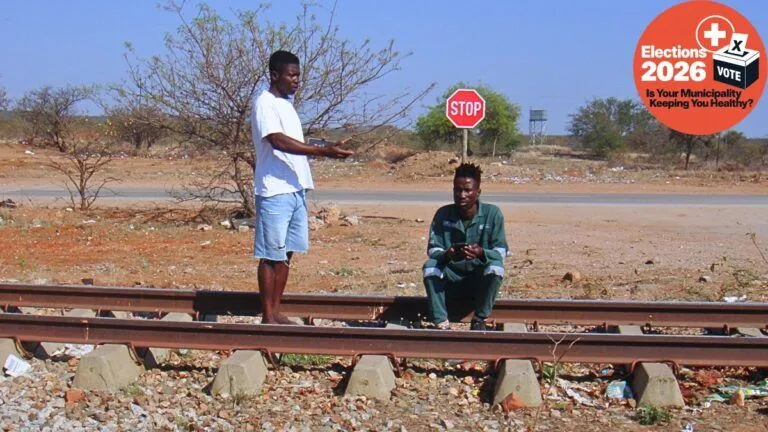
MUSINA, SOUTH AFRICA — Severe mobile network coverage dead zones in the Campbell community of Musina, Limpopo Province, are forcing residents to trek to dangerous, elevated railway tracks at night to find cell service to dispatch emergency medical services. Disclosures published by Health-e News reveal that limpopo residents without phone signal struggle to call ambulances, introducing catastrophic delays of one to two hours during acute maternal labor, traumatic stabbings, and life-threatening medical emergencies.
Mounting frustration over two decades of telecommunications neglect has spilled into local political action, with community members staging protests outside municipal offices and threatening to boycott upcoming municipal elections unless cellular infrastructure is established.
Emergency Response Benchmarks and Telecommunications Metrics
Data compiled from community incident reports and Musina Local Municipality resolutions highlight the clinical and infrastructural parameters facing Campbell residents:
Governance & Emergency Category
Local Public Health & Municipal Benchmarks
Emergency Dispatch Delay Window
1 to 2 hours lost searching for cellular signal to call ambulances
Historical Signal Neglect
>20 years without adequate mobile coverage in Campbell, Ward 6
Municipal Resolution Status
Cell tower resolution approved 28 August 2026 for Nancefield Ext 7
Regulatory Jurisdiction
Managed by the Independent Communications Authority of South Africa (ICASA)
Technical Mechanics of Emergency Response Delays and Clinical Risk
Understanding why limpopo residents without phone signal struggle to call ambulances underscores how connectivity infrastructure functions as a critical determinant of health:
Exacerbation of the “Second Delay” in Emergency Medicine: Obstetric and emergency care frameworks identify three critical delay phases: deciding to seek care, reaching a medical facility, and receiving definitive treatment. Telecommunications dead zones create an artificial pre-delay before the second phase even begins, directly endangering patients experiencing postpartum hemorrhage, eclampsia, or obstructed labor.
Trauma and Ischemic Windows: In acute trauma, myocardial infarction, and cerebrovascular accidents (stroke), patient survival depends on the “golden hour.” Prolonged delays while searching for cell signal result in irreversible tissue necrosis, permanent neurological deficits, or hypovolemic cardiac arrest.
Geographic Security Hazards: Forced nighttime movement toward remote railway tracks or unlit elevated terrain exposes distressed relatives to violent crime, muggings, and physical assault while attempting to reach emergency operators.
Municipal Accountability, Election Mandates, and Regulatory Dynamics
In response to sustained civil protest, Ward 6 Councillor Victor Manavhela urged municipal consultants to accelerate the construction of a planned cellular tower in Nancefield Extension 7 ahead of local elections. Community leaders noted that despite formal council approval in August 2026, physical progress on tower erection remains stalled.
Musina Local Municipality spokesperson Wilson Dzebu clarified that spectrum allocation and cellular tower licensing fall under the statutory jurisdiction of ICASA, confirming that formal inter-agency engagements are underway to address connectivity gaps across rural Limpopo.
Rural Infrastructure, Telemedicine, and Universal Health Access
The emergency communication crisis in Limpopo reflects broader health equity challenges across Sub-Saharan Africa, where digital health initiatives, mobile dispatch networks, and telemedicine platforms rely on functional cellular networks. When basic connectivity fails, rural populations are effectively severed from public health safety nets.
Integrating telecommunications planning into primary public health infrastructure—alongside paved emergency roads and functional ambulance fleets—remains essential to ensuring that geographic isolation and network dead zones no longer jeopardize human life.
Why It Matters: Where citizens cannot dial emergency services, medical response is delayed before it starts; telecommunications connectivity must be treated as a fundamental component of emergency healthcare delivery.
Sickle Cell Pain Crisis: Triggers, Home Care and Red Flags Nigeria has more people living with sickle cell disease than any other country, and about 150,000 babies are born with the condition here every year. For most of them, the defining experience is pain. A…
Gastro Outbreak Hits 111 Rhodes Students, Renewing… MAKHANDA, SOUTH AFRICA — An acute gastrointestinal outbreak affecting at least 111 students at Rhodes University has triggered a joint provincial health response and reignited intense public scrutiny over Makhanda’s collapsing municipal water and sanitation…
Newly Diagnosed With Breast Cancer? Your First 30 Days Guide If you have just been newly diagnosed with breast cancer, start here. You do not need to understand everything today. You need to know what to do next, and in what order. This guide breaks…
Ogun records 238 cholera cases, decries open defecation Ogun State has been grappling with a significant cholera outbreak, with a total of 238 cases and 12 deaths reported in the past month [1]. The state government confirmed these alarming figures on Thursday, shedding light…