Pregnancy changes the body’s defences, and malaria takes advantage of this. In Nigeria, where malaria is present all year round, pregnant women face a higher risk of infection and of serious complications. Fortunately, simple and affordable measures work well. This guide explains malaria prevention in pregnancy, including the tablets given at antenatal clinic, the correct use of nets and what to do if you fall ill.
Why pregnant women are at higher risk
Adults who grow up in malaria areas usually develop partial immunity. During pregnancy, this protection weakens. In addition, the malaria parasite can hide and multiply in the placenta, where the immune system cannot easily reach it.
Women in their first and second pregnancies, teenage mothers and women living with HIV are at the greatest risk. However, every pregnant woman in Nigeria needs protection, whatever her age or number of children.
How malaria harms mother and baby
Malaria in pregnancy can cause:
Severe anaemia in the mother, which can lead to heart strain and dangerous bleeding at delivery
Severe malaria, affecting the brain, kidneys or lungs
Miscarriage and stillbirth
Premature birth
Low birth weight, which raises the baby’s risk of illness and death in the first year
Importantly, malaria in the placenta can damage the baby even when the mother feels only mildly unwell, or not unwell at all. That is why malaria prevention in pregnancy matters for every woman.
Three pillars of malaria prevention in pregnancy
The World Health Organization recommends a package of three measures for pregnant women in areas like Nigeria:
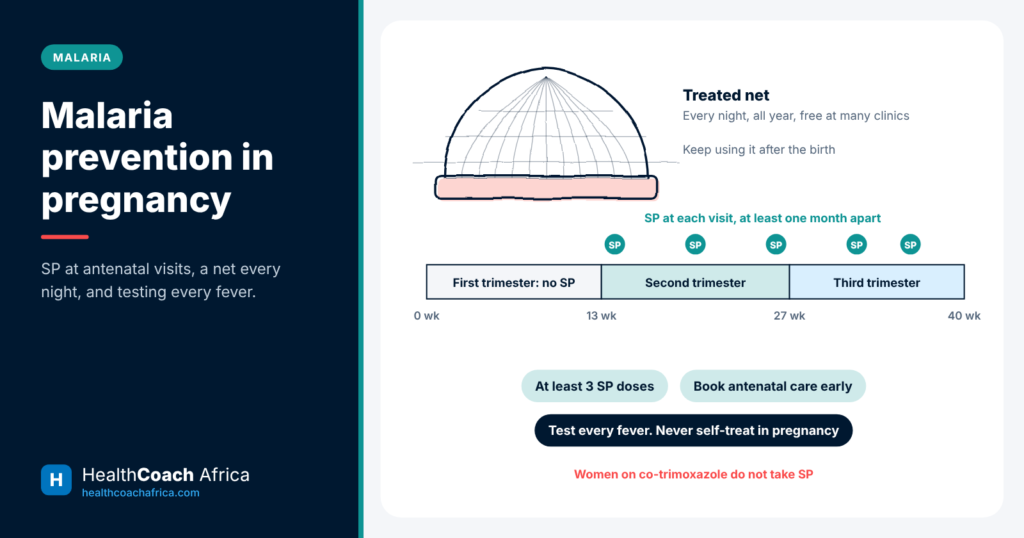
Preventive treatment with a medicine called sulfadoxine-pyrimethamine 1 , usually shortened to SP
Sleeping under an insecticide-treated net 2 every night
Prompt testing and treatment of any fever or suspected malaria
Each measure helps on its own, but together they give the strongest protection.
Preventive treatment with SP
SP is given at antenatal clinic, even when you feel well and have no malaria symptoms. The tablets clear any parasites hiding in the placenta and protect you for several weeks afterwards. This approach is called intermittent preventive treatment in pregnancy, or IPTp.
The key facts are:
The first dose is given as early as possible in the second trimester, from about 13 weeks
A dose is given at each scheduled antenatal visit, at least one month apart
At least three doses are recommended during pregnancy, and more is better
Each dose is three tablets, usually swallowed in front of the health worker
SP is free at many public antenatal clinics
SP is not given in the first trimester. Do not buy SP to take on your own schedule. Starting antenatal care early, and attending every visit, is the best way to receive all your doses.
When SP is not suitable
Some women should not take SP:
Women living with HIV who take co-trimoxazole every day, because co-trimoxazole already protects against malaria and the two medicines can interact
Women with a known allergy to sulfa medicines
Women in the first trimester of pregnancy
Folic acid at the usual dose of 0.4 mg is safe with SP. However, high-dose folic acid, such as 5 mg, may reduce how well SP works. Tell your health worker which folic acid tablets you take.
Sleeping under a treated net
Mosquitoes that carry malaria bite mainly at night. A long-lasting insecticide-treated net is one of the cheapest and most effective tools for malaria prevention in pregnancy. Many antenatal clinics give nets to pregnant women free of charge.
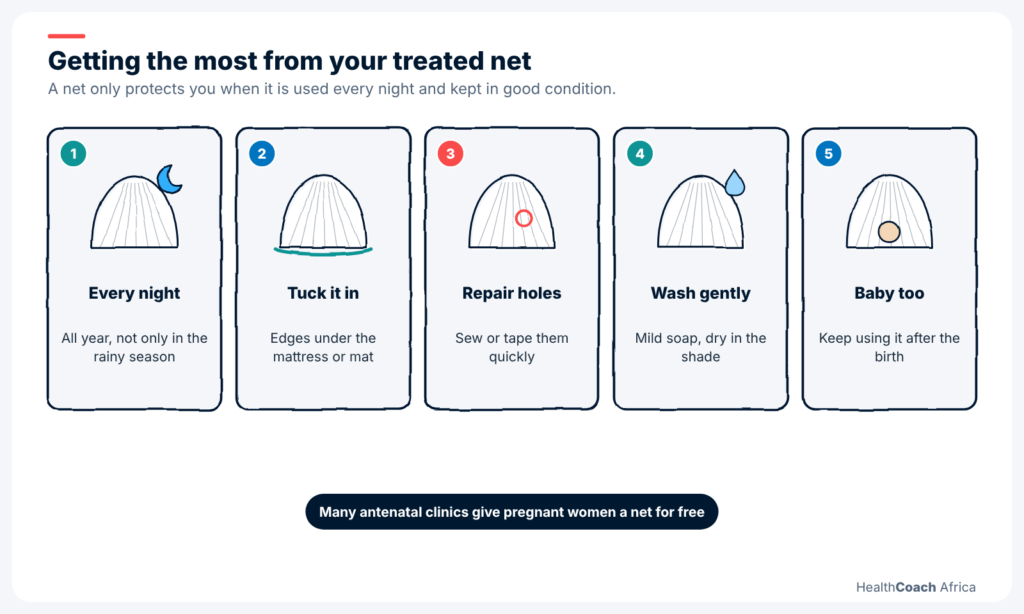
To get the most from your net:
Sleep under it every night, all year round, not only in the rainy season
Tuck the edges firmly under the mattress or mat
Check for holes and repair them with thread or tape
Wash it gently with mild soap and dry it in the shade, no more than every few months
Keep using it after the birth, and put the baby under it too
Five net care steps that support malaria prevention in pregnancy and protect the newborn
Mosquitoes that carry malaria bite mainly at night, so the net must be used all year round.
Other ways to avoid bites
In addition to nets, you can reduce bites by fitting window and door screens, closing doors and windows at dusk and clearing stagnant water near the house. Wearing long sleeves in the evening helps. Ask a pharmacist before using insect repellent creams or coils during pregnancy, and use them as directed on the pack.
Signs of malaria in pregnancy
Malaria can look different in pregnancy. See a health worker the same day if you have:
Fever or feeling hot and cold
Headache, body aches or weakness
Nausea, vomiting or loss of appetite
Unusual tiredness or paleness
Go to hospital immediately if you have danger signs, such as confusion, fits, difficulty breathing, very high fever, yellow eyes, dark urine, severe vomiting or bleeding.
Always test before treating. A rapid diagnostic test or a blood film confirms whether malaria is the cause. Many fevers in pregnancy are caused by other infections, such as urine infections, which need different treatment.
If malaria is confirmed, the WHO now recommends artemether-lumefantrine 3 in the first trimester. In the second and third trimesters, other artemisinin-based combination therapies are also used. Severe malaria at any stage of pregnancy is treated with injectable artesunate in hospital. Some antimalarials, including primaquine and doxycycline, should not be used in pregnancy. Never take leftover tablets or herbal mixtures without advice.
Malaria prevention in pregnancy: an antenatal checklist
Use this list at each antenatal visit. Tick each item off and ask your health worker if anything is missing.
I booked antenatal care early, ideally before 12 weeks
I received a treated net at my first visit
I know the date of my next SP dose
I have received SP at every visit since 13 weeks
I know which folic acid and iron tablets I am taking
I know the danger signs that need hospital care
My partner and children also sleep under nets
Keep your antenatal card safe. It shows the doses you have received. This simple checklist turns malaria prevention in pregnancy into a routine.
After the baby arrives
Protection does not stop at birth. Newborns and young babies are vulnerable to malaria too. Keep sleeping under a net with your baby, and check the baby for fever. A baby under two months with fever needs to see a health worker the same day. Continue malaria prevention in pregnancy habits, such as clearing stagnant water, after the birth as well.
Myths that put mothers at risk
“SP is only for women who already have malaria.” SP is preventive. It protects you and your baby even when you feel well.
“Nets are too hot to sleep under.” A fan, light cotton bedding and placing the net well away from walls help with comfort. The protection is worth it.
“Agbo is safer than hospital medicine in pregnancy.” Herbal mixtures have not been tested for safety in pregnancy, and some can harm the baby or the liver.
The role of partners and families
Malaria prevention in pregnancy works best when the whole household is involved. Partners can make sure there are enough nets for everyone, help clear stagnant water and support early antenatal booking. Learn more about protecting families in our article on malaria and maternal and child health.
Getting help
Book antenatal care as soon as you know you are pregnant, and ask about SP and a free net at your first visit. If you are unsure whether a medicine is safe in pregnancy, or need a malaria test kit or treatment, message a HubPharm pharmacist or chat with Afiya on WhatsApp.
Medicines and products in this article
#
Medicine or product
What to know
1
Sulfadoxine-pyrimethamine (SP)
Given at antenatal clinic
Preventive treatment from 13 weeks, at each scheduled visit at least one month apart. Not used in the first trimester.
2
Insecticide-treated net
Free at many clinics
Sleep under it every night all year round, and keep using it for the baby.
3
Artemether-lumefantrine
Prescription only
Recommended treatment for confirmed malaria, including in the first trimester. Take with food or milk.
To order any of these, or to ask a pharmacist a question first, message HubPharm on WhatsApp or visit hubpharmafrica.com. Prescription medicines are supplied against a valid prescription.
Signs of Postpartum Depression Every New Mother Should Know A new baby is expected to bring joy, so many mothers hide how they really feel. Yet studies in Nigeria have found depression in anywhere from about 15% to 45% of women after childbirth, depending…
Diabetes in Nigeria: Why Blood Sugar Control Fails Diabetes in Nigeria does not usually fail in the clinic. Among people who reach a specialist and stay in care, control is often reasonable. It fails in the years before anyone tests you, and it…
Thyroid Disease in Pregnancy: Risks, Tests and Safe… The thyroid is a small gland in the neck, but during pregnancy it carries a heavy load. For the first three months, a baby depends entirely on the mother's thyroid hormone for brain development. Thyroid…
Malaria: Understanding Symptoms, Treatment,… In this article, we will discuss the symptoms, treatment and prevention of malaria. Furthermore, we will highlight global efforts and challenges in eradicating malaria in our world Malaria, a life-threatening mosquito-borne disease, continues to…