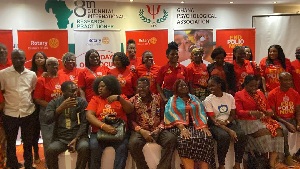
ACCRA, GHANA — As ghana closes type 2 poliovirus outbreak parameters following comprehensive health evaluations, the Ministry of Health and the Ghana Health Service (GHS) have formally announced the successful containment of the viral strain to coincide with World Polio Day. Official Outbreak Response Assessments confirmed in August 2026 that national intervention strategies successfully interrupted viral transmission, placing Ghana among five African nations—alongside Burundi, Guinea-Bissau, Republic of the Congo, and Uganda—to formally terminate circulating type 2 poliovirus events this year.
Under the leadership of GHS Director-General Dr. Samuel Kaba Akoriyea, health authorities attributed the achievement to sustained vaccination campaigns, active environmental surveillance networks, and robust international technical partnerships.
Operational Benchmarks for Ghana Closes Type 2
Data released by the Ministry of Health, GHS, and global polio eradication partners detail national immunization and containment benchmarks:
Immunisation & Containment Metric
National Public Health Benchmarks
Outbreak Formal Closure Date
August 2026 (Formally announced on World Polio Day)
National Immunisation Coverage
>95% coverage maintained across routine schedules
Inactivated Polio Vaccine (IPV)
IPV1 introduced in 2018; IPV2 added in 2024
Global Eradication Theme 2026
“One Day, One Focus: Ending Polio for Good”
Technical Mechanics: Ghana Closes Type 2
Understanding the viral dynamics behind why ghana closes type 2 poliovirus transmission highlights critical epidemiological principles:
Circulating Vaccine-Derived Poliovirus (cVDPV2) Dynamics: While wild type 2 poliovirus was declared globally eradicated in 2015, circulating vaccine-derived type 2 strains can emerge in under-immunized populations. When oral vaccine virus strains circulate long-term among unvaccinated children, they can genetically revert to cause paralytic illness. Achieving over 95 percent population coverage stops transmission by denying the virus susceptible hosts.
Integrated Immunisation Protocol: Ghana strengthened its population immunity by introducing the inactivated polio vaccine (IPV) in 2018 and integrating a second IPV dose into routine pediatric schedules in 2024. IPV delivers mucosal and systemic humoral immunity without risking viral shedding or reversion.
Acute Flaccid Paralysis (AFP) & Sewage Surveillance: Because the majority of poliovirus infections are asymptomatic, disease monitoring relies on active surveillance—investigating every case of sudden acute flaccid paralysis in children under 15 and testing wastewater environmental samples to catch silent transmission.
International Partnerships, Border Vulnerabilities, and Funding Pressures
The successful containment effort was executed in coordination with the Global Polio Eradication Initiative (GPEI), incorporating technical and financial backing from WHO, UNICEF, Gavi, Rotary International, and the U.S. Centers for Disease Control and Prevention.
However, public health experts warn that closing an outbreak does not eliminate reinfection risks. Ghana maintains extensive cross-border trade and migration corridors with neighboring West African states. As global donor funding for polio surveillance declines, health advocates urge domestic authorities to ring-fence budget allocations for sewage monitoring and clinical AFP tracking.
Cross-Border Biosecurity, System Resilience, and Sector Outlook
The outbreak closure comes during an intensive period for Ghana’s health infrastructure. Concurrently, public health officials have heightened health declaration protocols and temperature screening across international airports to prevent imported pathogen threats like Ebola, following recent cases confirmed in Kenya and Nigeria.
By maintaining high routine immunization coverage and vigilant community surveillance, health managers aim to protect pediatric populations while ghana closes type 2 poliovirus risks across all sixteen regions.
Why It Matters: Ending the poliovirus outbreak protects children from irreversible paralysis, but declining global surveillance grants and porous international borders require Ghana to sustain high routine vaccine coverage.
WHO Documents 1,153 Mpox Cases Across 11 African Nations GENEVA, SWITZERLAND — The World Health Organization documented 1,153 confirmed Mpox cases with 7 deaths across 11 African nations during a six-week surveillance period ending August 16, 2026, driving a coordinated mpox outbreak response across…
Ghana Health Minister Says Country Is Ready for Any… ACCRA, GHANA — Ghana’s Health Minister Kwabena Mintah Akandoh has urged the public not to panic, saying Ebola preparedness in Ghana includes thermal scanners at the airport, electronic health declaration forms, laboratory testing and an…
Nigeria Vaccination Campaign Targets 106 Million LAGOS, NIGERIA — Nigeria has initiated a nationwide health initiative aiming to protect vulnerable demographics across all 36 states and the Federal Capital Territory. As the nigeria vaccination campaign targets high-density urban zones and hard-to-reach…
Gene Sequencing Links Nigeria’s Ebola Virus Closely… ABUJA, NIGERIA — As gene sequencing links nigeria’s confirmed Ebola case directly to the viral strain identified in Kenya’s index patient, federal health authorities are intensifying cross-border epidemiological investigations to reconstruct regional transmission routes. Announcing…