Most women and girls experience some pain during their periods. For many, it is a mild ache. For others, it is severe enough to cause vomiting, fainting or days off school and work. Too often, girls are told to simply endure it. In fact, effective help is available. These period pain relief tips explain what causes the pain, what works best and when painful periods may signal a condition that needs treatment.
Why periods hurt
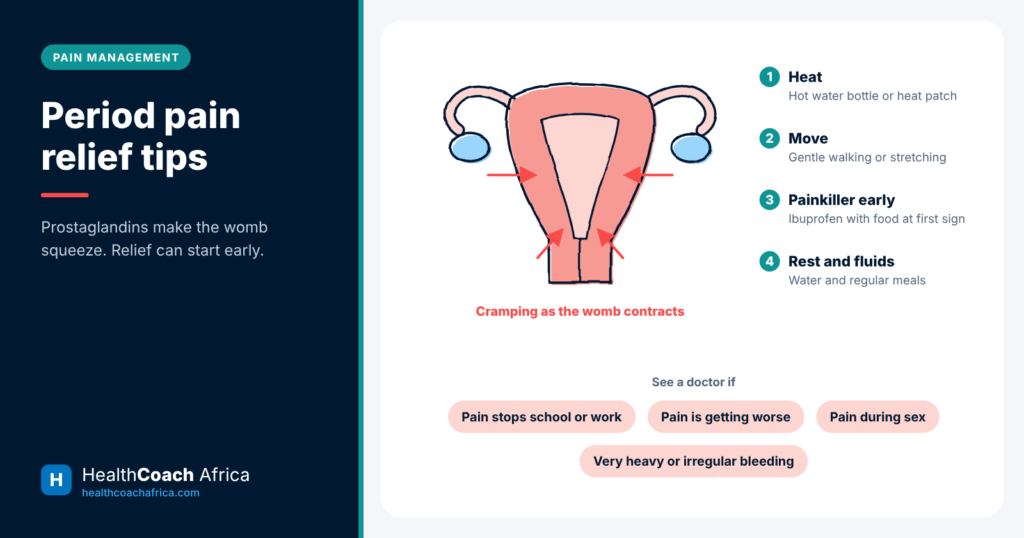
During a period, the lining of the womb is shed. To help push it out, the womb releases chemicals called prostaglandins, which make the muscle contract. These contractions squeeze the blood vessels supplying the womb, causing cramping pain.
Women who produce more prostaglandins usually have more painful periods. Prostaglandins can also cause nausea, diarrhoea, headaches and dizziness during a period.
What normal period pain feels like
Common period pain:
Starts just before or at the beginning of the period
Feels like cramping in the lower abdomen
May spread to the lower back and thighs
Usually lasts one to three days
Tends to be worst in the teenage years and often improves with age
This is called primary dysmenorrhoea. It is not caused by any disease.
Period pain relief tips: heat
Heat is one of the simplest and most effective remedies. It relaxes the muscles of the womb and improves blood flow. Try:
A hot water bottle wrapped in a towel on the lower abdomen or back
A warm bath or shower
A heat patch 1 , which can be worn under clothing at school or work
Never place a hot water bottle directly on bare skin, and do not sleep with it, to avoid burns.
Period pain relief tips: movement
It may seem the last thing you want to do, but gentle exercise can ease cramps. Walking, stretching, dancing and yoga all help. Regular exercise throughout the month may also reduce pain over time. Gentle circular massage of the lower abdomen can help too.
The right painkillers, at the right time
Anti-inflammatory painkillers are the most effective medicines for period pain, because they block prostaglandin production. They include:
Ibuprofen
Naproxen 2
Mefenamic acid 3
For the best effect:
Start taking them at the first sign of your period or pain, or the day before if your periods are regular
Take them regularly for the first one to two days, rather than waiting for the pain to become severe
Take them with food to protect your stomach
Follow the dose on the pack or as advised by your pharmacist
Anti-inflammatories are not suitable for people with stomach ulcers, some kidney problems, severe asthma that worsens with these medicines, or in late pregnancy. Paracetamol is an alternative, and it can be combined with an anti-inflammatory if needed.
Period pain relief tips at school and work
Painful periods often arrive at awkward times. A little planning helps:
Track your cycle with a calendar or app, so you know when your period is due
Carry painkillers, sanitary pads and a heat patch in your bag
Take your painkiller early, before the pain becomes severe
Drink water and eat a proper breakfast on period days
Tell a trusted teacher, school nurse or manager if you need a short rest
These simple period pain relief tips can stop pain from disrupting your day.
HUBPHARM PHARMACIST’S NOTE Mefenamic acid and naproxen need a pharmacist’s advice, and teenagers need doses checked by age and weight. Message a HubPharm pharmacist for a monthly period pack with the right painkiller, heat patches and a simple plan for when to take each one.
Hormonal treatments
Hormonal contraceptives, such as the combined pill, the hormonal coil and the contraceptive implant or injection, often make periods lighter and less painful. Some women use them mainly for this reason. A doctor or nurse can help you choose a suitable option based on your health and plans.
Food, drink and rest
Eating regular, balanced meals and drinking plenty of water may help you feel better. Some women find that cutting down on caffeine, salty food and alcohol around their period reduces bloating and discomfort. Good sleep matters too. Smoking is linked to more painful periods, so stopping can help.
Other approaches
A TENS machine, a small device that sends mild electrical pulses through pads on the skin, can relieve pain for some women. Ginger and other remedies have limited evidence. Be cautious with herbal mixtures sold for “womb cleansing”, as their content and safety are unknown.
Combining treatments
Many women get the best relief by combining several approaches. For example, you might start ibuprofen with food at the first sign of pain, use a hot water bottle in the evening and go for a short walk. If pain remains severe despite combining these period pain relief tips, it is time to see a doctor rather than simply taking more medicine.
What a doctor may do
A doctor will ask about your periods and pain, and may examine you. An ultrasound scan can look for fibroids, ovarian cysts or adenomyosis. Swabs may check for infection. If endometriosis is suspected, you may be referred to a gynaecologist. Treatment depends on the cause and may include stronger pain relief, hormone treatment or, sometimes, surgery.
Teenagers and painful periods
Periods often start between the ages of 10 and 15. In the first year or two, they can be irregular and painful. Girls should learn about periods before the first one arrives, so they are not frightened. Parents can help by keeping pads, painkillers suitable for the child’s age and a hot water bottle at home. A girl who faints, vomits repeatedly or misses school every month because of pain should see a doctor. Sharing these period pain relief tips at home and in schools helps girls stay healthy and keep learning.
When period pain is not normal
Sometimes painful periods are caused by an underlying condition. This is called secondary dysmenorrhoea. Possible causes include:
Endometriosis, where womb-like tissue grows outside the womb
Adenomyosis, where this tissue grows into the muscle of the womb
Fibroids, non-cancerous growths in or on the womb
Pelvic inflammatory disease, an infection of the reproductive organs
A copper coil, which can make periods heavier and more painful for some women
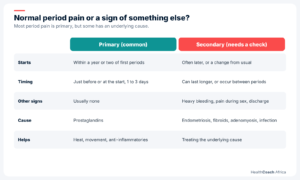
Comparison of primary and secondary period pain to show when period pain relief tips are not enough
Pain that changes, worsens or disrupts daily life deserves a medical check.
Signs that you should see a doctor
See a doctor if:
Your period pain is severe and not helped by painkillers
You regularly miss school or work because of pain
Pain has got worse over time, or started later in life
You have pain outside your period or during sex
Your periods are very heavy, irregular or you bleed between periods
You have unusual discharge or a fever
Seek urgent care for sudden, severe pelvic pain, especially if you could be pregnant.
A word for parents and schools
Girls with severe period pain sometimes miss days of school every month. Parents and teachers can help by taking their pain seriously, allowing access to painkillers, water and toilets, and arranging a medical check if pain is disabling. Learn more about reproductive health in our guide to gynaecological health.
Myths about period pain
“Period pain will go away after childbirth.” It sometimes improves, but this is not guaranteed, and nobody should have to wait for a baby to get relief.
“Taking painkillers will cause infertility.” Using the recommended doses of painkillers during your period does not cause infertility.
“Severe pain is just part of being a woman.” Pain that stops you living normally deserves a medical check.
Getting help
These period pain relief tips work for most women and girls. The NHS guide to period pain has more detail.For advice on choosing the right painkiller, safe doses for teenagers or heat patches, message a HubPharm pharmacist or ask Afiya on WhatsApp.
Medicines and products in this article
#
Medicine or product
What to know
1
Heat patches
Over the counter
Adhesive patches worn under clothing for continuous gentle heat.
2
Ibuprofen or naproxen
Pharmacy medicine
Anti-inflammatory painkillers. Start at the first sign of pain and take with food.
3
Mefenamic acid
Pharmacy medicine
Anti-inflammatory for period pain and heavy periods.
To order any of these, or to ask a pharmacist a question first, message HubPharm on WhatsApp or visit hubpharmafrica.com. Prescription medicines are supplied against a valid prescription.
Endometriosis and Getting Pregnant: What Women Need to Know Endometriosis is a common condition that causes painful periods, pelvic pain and, for some women, difficulty conceiving. Many women in Nigeria live with symptoms for years before diagnosis, because severe period pain is often dismissed…
Uterine Fibroids and Fertility: What Every Woman Should Know Fibroids are non-cancerous growths in the muscle of the womb, and they are very common. By the age of 50, most women will have developed at least one. Black women tend to get them earlier,…
Low Libido in Women: 7 Common Causes and Real Solutions Few topics are harder to raise with a partner, a friend or a doctor. Yet low libido in women is one of the most common sexual health concerns worldwide. It affects women of every age,…
Sickle Cell Pain Crisis: Triggers, Home Care and Red Flags Nigeria has more people living with sickle cell disease than any other country, and about 150,000 babies are born with the condition here every year. For most of them, the defining experience is pain. A…