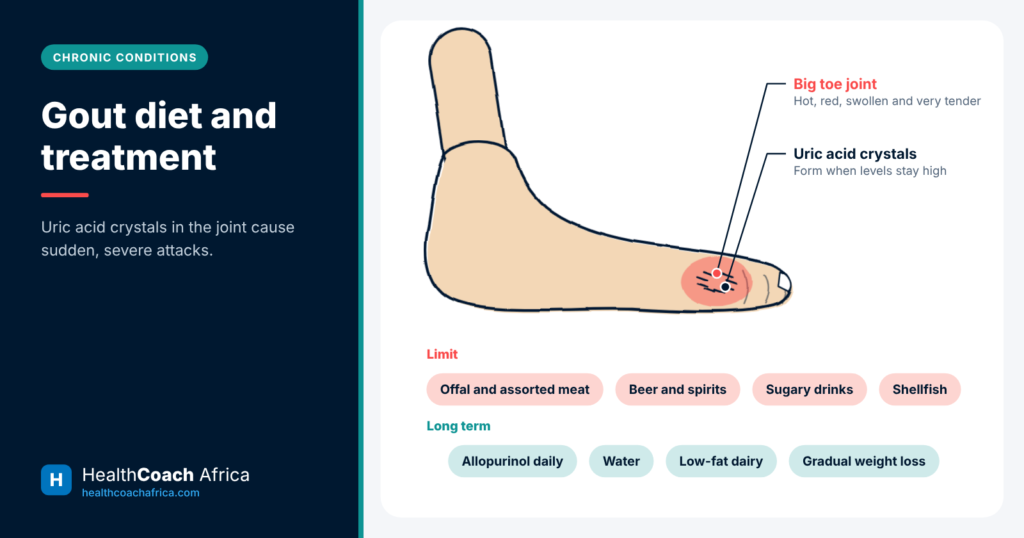
Gout causes some of the most intense pain a person can experience. An attack can turn a big toe hot, red and so tender that even a bed sheet feels unbearable. Gout is becoming more common in Nigeria, linked to rising rates of obesity, high blood pressure and changing diets. The good news is that gout is one of the most treatable forms of arthritis. This guide explains gout diet and treatment, from easing an attack to preventing future ones.
What causes gout
Gout is caused by uric acid, a waste product made when the body breaks down substances called purines. Purines are found in the body’s own cells and in some foods and drinks. Normally, the kidneys remove uric acid in urine.
When uric acid levels in the blood stay too high, needle-shaped crystals can form in and around the joints. The immune system attacks these crystals, causing sudden inflammation and severe pain.
Who is most at risk?
Gout is more common in:
Men, especially after the age of 30
Women after menopause
People who are overweight
People with high blood pressure, kidney disease, diabetes or heart disease
People who take water tablets, such as hydrochlorothiazide or furosemide
People who drink beer or spirits regularly
People who drink a lot of sugary drinks
Those with a family history of gout
Symptoms of a gout attack
A gout attack, also called a flare, often starts suddenly, frequently at night. Typical symptoms include:
Severe pain in one joint, most often the big toe
Swelling, redness and heat over the joint
Extreme tenderness, even to light touch
Shiny skin over the affected joint
Gout can also affect the ankle, knee, wrist, fingers and elbow. An attack usually peaks within 24 hours and settles over one to two weeks, even without treatment. However, attacks tend to return and become more frequent over time.
Gout diet and treatment myths
“Gout is caused only by eating too much meat.” Diet plays a part, but genes, kidney function, weight and some medicines are often more important.
“Allopurinol 1 should be stopped during an attack.” If you are already taking it, keep taking it. Stopping and restarting causes more attacks.
“Gout is a rich man’s disease.” Gout affects people of every background, and it is becoming more common across Nigeria.
“Herbal mixtures can flush out uric acid.” No herbal mixture has been shown to lower uric acid reliably. Some contain hidden steroids that mask pain but cause harm.
How it is diagnosed
A doctor can often diagnose gout from the symptoms and examination. A blood test for uric acid is useful, but levels may be normal during an attack, so it is often repeated a few weeks later. The most certain test is to draw fluid from the joint with a needle and look for crystals under a microscope. This also helps to rule out a joint infection, which needs urgent treatment.
Treating a gout attack
The aim is to reduce pain and inflammation quickly. Start treatment as early as possible:
Anti-inflammatory painkillers, such as naproxen or diclofenac 2 , at full dose for a few days, if they are safe for you
Colchicine 3 , taken in low doses. Higher doses cause diarrhoea and sickness without extra benefit.
Steroids, either as tablets for a few days or as an injection into the joint, for people who cannot take the other options
Rest the joint, raise it and apply an ice pack wrapped in a cloth for 20 minutes at a time. Keep the bed sheet off the toe with a box or frame. Avoid aspirin, because it can raise uric acid levels.
Long-term treatment to prevent attacks
If you have repeated attacks, joint damage, lumps of crystals under the skin called tophi, kidney stones or kidney disease, your doctor will recommend medicine to lower uric acid. This is the most important part of gout diet and treatment for preventing future attacks.
Allopurinol is the most commonly used medicine. It is started at a low dose and increased gradually.
Febuxostat is an alternative for people who cannot take allopurinol.
The usual target is a uric acid level below 360 micromol/L, or 6 mg/dL. Regular blood tests guide the dose. These medicines must be taken every day, usually for life, to keep crystals from forming.
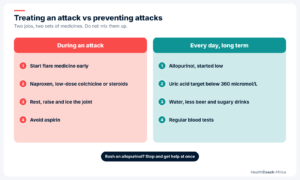
Two-column chart separating short-term attack care from long-term gout diet and treatment
Keep taking allopurinol during an attack. Treat the attack separately with your flare medicine.
Starting allopurinol safely
When you start allopurinol, attacks may become more common for a few months, because crystals dissolve and shift. To prevent this, doctors often prescribe low-dose colchicine or an anti-inflammatory for the first few months. Do not stop allopurinol if you have an attack. Keep taking it and treat the attack separately.
Rarely, allopurinol causes a serious skin reaction. Stop taking it and seek medical help immediately if you develop a rash, blistering, mouth ulcers or fever, especially in the first few months.
HUBPHARM PHARMACIST’S NOTE Colchicine works well at low doses, but the line between a helpful dose and a toxic one is narrow. It also interacts with some antibiotics and heart medicines. Check your gout medicines with a HubPharm pharmacist before taking a new prescription alongside them.
Gout diet: foods and drinks to limit
Diet alone rarely controls gout, but it helps. In a sensible gout diet and treatment plan, limit:
Organ meats, such as liver, kidney and other offal, often found in pepper soup and assorted meat dishes
Red meat, such as beef and goat meat, in large portions
Some seafood, such as shellfish, sardines and anchovies
Beer and spirits, which raise uric acid and reduce its removal
Sugary drinks, fruit juices and foods high in added sugar, because fructose raises uric acid
Gout diet: foods that are fine or helpful
You do not need a joyless diet. Good choices include:
Vegetables, including those once thought to be high in purines, such as spinach
Low-fat milk and yoghurt, which may lower uric acid
Whole grains, beans and lentils
Eggs, chicken and fish in moderate portions
Plenty of water, about two litres a day unless your doctor advises otherwise
Coffee, which may slightly lower the risk of gout
Cherries have also shown some benefit in studies, although the evidence is limited.
Gout diet and treatment at parties
Owambe parties, weddings and festive seasons often bring pepper soup with assorted meat, beer and sugary drinks, all of which can trigger an attack. Plan ahead. Choose chicken or fish instead of offal, keep portions of red meat small, drink water between other drinks and avoid beer and spirits where possible. If you take allopurinol, continue it as normal. Keep your flare medicine with you, and start it at the first twinge of pain.
Complications of untreated gout
Without treatment, gout attacks become more frequent and can affect more joints. Over years, crystals form hard lumps called tophi under the skin, often on the fingers, elbows and ears. Joints can become permanently damaged and stiff. Uric acid can also form kidney stones and contribute to kidney disease. These complications are largely preventable with consistent gout diet and treatment.
Weight and lifestyle
Losing excess weight gradually lowers uric acid and reduces attacks. Avoid crash diets and fasting, which can raise uric acid and trigger a flare. Regular, moderate exercise helps. Ask your doctor whether any of your medicines, such as water tablets, could be changed to ones that do not raise uric acid.
Gout and your heart
Gout is linked to high blood pressure, kidney disease, diabetes and heart disease. Having gout is a reason to check these conditions regularly. Good gout diet and treatment habits, such as limiting alcohol and sugar, also benefit the heart.
Lowers uric acid to prevent attacks. Started low and increased. Stop and seek help if a rash appears.
2
Naproxen
Pharmacy medicine
Anti-inflammatory for attacks if safe for you.
3
Colchicine
Prescription only
Low doses treat or prevent flares. Higher doses cause diarrhoea.
To order any of these, or to ask a pharmacist a question first, message HubPharm on WhatsApp or visit hubpharmafrica.com. Prescription medicines are supplied against a valid prescription.
Arthritis: Everything You Need To Know There are more than 100 different types of arthritis, with different causes and treatment methods. Osteoarthritis (OA) is the most common type of arthritis. Other common types include: Rheumatoid arthritis (RA) Psoriatic arthritis (PsA) Gout…
Heart Attack Warning Signs: Act Fast and Save a Life Heart disease is rising in Nigeria, driven by high blood pressure, diabetes, smoking and changing lifestyles. A heart attack is a medical emergency in which every minute counts. The faster treatment starts, the more heart…
Lower Back Pain Relief: What Works and When to Worry Low back pain is the leading cause of disability worldwide. The World Health Organization estimates that it affected 619 million people in 2020, and almost everyone experiences it at least once. Market traders, drivers, office…
Coping With Panic Attacks: 6 Steps That Calm Your Body Fast Your heart pounds, your chest tightens and you are suddenly sure that something terrible is about to happen. Many people who rush to hospital convinced they are having a heart attack are in fact having…