Syphilis is a sexually transmitted infection that has been known for centuries, yet it remains common worldwide. It can cause serious damage to the heart, brain, eyes and nerves if left untreated, and it can be passed from mother to baby during pregnancy. The good news is that syphilis is easy to test for and easy to cure. This guide explains syphilis symptoms and treatment at each stage.
What causes syphilis
Syphilis is caused by a bacterium called Treponema pallidum. It spreads mainly through direct contact with a syphilis sore during vaginal, anal or oral sex. It can also pass from a pregnant woman to her baby. It is not spread by toilet seats, sharing cutlery or swimming pools.
Syphilis symptoms and treatment: who should test?
Testing is quick and simple. Consider a syphilis test if you:
Have a new sexual partner
Have more than one partner
Have a partner with syphilis or another STI
Notice a painless sore or an unexplained rash
Are pregnant
Are living with HIV
Have had sex without a condom
Regular testing is the best way to catch syphilis early. Early syphilis symptoms and treatment are both simple to manage.
Why syphilis is easy to miss
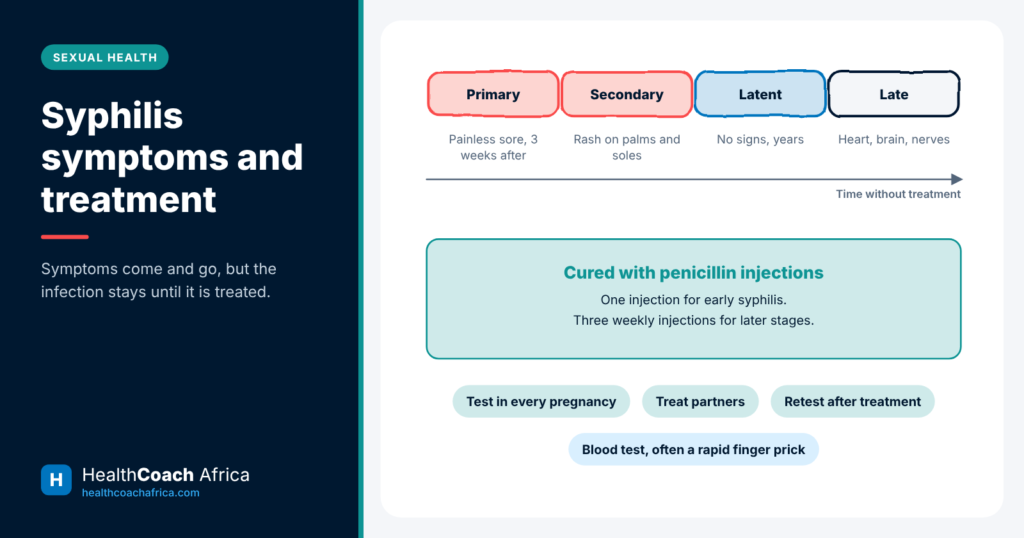
The early signs of syphilis are often painless and can go unnoticed. Symptoms come and go, and the infection can hide for years without causing problems. During this time, it can still be passed on and can damage the body. Testing is the only way to know for sure.
Stage 1: primary syphilis
About three weeks after infection, though anywhere from 10 to 90 days, a sore called a chancre appears where the bacteria entered the body. It is usually:
Firm, round and painless
Found on the penis, vagina, anus, rectum, lips or mouth
Single, although there can be several
The sore heals on its own within three to six weeks, but the infection remains.
Stage 2: secondary syphilis
A few weeks after the sore heals, secondary syphilis may cause:
A rash, often on the palms of the hands and soles of the feet, which does not usually itch
Fever and tiredness
Swollen glands
Sore throat
Patchy hair loss
Muscle aches
Wart-like growths in moist areas such as the genitals
These symptoms also disappear without treatment, but the infection is still present.
Latent syphilis
After the secondary stage, syphilis can enter a hidden phase with no symptoms. This can last for years. Without treatment, some people go on to develop tertiary syphilis.
Tertiary syphilis and neurosyphilis
Years after infection, syphilis can damage the heart, blood vessels, brain, nerves, eyes, bones and joints. Signs can include memory problems, personality changes, difficulty walking, blindness and heart failure. Syphilis can also affect the nervous system or eyes at any stage, causing headaches, hearing loss or vision changes.
Congenital syphilis
Babies born with syphilis may have no signs at birth. Others have a rash, a runny nose, an enlarged liver, anaemia or bone problems. Later, they may develop problems with teeth, hearing, vision and bones. Treating the mother early in pregnancy prevents most cases. Babies born to mothers with syphilis are examined and may be treated after birth.
Syphilis in pregnancy
Syphilis in pregnancy can cause miscarriage, stillbirth, premature birth and congenital syphilis, which can cause serious problems in babies. According to the World Health Organization, testing and treating pregnant women early prevents most of these outcomes. Every pregnant woman should be tested at her first antenatal visit, and treated immediately if positive.
How syphilis is tested
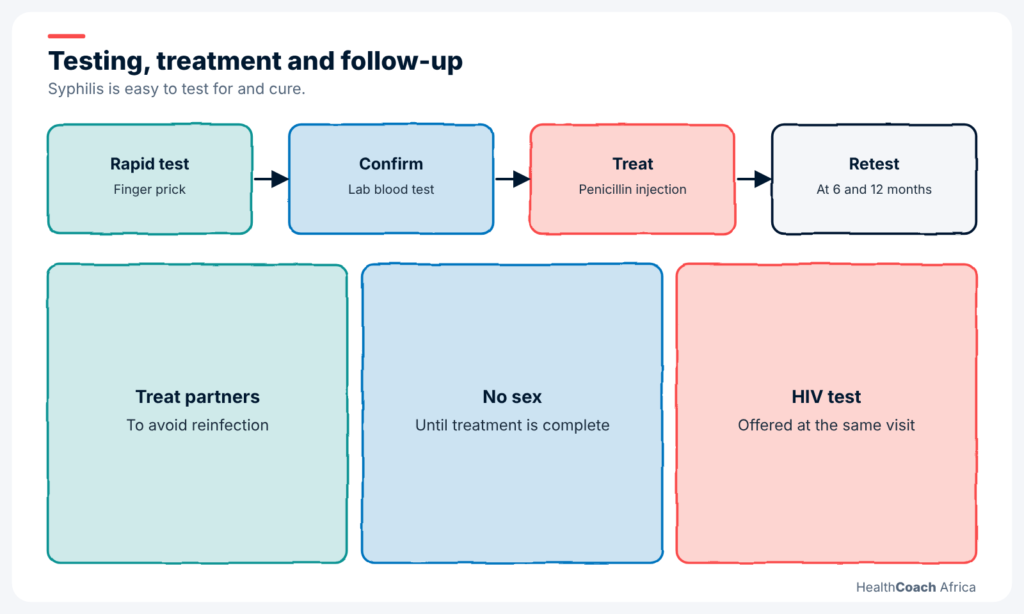
Syphilis is diagnosed with blood tests. Rapid tests give results 1 within minutes and are widely used in antenatal clinics and testing centres. Laboratory tests may also be used. A positive rapid test is often followed by another test to confirm active infection and to guide follow-up. Sores can sometimes be tested directly.
Testing and follow-up steps in syphilis symptoms and treatment
Follow-up blood tests confirm that treatment has worked.
Syphilis symptoms and treatment: the cure
Syphilis is treated with penicillin. For early syphilis, a single injection of benzathine penicillin 2 is usually enough. Later stages need three weekly injections. Neurosyphilis is treated with penicillin through a drip in hospital.
People who are allergic to penicillin may be given other antibiotics, although penicillin is preferred, especially in pregnancy.
The reaction after treatment
Some people develop fever, chills, headache and muscle aches within 24 hours of starting treatment. This is called the Jarisch-Herxheimer reaction. It is caused by the bacteria dying and usually settles within a day. It is not an allergy. Paracetamol can help.
Syphilis and HIV
Syphilis sores make it easier to catch and pass on HIV. People with syphilis should be offered an HIV test. People living with HIV should be tested for syphilis regularly. Treatment for syphilis is the same, but follow-up may be closer.
HUBPHARM PHARMACIST’S NOTE Penicillin is the treatment of choice for syphilis, especially in pregnancy, but many people believe they are allergic when they are not. Message a HubPharm pharmacist if you were told you have a penicillin allergy. We can help you prepare questions for your doctor, so that you get the most effective treatment.
Follow-up tests
After treatment, blood tests are repeated over several months to check that the infection has cleared. Some tests remain positive for life even after cure, so your health worker will use the right test to monitor you.
What to expect at the clinic
At a sexual health clinic or general hospital, a health worker will ask about your symptoms and sexual history in private. You will be examined if you have sores or a rash. A blood sample is taken. Rapid test results may be ready in minutes. If treatment is needed, you can often receive the injection on the same day. You will be told when to return for follow-up tests and how to inform partners. Everything is kept confidential.
Caring for yourself during treatment
Rest if you feel unwell after the injection. Drink plenty of fluids. Keep any sores clean and dry. Avoid sex until you have finished treatment and your health worker confirms it is safe. Take your follow-up appointments seriously, because they confirm the cure.
Partners must be treated
Sexual partners should be tested and treated, even if they have no symptoms. Avoid sex until both partners have completed treatment and any sores have healed. Otherwise, the infection can pass back and forth.
Myths about syphilis
“Syphilis is a disease of the past.” It is still common worldwide.
“If the sore heals, the infection is gone.” The infection remains and moves to the next stage.
“Herbal mixtures can cure syphilis.” Only antibiotics such as penicillin cure syphilis.
“You cannot get syphilis twice.” You can be reinfected after treatment.
Syphilis symptoms and treatment: key points
Early syphilis often causes a painless sore
A rash on the palms and soles is a classic sign of the second stage
Testing is a simple blood test
Penicillin cures syphilis
Partners must be tested and treated
Every pregnant woman should be tested
Remembering these points about syphilis symptoms and treatment can protect you, your partners and your children.
Prevention
Use condoms correctly every time you have sex
Reduce the number of sexual partners
Get tested regularly if you have new or multiple partners
Treatment cures syphilis, but it does not protect you from future infection. If a partner is not treated, or you have new partners, you can be reinfected. Retest when advised. Understanding syphilis symptoms and treatment helps you stay protected.
Getting help
Knowing syphilis symptoms and treatment options helps you act quickly. If you notice a painless sore or an unexplained rash, or if a partner has syphilis, get tested. For confidential advice, testing referrals or help with prescribed treatment, message a HubPharm pharmacist or ask Afiya on WhatsApp.
Medicines and products in this article
#
Medicine or product
What to know
1
Syphilis rapid test
Clinic
Finger-prick test with results in minutes.
2
Benzathine penicillin
Prescription only, injection
Cures syphilis. One injection for early syphilis, three weekly for later stages.
To order any of these, or to ask a pharmacist a question first, message HubPharm on WhatsApp or visit hubpharmafrica.com. Prescription medicines are supplied against a valid prescription.
Centers for Disease Control and Prevention. About syphilis.
Please follow and like us:
Views:91
Related Posts:
Vaginal Yeast Infection Treatment: A Practical Guide… Vaginal yeast infection, often called thrush or candidiasis, is very common. Many women experience it at least once in their lives. It causes itching, soreness and discharge, and it can be very uncomfortable. It is…
STI Testing in Nigeria: A Confidential Guide to… Sexually transmitted infections, or STIs, are very common, and many cause no symptoms at all. That means you can have an infection, pass it on and develop complications without knowing. Testing is the only way…
Gonorrhoea Symptoms and Treatment: What You Need to Know Gonorrhoea is one of the most common sexually transmitted infections. It is caused by bacteria that infect the genitals, rectum and throat. Many people, especially women, have no symptoms and do not know they are…
Preparing for Pregnancy Checklist: A Healthy Start… The months before pregnancy are an important time to prepare. Many of a baby's organs form in the first weeks, often before a woman knows she is pregnant. Good health before conception lowers the risk…