Rheumatoid arthritis is a long-term condition in which the immune system attacks the joints. It causes pain, swelling and stiffness, and without treatment it can permanently damage joints within the first few years. It often affects women in their thirties to fifties, at a busy time of life. Recognising the rheumatoid arthritis early signs and starting treatment quickly can prevent much of this damage.
What rheumatoid arthritis is
Rheumatoid arthritis is an autoimmune disease. The immune system, which normally fights infections, mistakenly attacks the lining of the joints, called the synovium. The lining becomes inflamed and thickened. Over time, this inflammation can damage cartilage, bone, tendons and ligaments.
Rheumatoid arthritis can also affect other parts of the body, including the lungs, eyes, skin, blood vessels and heart.
Rheumatoid arthritis early signs: a quick check
Ask yourself these questions. Have I had them for six weeks or more?
Are several small joints in my hands or feet painful?
Are they swollen, not just sore?
Are the same joints affected on both sides?
Am I stiff for more than 30 minutes in the morning?
Do I feel tired and unwell?
If the answer is yes to several, see a doctor soon. Mention that you are worried about rheumatoid arthritis early signs. Early referral makes a big difference.
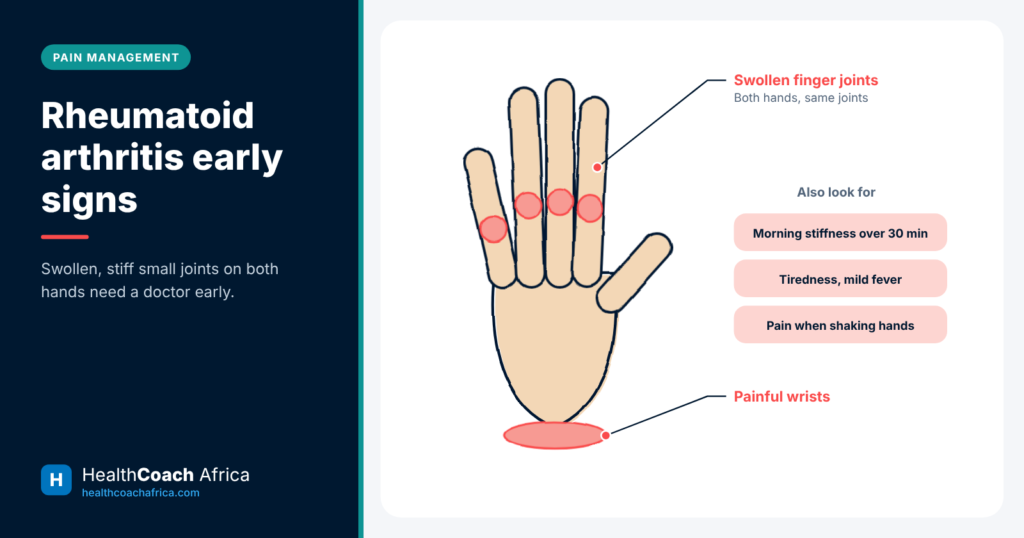
Rheumatoid arthritis early signs
Look out for:
Pain and swelling in small joints, especially the knuckles and middle joints of the fingers, the wrists and the balls of the feet
Symmetry: the same joints on both sides of the body are often affected
Morning stiffness lasting more than 30 minutes, often more than an hour
Warm, tender joints that feel puffy
Tiredness, which can be severe
Mild fever and feeling generally unwell
Loss of appetite and weight
Symptoms may start gradually over weeks or, less often, suddenly.
How it differs from osteoarthritis
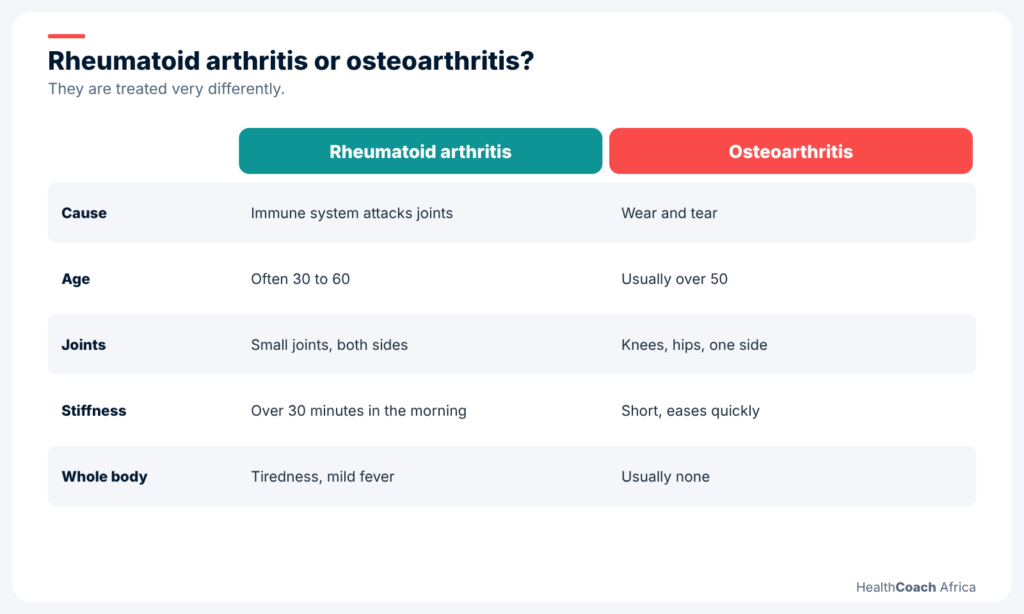
Osteoarthritis is more common and is linked to age and wear on the joints. It usually affects larger weight-bearing joints such as knees and hips, and the end joints of the fingers. Pain is often worse with activity and stiffness lasts less than 30 minutes.
Rheumatoid arthritis tends to affect smaller joints on both sides, causes longer morning stiffness, and often comes with tiredness and general illness. Swelling feels soft and warm rather than bony.
Comparison of rheumatoid arthritis early signs and osteoarthritis
Early treatment of rheumatoid arthritis can prevent lasting joint damage.
Squeeze test
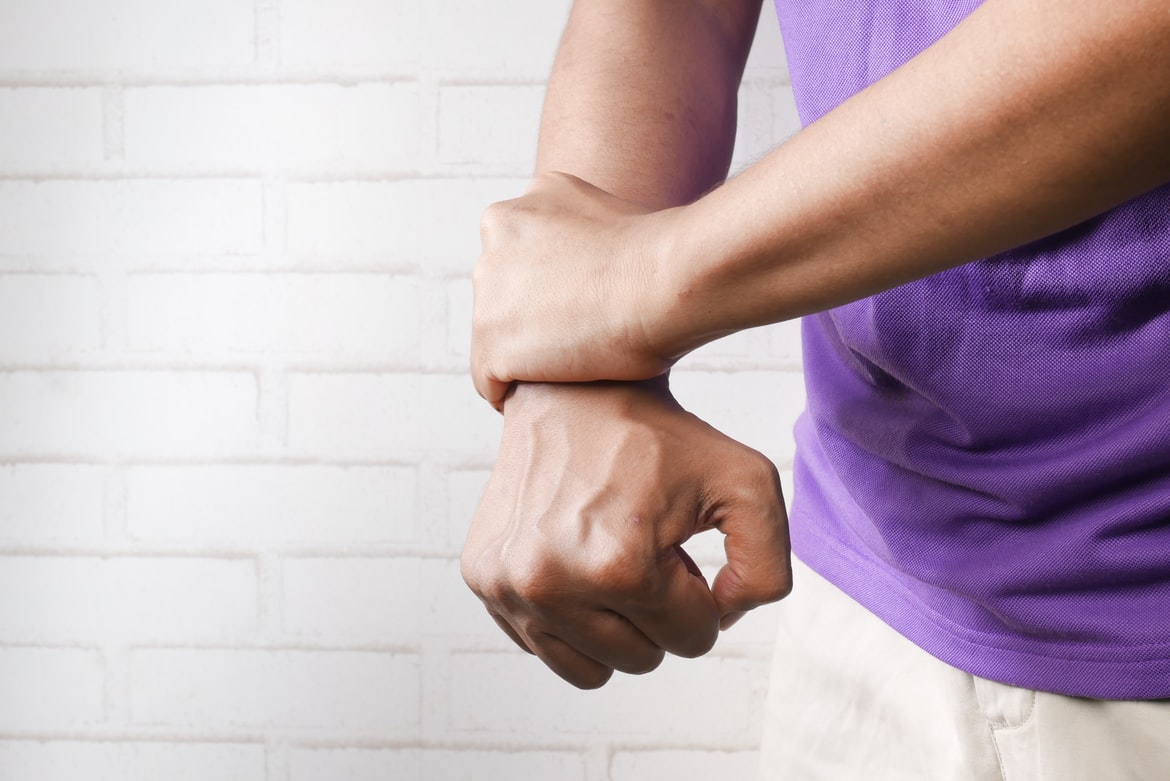
A simple sign doctors use is the squeeze test. Gently squeeze across the knuckles of the hand or the balls of the feet. If this is painful, it can be a sign of joint inflammation. It does not diagnose rheumatoid arthritis, but it helps decide who needs further tests.
Who is at risk?
Rheumatoid arthritis can affect anyone, but it is more common in:
Women
People aged 30 to 60
People with a family history of the condition
Smokers
People who are overweight
Why early treatment matters
Joint damage in rheumatoid arthritis can begin in the first months. Starting the right treatment early, ideally within three months of symptoms starting, gives the best chance of controlling the disease and preventing permanent damage. This is often called the window of opportunity.
How it is diagnosed
There is no single test. A doctor will consider:
Your symptoms and a joint examination
Blood tests, including rheumatoid factor and anti-CCP antibodies, which are often positive
Inflammation markers, such as ESR and CRP
X-rays or ultrasound of the hands and feet
Some people with rheumatoid arthritis have negative blood tests, so the overall picture matters. A rheumatologist, a doctor who specialises in joint diseases, usually confirms the diagnosis.
Treatment options
The main treatments are disease-modifying antirheumatic drugs, often called DMARDs. They calm the immune system and slow joint damage:
Methotrexate 1 is usually the first choice.It is taken once a week, not daily, with folic acid 2 to reduce side effects.
Other DMARDs, such as hydroxychloroquine 3 and sulfasalazine, may be used alone or in combination.
Biological medicines are used when other treatments do not work, though they are expensive and less widely available.
Steroids and anti-inflammatory painkillers may be used for short periods to ease symptoms while DMARDs start to work, which can take several weeks.
Rheumatoid arthritis and pregnancy
Women with rheumatoid arthritis can have healthy pregnancies. Symptoms often improve during pregnancy and may flare after birth. Some medicines, including methotrexate, must be stopped well before trying to conceive. Others are safe. Plan pregnancy with your rheumatologist.
Rheumatoid arthritis and the heart
People with rheumatoid arthritis have a higher risk of heart disease. Inflammation affects blood vessels. Checking blood pressure, cholesterol and blood sugar regularly, stopping smoking and staying active all protect the heart.
HUBPHARM PHARMACIST’S NOTE Methotrexate is taken once a week, and taking it daily by mistake can be fatal. Folic acid is usually taken on a different day. Ask HubPharm to label your methotrexate with the day of the week and set a weekly reminder. A pharmacist can also explain which painkillers are safe alongside it.
Methotrexate safety
Methotrexate is safe and effective when used correctly, but it needs care:
Take it once a week, on the same day each week
Take folic acid as prescribed, usually on a different day
Have regular blood tests to check your blood count and liver
Avoid alcohol or keep it to a minimum
Do not take it in pregnancy, and use reliable contraception
Report sore throat, fever, mouth ulcers, unusual bruising or breathlessness
Taking methotrexate daily by mistake can be very dangerous.
Preparing for your appointment
Before seeing a doctor about possible rheumatoid arthritis early signs, write down:
Which joints hurt, and when the pain started
How long your morning stiffness lasts
Any swelling you have noticed, with photos if possible
Tiredness, fever or weight loss
Family history of arthritis or autoimmune disease
Medicines and supplements you take
Clear information helps the doctor decide on tests and referral quickly.
Diet and rheumatoid arthritis
No diet cures rheumatoid arthritis. However, a balanced diet with vegetables, fruit, whole grains, beans and oily fish such as sardines and mackerel supports overall health. Limit processed foods and sugary drinks. Keep a healthy weight to reduce strain on joints.
Living with uncertainty
Sometimes, early symptoms do not yet meet the criteria for a diagnosis. Your doctor may monitor you closely and repeat tests. Report any new swelling or worsening stiffness promptly. Keeping a symptom diary helps track rheumatoid arthritis early signs over time.
Myths about rheumatoid arthritis
“Arthritis only affects old people.” Rheumatoid arthritis often starts between 30 and 60.
“Joint pain is just part of life.” Swollen, stiff joints need checking.
“Treatment can wait until it gets bad.” Early treatment prevents damage.
“Herbal rubs can cure it.” They do not stop the disease.
Spotting rheumatoid arthritis early signs and acting quickly gives the best long-term outcome.
Living well with rheumatoid arthritis
Stay active with gentle exercise such as walking, swimming and stretching
Protect your joints by using larger joints to carry loads and using aids such as jar openers
Balance activity with rest during flares
Stop smoking, which worsens the disease
Eat a balanced diet and keep a healthy weight
Get vaccinated against flu and pneumonia, as advised
Protecting your joints day to day
Use larger joints rather than small ones when lifting. Carry bags on your forearm or shoulder. Use jar openers and tools with thick handles. Pace your activities and rest between tasks. Gentle exercise keeps joints flexible. Spotting rheumatoid arthritis early signs and protecting your joints helps you stay active.
Once weekly. Needs regular blood tests. Not in pregnancy.
2
Folic acid
Prescription
Reduces methotrexate side effects. Usually on a different day.
3
Hydroxychloroquine
Prescription only
Another DMARD. Needs regular eye checks.
To order any of these, or to ask a pharmacist a question first, message HubPharm on WhatsApp or visit hubpharmafrica.com. Prescription medicines are supplied against a valid prescription.
Chronic Pain Management in African Women: A… Chronic pain, characterized by persistent discomfort lasting for more than three to six months, is a global health challenge that affects millions of individuals. In the context of Africa, chronic pain poses unique considerations, and…
Gout Diet and Treatment: How to Stop the Attacks Gout causes some of the most intense pain a person can experience. An attack can turn a big toe hot, red and so tender that even a bed sheet feels unbearable. Gout is becoming more…
Arthritis: Everything You Need To Know There are more than 100 different types of arthritis, with different causes and treatment methods. Osteoarthritis (OA) is the most common type of arthritis. Other common types include: Rheumatoid arthritis (RA) Psoriatic arthritis (PsA) Gout…
Lower Back Pain Relief: What Works and When to Worry Low back pain is the leading cause of disability worldwide. The World Health Organization estimates that it affected 619 million people in 2020, and almost everyone experiences it at least once. Market traders, drivers, office…