Painkillers are among the most widely used medicines in Nigeria. Many are sold over the counter, and people often take them for headaches, body aches, period pain and fever without a second thought. Used correctly, they are safe and effective. Used incorrectly, they can damage the liver, kidneys and stomach, and some can cause dependence. This pharmacist’s guide explains the safe use of painkillers so that you get relief without harm.
Safe use of painkillers: the golden rules
Know what you are taking. Read the label.
Use the lowest dose that works.
Use it for the shortest time.
Do not combine products with the same ingredient.
Take anti-inflammatories with food.
Avoid alcohol with strong painkillers.
Ask a pharmacist if you have other health conditions.
See a doctor if pain lasts more than a few days or keeps returning.
These rules are the foundation of the safe use of painkillers.
Types of painkillers
The main types of pain medicines are:
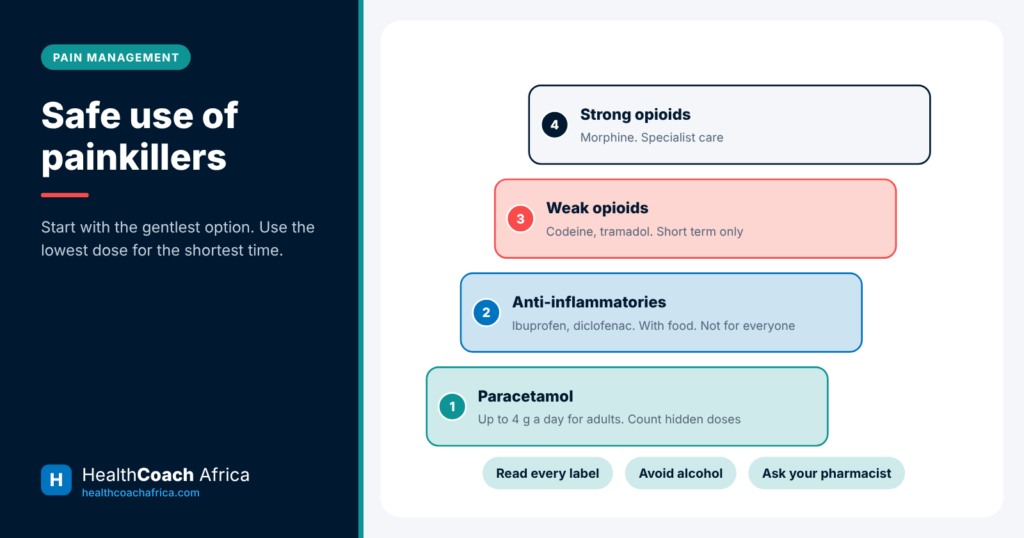
Paracetamol, for mild to moderate pain and fever
Anti-inflammatory painkillers, also called NSAIDs, such as ibuprofen, diclofenac, naproxen 1 and aspirin
Opioids, such as codeine, tramadol and morphine, for moderate to severe pain
Topical painkillers, such as gels and creams
Medicines for nerve pain, such as amitriptyline and pregabalin, which work differently
Paracetamol: safe, but limits matter
Paracetamol is one 2 of the safest painkillers when taken at the right dose. For most adults, the maximum is 4 grams in 24 hours, usually taken as two 500 mg tablets up to four times a day, at least four hours apart, as described by the NHS.
Taking more than this can cause serious liver damage, which may not show symptoms for a day or two. Lower doses may be needed for people who weigh less than 50 kg, drink alcohol regularly, or have liver disease.
Signs of a paracetamol overdose
An overdose may cause no symptoms at first. Later, there may be nausea, vomiting, abdominal pain and yellowing of the eyes. Liver damage can be fatal. If you or someone else may have taken too much paracetamol, go to hospital immediately, even if you feel well. Early treatment protects the liver.
Watch out for hidden paracetamol
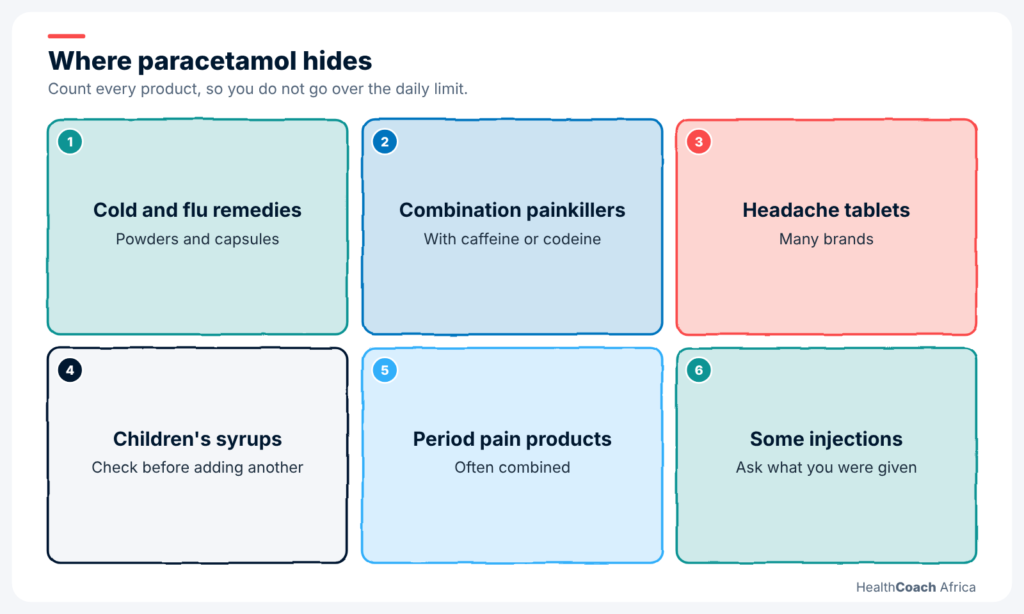
Many cold and flu remedies, headache tablets and combination painkillers contain paracetamol. Taking these together with plain paracetamol can easily lead to an overdose. Always read the label and check the ingredients. Ask a pharmacist if you are unsure.
Common products with hidden paracetamol, a key point in the safe use of painkillers
Check the label for paracetamol, sometimes called acetaminophen.
Anti-inflammatory painkillers: use with care
NSAIDs reduce pain and inflammation. They are useful for period pain, sprains, toothache and arthritis. However, they can cause:
Stomach irritation, ulcers and bleeding
Kidney damage, especially in people who are dehydrated or have kidney disease
Raised blood pressure and fluid retention
A higher risk of heart attack and stroke with long-term use
Worsening of asthma in some people
To use NSAIDs safely:
Take them with food
Use the lowest dose for the shortest time
Avoid them if you have stomach ulcers, kidney disease, heart failure or uncontrolled high blood pressure, unless a doctor advises
Avoid taking two different NSAIDs together
Avoid them in the later stages of pregnancy
Safe use of painkillers with other conditions
High blood pressure or heart disease: avoid NSAIDs unless your doctor agrees
Kidney disease: avoid NSAIDs
Stomach ulcers: avoid NSAIDs
Asthma: some people react to NSAIDs
Liver disease: use lower doses of paracetamol
Taking blood thinners: avoid NSAIDs and aspirin unless prescribed
A pharmacist can check your full medicine list and advise on the safe use of painkillers for you.
Opioids: effective but risky
Codeine and tramadol are opioids 3 . They can be helpful for short periods of severe pain, but they carry real risks:
Drowsiness and slowed reactions
Constipation, nausea and dizziness
Dependence and addiction with regular use
Dangerous breathing problems, especially with alcohol or sleeping tablets
Seizures with high doses of tramadol
Use opioids only when prescribed, for the shortest time possible. Never share them or take more than prescribed.
HUBPHARM PHARMACIST’S NOTE Many households have three or four products that all contain paracetamol, such as a cold remedy, a headache tablet and a combination painkiller, and nobody adds them up. Send a photo of your medicine shelf to a HubPharm pharmacist. We will spot duplicates, tell you the safe daily total and suggest what to keep.
Painkiller injections
In some places, people receive painkiller injections, such as diclofenac, for minor aches. Injections carry extra risks, including infections, abscesses and nerve damage, and usually offer no benefit over tablets. Avoid injections unless a qualified health worker considers them necessary.
Children and painkillers
Use medicines made for children, with the correct dose for age or weight
Use the measuring syringe or spoon provided
Never give aspirin to children under 16, because it can cause a rare but serious condition called Reye’s syndrome
Check with a pharmacist before giving ibuprofen to children with asthma or dehydration
Pregnancy and breastfeeding
Paracetamol is usually the preferred painkiller in pregnancy, used at the lowest effective dose. NSAIDs should generally be avoided, especially after 20 weeks, unless a doctor advises. Check with a pharmacist or doctor before taking any painkiller in pregnancy or while breastfeeding.
Safe use of painkillers for older adults
Older adults are more likely to have side effects. NSAIDs raise the risk of stomach bleeding and kidney problems. Opioids increase the risk of falls and confusion. Paracetamol is often the safest first choice. Gels can help joint pain with fewer side effects. Regular medicine reviews help prevent problems.
Myths about painkillers
“More tablets work faster.” Extra doses add risk, not relief.
“Herbal pain mixtures are natural, so they are safe.” Some contain hidden steroids or anti-inflammatories.
“Injections work better than tablets.” For most pain, tablets work just as well and are safer.
“Paracetamol is too weak to help.” Taken correctly, it works well for many types of pain.
Safe use of painkillers at home
Keep a written list of all medicines in the household, with doses and times. Keep painkillers out of children’s reach and out of sight. Do not keep large stocks of strong painkillers. Check expiry dates regularly. Teach teenagers about the dangers of misusing pain medicines. These household habits support the safe use of painkillers for everyone.
Ask your pharmacist
Pharmacists are trained to help with the safe use of painkillers. Bring a list of everything you take, including herbal products. Ask which painkiller is safest for you, how much to take, and how long to use it. Ask what to do if the pain does not improve.
When pain needs more than painkillers
Painkillers treat symptoms, not causes. Pain that is severe, persistent or getting worse needs a medical check. Chest pain, severe abdominal pain, sudden severe headache and pain with fever need urgent care. Ongoing pain may need physiotherapy, exercise or treatment of an underlying condition.
Medication overuse headache
Taking painkillers for headaches on more than about 10 to 15 days a month can cause medication overuse headache, where headaches become more frequent. If you need painkillers this often, see a doctor.
Storing painkillers safely
Keep medicines in their original packaging, out of the reach of children, in a cool, dry place. Return unused or expired medicines to a pharmacy.
Painkillers and alcohol
Alcohol and painkillers are a risky mix. Regular drinking increases the risk of liver damage from paracetamol. Alcohol with anti-inflammatory tablets raises the risk of stomach bleeding. Alcohol with opioids slows breathing and can be fatal. If you drink, tell your pharmacist. The safe use of painkillers includes avoiding alcohol when you take them.
Getting help
The safe use of painkillers protects your liver, kidneys and stomach. Read more about different kinds of pain in our article on acute and chronic pain.For advice on which painkiller is safest with your other medicines, or for genuine products, message a HubPharm pharmacist or chat with Afiya on WhatsApp.
Medicines and products in this article
#
Medicine or product
What to know
1
Ibuprofen
Pharmacy medicine
Take with food, lowest dose, shortest time.
2
Paracetamol
Over the counter
Maximum 4 g in 24 hours for most adults. Watch for hidden doses.
3
Codeine and tramadol
Prescription only
Short-term use only. Risk of dependence.
To order any of these, or to ask a pharmacist a question first, message HubPharm on WhatsApp or visit hubpharmafrica.com. Prescription medicines are supplied against a valid prescription.
Fatty Liver Disease Symptoms: The Silent Condition… Fatty liver disease is becoming one of the most common liver conditions in the world, and Nigeria is no exception. It is closely linked to rising rates of obesity, type 2 diabetes and high blood…
Liver Cancer in Nigeria: Causes, Warning Signs and… Liver cancer is one of the leading causes of cancer death in Nigeria. It often affects people in their thirties, forties and fifties, at the most productive time of their lives. Sadly, most patients are…
Period Pain Relief Tips for Every Woman and Girl Most women and girls experience some pain during their periods. For many, it is a mild ache. For others, it is severe enough to cause vomiting, fainting or days off school and work. Too often,…
Stomach Cancer Warning Signs: When Indigestion Is… Many Nigerians live with indigestion for years. They buy antacids, try herbal mixtures and call every pain an "ulcer". Most of the time, the cause is simple. But stomach cancer warning signs can look exactly…