Chronic kidney disease is common in Nigeria, often caused by high blood pressure, diabetes and kidney infections. When the kidneys are damaged, they cannot remove waste, salt and fluid from the body as well as they should. What you eat and drink can slow the damage and help you feel better. These kidney disease diet tips explain the main changes, using everyday Nigerian foods. Always follow advice from your doctor or dietitian, because needs differ from person to person.
Why diet matters
Healthy kidneys filter waste and extra water, balance minerals such as sodium, potassium and phosphorus, and help control blood pressure. In kidney disease, these jobs become harder. A kidney-friendly diet:
Helps control blood pressure
Reduces strain on the kidneys
Prevents dangerous build-up of potassium and phosphorus
Reduces fluid build-up and swelling
Keeps you well nourished
Kidney disease diet tips: a sample day
Here is an example of a kidney-friendly day for someone in the early stages. Adjust it with your dietitian:
Breakfast: pap or oats with a small amount of milk and an egg
Mid-morning: an apple or a few slices of pawpaw
Lunch: a moderate portion of rice with fish stew made with fewer seasoning cubes, and boiled vegetables
Afternoon: unsalted crackers or a small fruit
Dinner: a small wrap of swallow with vegetable soup and chicken, cooked with herbs instead of extra salt
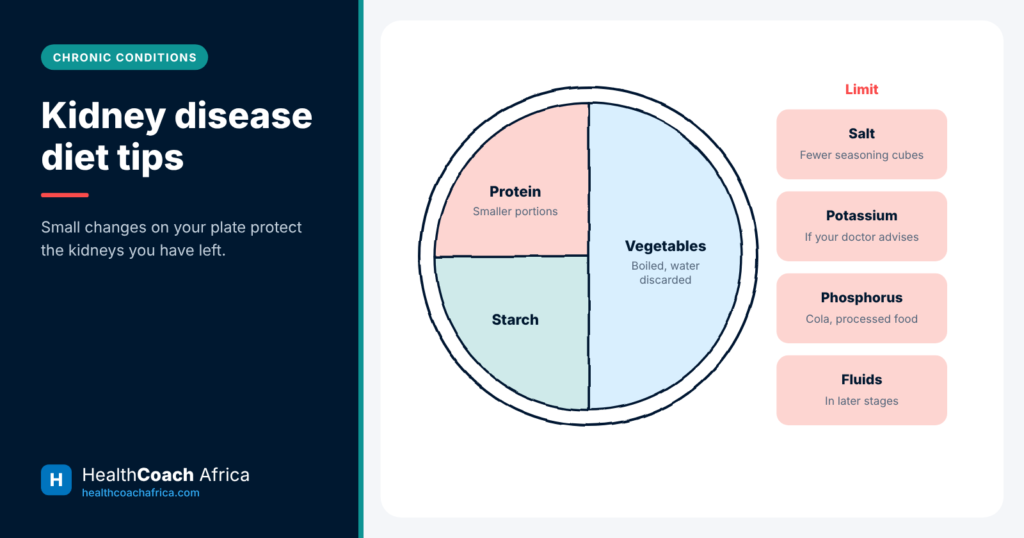
Notice the smaller protein portions, reduced salt and plenty of vegetables. These kidney disease diet tips can be adapted to your taste.
Your diet depends on your stage
Diet advice changes as kidney disease progresses. In early stages, the main focus is on salt, blood pressure and blood sugar. In later stages, or on dialysis, limits on potassium, phosphorus and fluid may be needed. According to the National Institute of Diabetes and Digestive and Kidney Diseases, a dietitian can help create a plan that suits your stage and blood test results.
Kidney disease diet tips: cut the salt
Too much salt raises blood pressure and causes fluid retention. Aim for less than 5 grams of salt a day, about one level teaspoon from all sources.
Use fewer seasoning cubes, which are very high in salt
Avoid adding salt at the table
Limit processed foods, canned foods, instant noodles and salty snacks
Flavour food with onions, garlic, ginger, pepper and herbs
Be cautious with salt substitutes, which often contain potassium
The right amount of protein
Protein is important for strength and healing, but too much creates more waste for the kidneys to remove. People with kidney disease who are not on dialysis may be advised to eat moderate amounts of protein. People on dialysis usually need more protein, because dialysis removes some of it.
Choose good-quality protein such as fish, eggs, chicken and smaller portions of beans. Your dietitian will advise how much is right for you.
Potassium: when to limit it
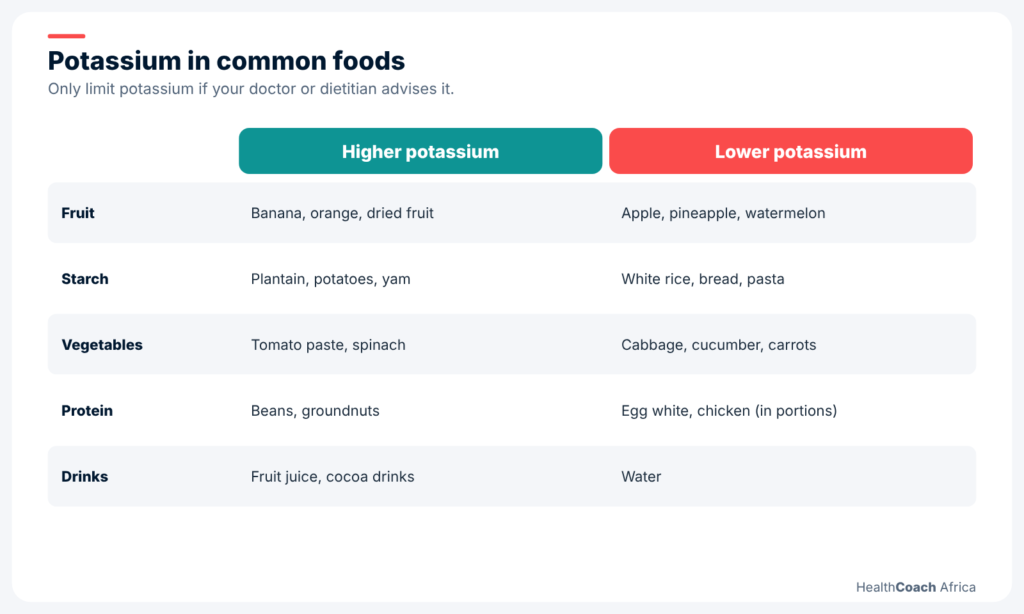
Potassium helps nerves and muscles work, including the heart. Damaged kidneys may not remove it well, and high potassium can cause dangerous heart rhythm problems. Not everyone with kidney disease needs to limit potassium. Your blood test will show whether you do.
If you need to limit potassium, foods to reduce include:
Plantain, banana, oranges and dried fruit
Tomatoes and tomato paste
Potatoes and yam in large portions
Beans, nuts and groundnuts
Some green leafy vegetables
Boiling vegetables and yam in plenty of water, then throwing away the water, reduces their potassium content.
High and lower potassium foods in kidney disease diet tips
Boiling vegetables and discarding the water lowers their potassium.
Cooking methods that help
Boil vegetables, yam and potatoes in plenty of water and discard the water to reduce potassium
Grill, boil or steam rather than frying
Prepare your own spice mixes without salt
Soak dried fish and stockfish and throw away the soaking water
Cook fresh rather than relying on canned or processed foods
HUBPHARM PHARMACIST’S NOTE Many medicines need lower doses when the kidneys are weak, including some diabetes tablets, antibiotics and painkillers. Phosphate binders also only work when taken with meals. Send your medicine list and latest kidney blood test to a HubPharm pharmacist. We will flag doses to review with your doctor.
Phosphorus
In later stages, phosphorus can build up and weaken the bones. High-phosphorus foods include dairy, processed meats, cola drinks and some packaged foods with phosphate additives. Your doctor may prescribe phosphate binders 1 , which are taken with meals.
Reading food labels
Check labels for sodium, potassium and phosphate. Ingredients with “phos” in the name, such as sodium phosphate, contain phosphorus that is easily absorbed. Choose products with lower sodium. These label-reading habits support all the other kidney disease diet tips.
Fluids
In early kidney disease, drinking enough water is important. In later stages or on dialysis, you may be asked to limit fluids to prevent swelling and breathlessness. Fluids include water, soups, tea, pap and foods that melt at room temperature. Follow the amount your doctor sets.
Controlling blood sugar and blood pressure
Diabetes and high blood pressure are the main causes of kidney disease. Keeping both under control slows kidney damage. Follow your diabetes meal plan, cut sugary drinks and take medicines as prescribed 2 .Read more about blood pressure in our article on lifestyle changes for hypertension.
Kidney disease diet tips with diabetes
Many people have both kidney disease and diabetes. Balancing the two diets can be challenging. Some fruits and vegetables that suit diabetes are high in potassium. Working with a dietitian helps you find foods that suit both conditions. Keep blood sugar in range, limit sugary drinks and choose whole grains in moderate portions.
Keeping a food diary
For two weeks, write down everything you eat and drink, including seasoning cubes and snacks. Bring it to your dietitian. It shows where salt, potassium and fluid are coming from, and makes it easier to plan realistic changes together.
Questions to ask your dietitian or doctor
What stage is my kidney disease?
Do I need to limit potassium or phosphorus?
How much protein should I eat each day?
How much fluid should I drink?
Which of my medicines need dose changes because of my kidneys?
How often should I have blood tests?
Eating out with kidney disease
Restaurant and party food is often very salty. Choose grilled or boiled dishes, ask for less seasoning, avoid extra sauces and keep portions moderate. Drink water or approved fluids instead of soft drinks and cola. Plan ahead and enjoy the occasion without undoing your hard work.
Myths about kidney diets
“Drinking lots of water cures kidney disease.” In later stages, too much fluid can be harmful.
“All fruits and vegetables are bad for the kidneys.” Most people can eat plenty, with some limits in later stages.
“Herbal teas flush the kidneys.” Some herbal products damage the kidneys.
“Protein must be avoided completely.” Moderate amounts of good-quality protein are needed.
Avoid herbal mixtures and painkillers that harm the kidneys
Many herbal mixtures, bitters and “kidney cleanses” can damage the kidneys. Anti-inflammatory painkillers, such as ibuprofen and diclofenac, can also worsen kidney function. Always check with a pharmacist or doctor before taking any new medicine or supplement.
Kidney disease diet tips for families
Cooking separate meals is tiring. Instead, prepare one base meal with less salt, and let family members add seasoning to their own plates. Serve protein in smaller portions for the person with kidney disease. Boil vegetables first, then add them to the stew. Teach children to enjoy foods with less salt. These kidney disease diet tips protect the whole family’s kidneys and blood pressure.
Kidney-friendly snacks
Choose snacks that are low in salt, potassium and phosphorus. Good options include apples, pineapple, unsalted popcorn, rice cakes and plain biscuits. Avoid salted groundnuts, crisps, chocolate and cola drinks. Your dietitian can suggest snacks that suit your stage.
Getting help
These kidney disease diet tips can help protect your kidneys and improve how you feel. Ask your doctor for a referral to a dietitian and for regular blood tests. For help with blood pressure medicines, phosphate binders or checking which medicines are safe for your kidneys, message a HubPharm pharmacist or chat with Afiya on WhatsApp.
Medicines and products in this article
#
Medicine or product
What to know
1
Phosphate binders
Prescription only
Taken with meals to reduce phosphorus absorption.
2
Blood pressure medicines
Prescription only
Good control slows kidney damage.
To order any of these, or to ask a pharmacist a question first, message HubPharm on WhatsApp or visit hubpharmafrica.com. Prescription medicines are supplied against a valid prescription.
Low Salt Diet Tips for a Healthier Heart High blood pressure affects millions of Nigerians, and many do not know they have it. One of the biggest causes is eating too much salt. Salt is everywhere in our kitchens: in seasoning cubes, stews,…
Nutrition During Cancer Treatment: What to Eat and Why Cancer and its treatment place heavy demands on the body. Chemotherapy, radiotherapy and surgery all increase your need for energy and protein, while side effects such as nausea and mouth sores make eating harder. Good…
Kidney Disease Warning Signs You Should Never Ignore Your kidneys filter your entire blood supply many times a day. They remove waste, balance fluid and help to control blood pressure. They can also lose most of their function before you feel anything. Community…
Nigerian Diet for Diabetes: A Practical Guide to Eating Well A diagnosis of diabetes often comes with a long list of foods you are told to stop eating. Many people believe they must give up eba, rice, yam and plantain for ever. That is not…