High blood pressure affects millions of Nigerians, and many do not know they have it. One of the biggest causes is eating too much salt. Salt is everywhere in our kitchens: in seasoning cubes, stews, snacks, bread and processed foods. Cutting back is one of the simplest and cheapest ways to protect your heart, brain and kidneys. These low salt diet tips will help your whole family eat less salt without losing flavour.
Why salt matters
Salt contains sodium. Too much sodium makes the body hold on to water, which increases the volume of blood and raises blood pressure. Over time, high blood pressure damages the arteries and leads to stroke, heart attack, heart failure and kidney disease.
Reducing salt lowers blood pressure within weeks, especially in people who already have high blood pressure. It also helps blood pressure medicines work better.
How much salt is safe?
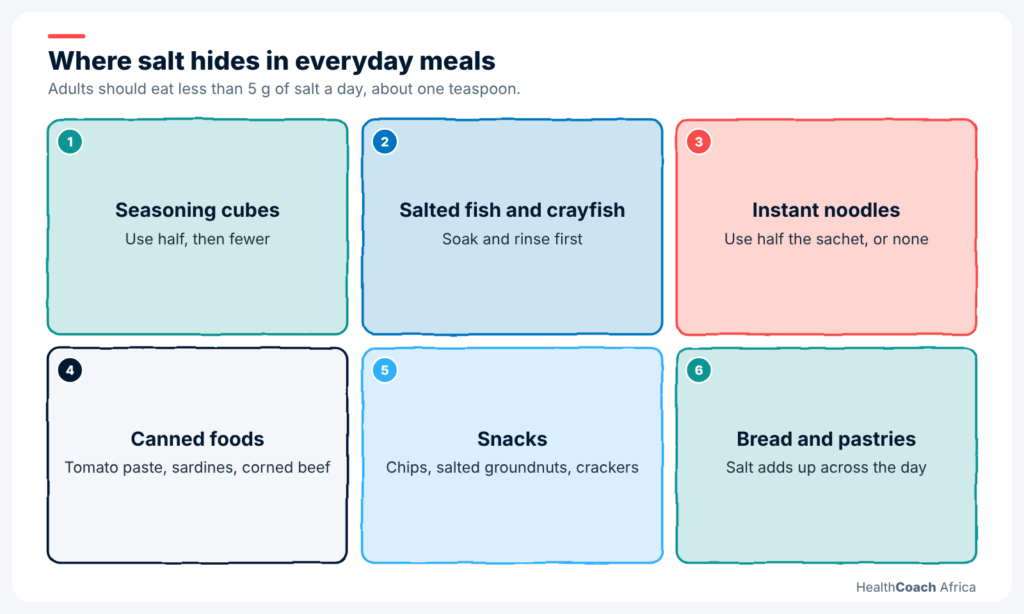
The World Health Organization recommends that adults eat less than 5 grams of salt a day. That is just under one level teaspoon, from all sources, including salt already in food. Children need even less.
Most people eat far more than this. Much of it comes from seasoning cubes and processed foods rather than the salt shaker.
Where salt hides
Common sources of salt in Nigerian diets include:
Seasoning cubes and powders, which are very high in sodium
Table salt added during cooking and at the table
Processed and canned foods, such as sardines, corned beef and canned tomatoes
Snacks, such as crisps, salted groundnuts, chin chin and plantain chips
Bread, pastries and biscuits
Instant noodles and their flavour sachets
Smoked and dried fish, stockfish and dried crayfish
Fast food, suya spice and restaurant meals
Common hidden sources of salt in Nigerian meals, with low salt diet tips
Most salt comes from seasoning and processed foods, not the salt shaker.
Low salt diet tips for cooking
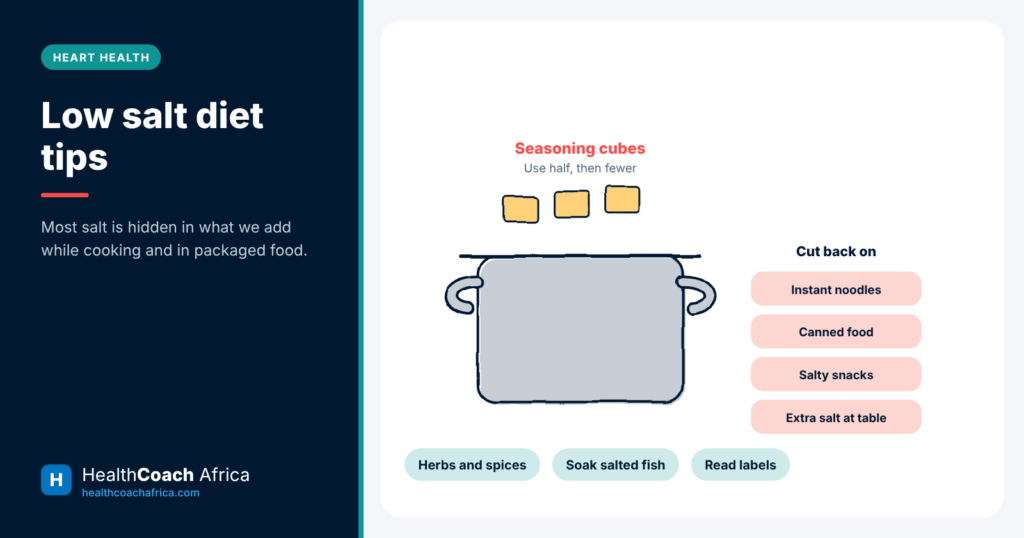
Use fewer seasoning cubes. Start by halving the number you use, then reduce further over time.
Taste before adding salt. Many dishes already contain enough from other ingredients.
Add salt at the end of cooking, when you can taste it, rather than at the start.
Use natural flavours, such as onions, garlic, ginger, scent leaf, uziza, pepper, curry, thyme, nutmeg and lemon.
Make your own spice mixes from ground crayfish, pepper and herbs, using small amounts of crayfish.
Rinse canned foods, such as beans or vegetables, before use.
Soak stockfish and dried fish well and discard the soaking water.
Low salt diet tips at the table and when shopping
Remove the salt shaker from the dining table
Read food labels and compare sodium or salt content
Choose fresh meat and fish over processed products
Buy unsalted groundnuts and snacks
Limit instant noodles, or use only part of the flavour sachet
When eating out, ask for less seasoning and avoid extra salt
Low salt diet tips: a four-week plan
Cutting salt suddenly can make food taste flat. A gradual plan works better:
Week 1: remove the salt shaker from the table
Week 2: use half your usual number of seasoning cubes
Week 3: replace salty snacks with fruit or unsalted groundnuts
Week 4: read labels and choose lower-salt bread and canned foods
By the end of the month, your taste will have started to adjust. Keep going. These low salt diet tips become easier with time.
Your taste will adjust
Food may taste bland at first. However, taste buds adapt within a few weeks. After that, many people find salty foods unpleasant. Reduce salt gradually so that the change is less noticeable.
Low salt diet tips for eating out
Restaurants, bukas and fast-food outlets often use a lot of seasoning. Choose grilled or boiled dishes over fried ones. Ask for less seasoning where possible. Avoid adding extra salt or seasoning sauce. Limit suya spice and pepper soup seasoning, which can be very salty. Eat more home-cooked meals, where you control the salt.
Potassium helps balance sodium
Foods rich in potassium help to lower blood pressure. Good sources include fruits such as bananas, oranges and pawpaw, vegetables such as spinach and tomatoes, and beans. However, people with kidney disease may need to limit potassium. Ask your doctor before increasing it.
HUBPHARM PHARMACIST’S NOTE Potassium salt substitutes can be dangerous with some common blood pressure tablets, such as lisinopril, losartan and spironolactone, and with kidney disease. Check with a HubPharm pharmacist before you switch. Send us your medicine list, and we will tell you whether a substitute is safe for you or suggest other ways to add flavour.
Salt substitutes
Some salt substitutes 1 replace part of the sodium with potassium. They can help lower blood pressure in many people. However, they are not safe for everyone, especially people with kidney disease or those taking certain blood pressure medicines that raise potassium. Speak to a doctor or pharmacist before using them.
Checking your blood pressure
Blood pressure often has no symptoms, so the only way to know is to check it. Adults should have it checked at least once a year, and more often if it is high. A home blood pressure monitor 2 lets you see how lifestyle changes, including less salt, affect your readings. Record your readings and share them with your doctor.
How much difference does it make?
Reducing salt can lower blood pressure by a few points within weeks. That may sound small. However, across a whole population, small reductions prevent large numbers of strokes and heart attacks. For people with high blood pressure, less salt can mean fewer medicines or better control. Every reduction counts.
Making it a family habit
Salt habits are shared. Talk with the person who does most of the cooking. Agree to reduce seasoning cubes step by step. Teach children to enjoy natural flavours. Encourage street food vendors and caterers you use often to offer lower-salt options. Small changes across a household add up.
Children and salt
Children develop their taste preferences early. Do not add salt to baby foods. Limit salty snacks and instant noodles. Children who eat less salt are less likely to develop high blood pressure later in life.
Low salt and heart failure or kidney disease
People with heart failure or chronic kidney disease often need stricter salt limits. Too much salt can cause fluid build-up, swelling and breathlessness. Follow the advice of your doctor or dietitian.
Reading food labels for salt
Many packaged foods show sodium rather than salt. To estimate salt, multiply sodium by 2.5. For example, 400 mg of sodium equals about 1 gram of salt. As a rough guide, foods with more than 1.5 g of salt per 100 g are high in salt, and foods with 0.3 g or less are low. Compare similar products and choose the lower one. Reading labels is one of the most useful low salt diet tips for busy shoppers.
Low salt and older adults
Older adults are especially sensitive to salt, and their blood pressure often responds well to cutting back. However, very low salt diets can be risky for some older people taking water tablets. Make changes gradually and keep taking your medicines. Check your blood pressure regularly.
Myths about salt
“I sweat a lot in the heat, so I need extra salt.” Most people get more than enough salt from food, even in hot weather.
“Sea salt and pink salt are healthier.” They contain about the same amount of sodium as ordinary salt.
“If I do not add salt, I am not eating much.” Most salt comes from seasoning cubes and processed foods.
Street food and snacks
Roadside snacks such as suya, fried plantain chips and seasoned groundnuts are often very salty. Enjoy them occasionally and in small portions. Choose roasted corn, fresh fruit or unsalted groundnuts more often. These low salt diet tips still let you enjoy food on the go.
Getting help
These low salt diet tips can lower your blood pressure and protect your heart. Read more in our article on lifestyle changes for hypertension.For a home blood pressure monitor, advice on salt substitutes with your medicines or a review of your blood pressure treatment, message a HubPharm pharmacist or chat with Afiya on WhatsApp.
Medicines and products in this article
#
Medicine or product
What to know
1
Potassium salt substitutes
Over the counter
Lower sodium, but not safe for everyone. Check first.
2
Home blood pressure monitor
Over the counter
Shows how cutting salt lowers your readings over weeks.
To order any of these, or to ask a pharmacist a question first, message HubPharm on WhatsApp or visit hubpharmafrica.com. Prescription medicines are supplied against a valid prescription.
Nigerian Diet for Diabetes: A Practical Guide to Eating Well A diagnosis of diabetes often comes with a long list of foods you are told to stop eating. Many people believe they must give up eba, rice, yam and plantain for ever. That is not…
Nutrition During Cancer Treatment: What to Eat and Why Cancer and its treatment place heavy demands on the body. Chemotherapy, radiotherapy and surgery all increase your need for energy and protein, while side effects such as nausea and mouth sores make eating harder. Good…
Kidney Disease Warning Signs You Should Never Ignore Your kidneys filter your entire blood supply many times a day. They remove waste, balance fluid and help to control blood pressure. They can also lose most of their function before you feel anything. Community…
Lower Blood Pressure Naturally: 7 Nigerian Food Swaps If you're looking to lower blood pressure naturally, you don't have to give up your favourite Nigerian foods. Simple changes to what you eat can help reduce sodium, increase potassium-rich foods and support healthy blood…