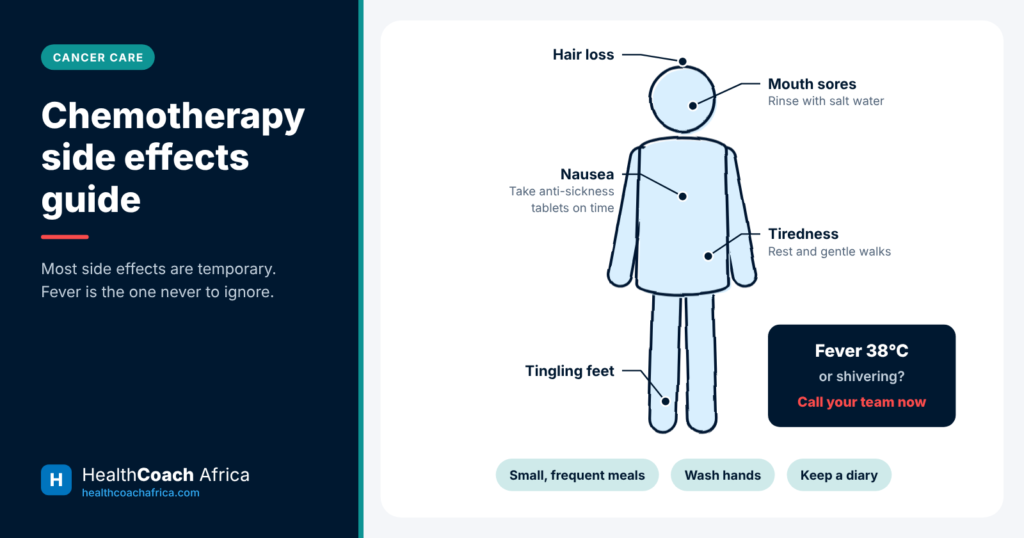
Starting chemotherapy can feel frightening. Many people have heard stories of severe sickness and hair loss. In reality, side effects vary widely. Some people have very few, while others need extra support. This chemotherapy side effects guide explains the common effects, practical ways to manage them at home and the warning signs that mean you must call your cancer team straight away.
Why chemotherapy causes side effects
Chemotherapy medicines kill cells that divide quickly. Cancer cells divide quickly, but so do some healthy cells. These include cells in the hair roots, the lining of the mouth and gut, and the bone marrow, which makes blood cells. When these healthy cells are affected, side effects appear.
Most side effects are temporary. Healthy cells usually recover after each cycle and after treatment ends. Your team chooses doses and gaps between cycles to give your body time to recover.
Before your first cycle
Preparation makes treatment easier. Before starting, ask your team which side effects are most likely with your medicines. Visit a dentist if you can, because mouth problems are harder to treat during chemotherapy. Stock up on simple foods, oral rehydration solution and a thermometer. Arrange help with transport and household tasks. This chemotherapy side effects guide works best when you plan ahead with your family.
Infection: the most important risk
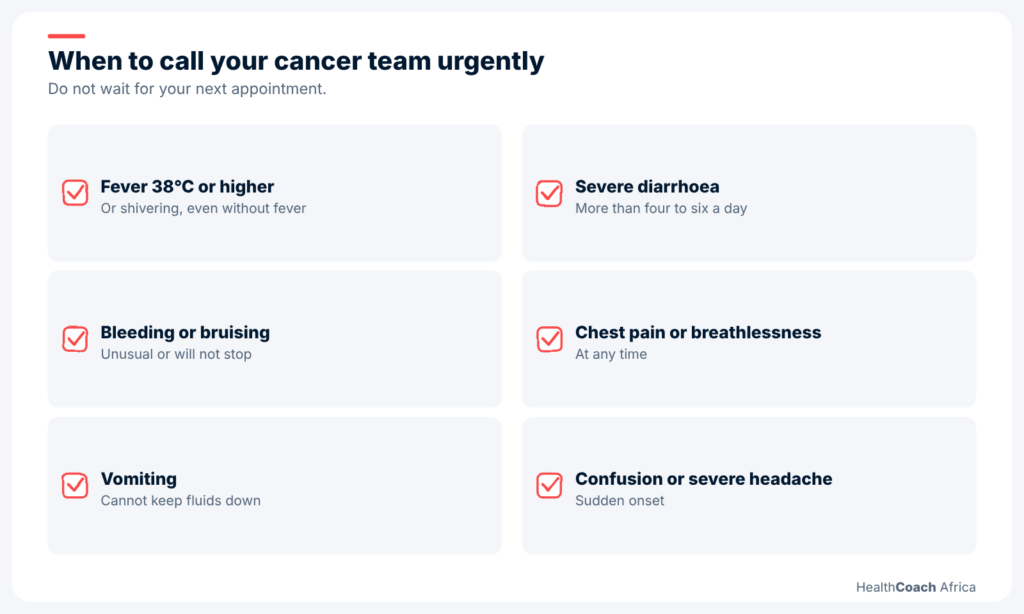
Urgent warning signs in a chemotherapy side effects guide, including fever, bleeding and breathlessness
Keep your cancer team’s emergency number where everyone at home can find it.
Chemotherapy can lower your white blood cells, which fight infection. This usually happens 7 to 14 days after each treatment. An infection at this time can become serious very quickly.
Call your cancer team or go to hospital immediately if you have:
A temperature of 38°C or higher
Shivering or feeling suddenly unwell, even without fever
A cough, sore throat or burning when passing urine
Redness, swelling or pus around a line or wound
Keep a working thermometer1 at home. Do not take paracetamol to bring down a fever before calling, as it can hide an infection. Wash hands often, avoid people who are sick and keep cuts clean.
Nausea and vomiting
Modern anti-sickness medicines2 prevent most nausea. Take them exactly as prescribed, even if you feel fine. They work best when taken before sickness starts.
Other tips that help:
Eat small, frequent meals rather than three large ones
Choose plain foods, such as pap, crackers, rice or bread
Avoid strong smells and very oily or spicy food
Sip fluids slowly throughout the day
Try ginger tea or ginger biscuits
Rest sitting up after eating
Tell your team if you vomit more than a few times a day or cannot keep fluids down. They can change your medicine.
Fatigue
Tiredness is the most common side effect. It can last for weeks after treatment. Plan activities for times when you have more energy. Rest when you need to, but gentle activity, such as short walks, often improves energy. Ask family members to help with cooking, shopping and childcare.
Tell your team if tiredness becomes severe or you feel breathless. Anaemia, a low red blood cell count, may be the cause and can be treated.
Mouth sores and taste changes
Chemotherapy can cause a sore mouth, ulcers and changes in taste. Keep your mouth clean with a soft toothbrush. Rinse with a mild salt-water mouthwash3 several times a day. Avoid alcohol-based mouthwashes, very hot food and acidic drinks. If food tastes metallic, try plastic cutlery and cold foods.
Report white patches, severe pain or difficulty swallowing. These may be a sign of infection, such as oral thrush, which needs treatment.
HUBPHARM PHARMACIST’S NOTE
Anti-sickness medicines work best when they are taken on time, before nausea starts. Many patients run out between cycles or are unsure which tablet to take when. Send your chemotherapy discharge prescription to a HubPharm pharmacist. We will turn it into a simple day-by-day chart, check it against your other medicines and herbal products, and deliver anti-sickness tablets, mouthwash, oral rehydration solution and a thermometer before your next cycle. We can also remind you when your low immunity window starts, so you know when to watch most closely for fever.
Hair loss
Not all chemotherapy causes hair loss. When it does, hair usually begins to fall out two to three weeks after the first treatment. It almost always grows back after treatment ends, though it may be a different texture at first.
Some people cut their hair short beforehand. Others choose scarves, caps or wigs. Protect the scalp from sun and cold. Hair loss can be upsetting. Talking about your feelings with family, friends or a counsellor helps.
Bowel changes
Some chemotherapy medicines cause diarrhoea. Others, along with strong painkillers and anti-sickness medicines, cause constipation.
For diarrhoea: drink plenty of fluids, use oral rehydration solution4 and eat bland foods. Call your team if you have more than four to six loose stools a day.
For constipation: drink water, eat fruit and vegetables if you can, and stay active. Ask about laxatives before the problem becomes severe.
Skin, nails and nerves
Skin may become dry, darker or more sensitive to the sun. Use a gentle moisturiser and protect your skin outdoors. Nails may become brittle or develop lines.
Some medicines affect the nerves, causing tingling or numbness in the hands and feet. Tell your team early, because adjusting the dose may prevent lasting damage. Take care with hot water and wear well-fitting shoes.
Eating well during treatment
Good nutrition helps your body recover between cycles. Aim for protein at most meals, such as eggs, fish, beans, chicken and milk. If your appetite is poor, eat little and often, and choose foods you enjoy. Nutrition drinks can help when meals are difficult.
Food safety matters while your immunity is low. Wash hands before eating, cook meat and eggs thoroughly, wash fruit well and avoid food from unhygienic roadside stalls.
Emotional changes
Feeling anxious, low or irritable during treatment is common. Changes in appearance, tiredness and uncertainty about the future all take a toll. Talk to people you trust. Join a support group if one is available. Tell your team if you feel hopeless or cannot sleep, because help is available.
Sex, fertility and pregnancy
Chemotherapy can affect fertility in both men and women. Ask about options to protect fertility before treatment starts. Use reliable contraception during treatment, because chemotherapy can harm an unborn baby. Ask your team when it is safe to try for a baby afterwards. Use condoms for a few days after each treatment, as small amounts of medicine may be present in body fluids.
Keeping a side effects diary
Write down each symptom, when it started and what helped. Bring the diary to every appointment. It helps your team adjust medicines and doses. A diary is a simple tool that turns this chemotherapy side effects guide into a personal plan.
Avoid unproven remedies
Some herbal mixtures and supplements can interact with chemotherapy, damage the liver or kidneys, or reduce the effect of treatment. Always tell your cancer team about anything you take, including herbal teas, vitamins and traditional medicines. This chemotherapy side effects guide cannot cover every product, so ask before you start anything new.
Chemotherapy side effects guide: when to call for help
Keep your cancer team’s emergency number somewhere easy to find. Call them urgently for:
Fever of 38°C or higher, or shivering
Bleeding or unusual bruising
Vomiting that will not stop, or being unable to drink
Severe diarrhoea
Chest pain or difficulty breathing
Sudden confusion or severe headache
Do not wait until the next appointment. Early action prevents serious problems.
Prevent nausea and vomiting. Take on schedule, even if you feel well.
3
Salt-water or alcohol-free mouthwash
Over the counter
Keeps the mouth clean and eases sore gums.
4
Oral rehydration solution
Over the counter
Replaces fluids lost through diarrhoea or vomiting.
To order any of these, or to ask a pharmacist a question first, message HubPharm on WhatsApp or visit hubpharmafrica.com. Prescription medicines are supplied against a valid prescription.
Nutrition During Cancer Treatment: What to Eat and Why Cancer and its treatment place heavy demands on the body. Chemotherapy, radiotherapy and surgery all increase your need for energy and protein, while side effects such as nausea and mouth sores make eating harder. Good…
Managing Chemotherapy Side Effects: 7 Practical Tips… Chemotherapy saves lives, but it also affects healthy cells, and that is where side effects come from. The good news is that most of them can be prevented, reduced or treated. Managing chemotherapy side effects…
Grief and Bereavement Support: Living Through Loss Losing someone we love is one of the hardest experiences in life. In Nigeria, families often come together quickly after a death, with visitors, prayers, ceremonies and long funeral preparations. When the crowds leave, many…
Healthy Weight Loss Tips: Slow, Steady and Sustainable Overweight and obesity are rising in Nigeria, especially in cities. Excess weight increases the risk of type 2 diabetes, high blood pressure, heart disease, stroke, joint pain, fatty liver and some cancers. Many people try…