Diabetes is one of the leading causes of kidney failure worldwide. In Nigeria, many people with kidney failure first learn they have kidney disease when they are told they need dialysis. Dialysis is expensive and hard to access, and kidney transplants are out of reach for most families. Yet kidney damage from diabetes develops slowly over years and can often be prevented or slowed. This guide explains diabetic kidney disease prevention, the tests you need and the steps that protect your kidneys.
What do the kidneys do?
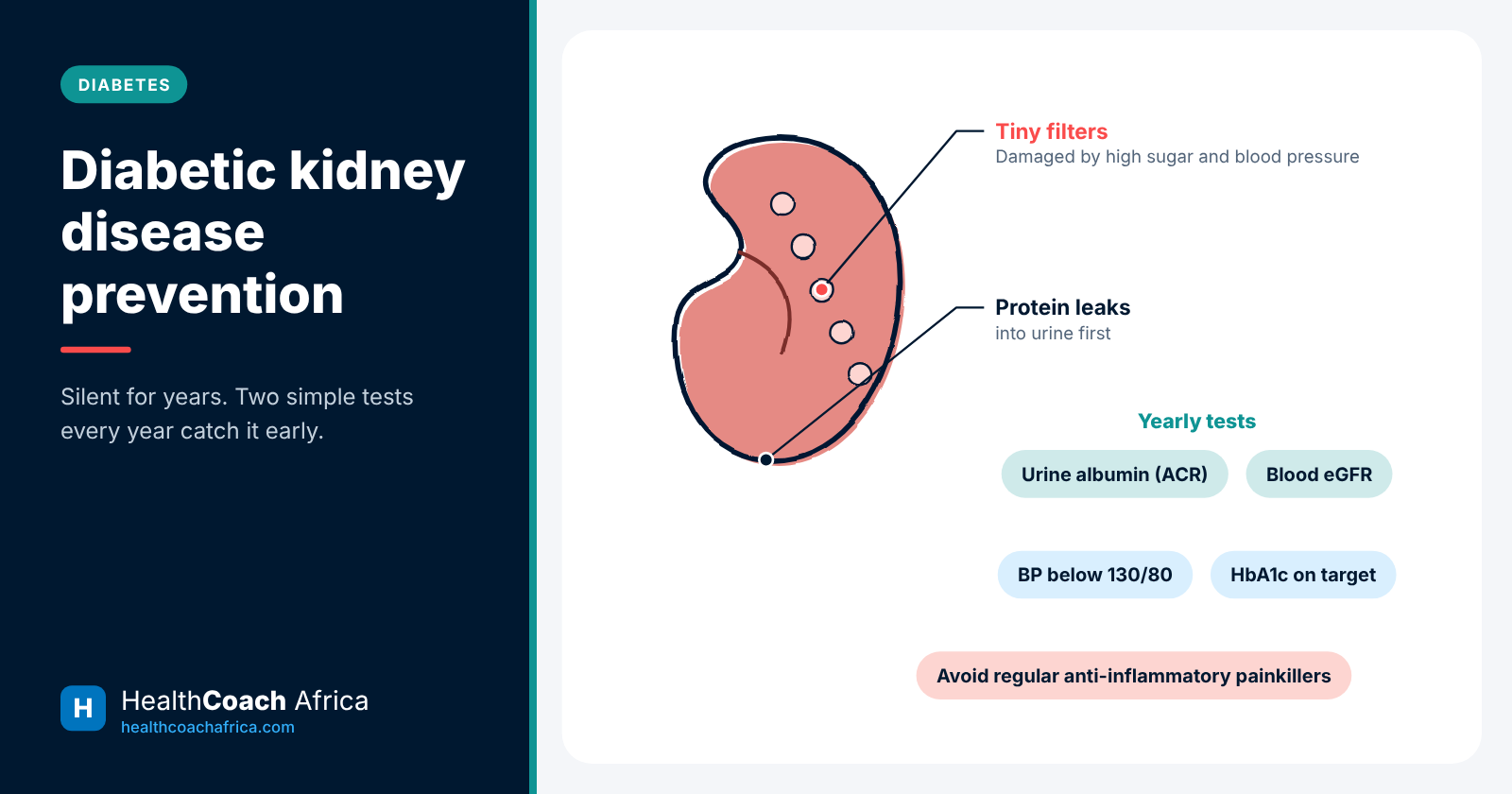
The kidneys are two bean-shaped organs in the lower back. Each contains about a million tiny filters. These filters clean waste and extra fluid from the blood and pass them out as urine. The kidneys also help control blood pressure, keep bones healthy and make a hormone that helps produce red blood cells.
How diabetes damages the kidneys
High blood sugar damages the tiny blood vessels in the kidney filters. Over time, the filters become leaky. Protein, especially a protein called albumin, starts to leak into the urine. As damage continues, the kidneys filter less blood and waste builds up in the body.
High blood pressure speeds up this damage. Many people with diabetes also have high blood pressure, so the two together put the kidneys under great strain.
Silent until late
Early diabetic kidney disease causes no symptoms. By the time symptoms appear, a lot of kidney function may already be lost. Late signs include:
Swollen feet, ankles or face
Foamy urine
Tiredness and weakness
Poor appetite, nausea or vomiting
Itchy skin
Shortness of breath
Passing much less urine
Because the early stages are silent, regular testing is the cornerstone of diabetic kidney disease prevention.
The two tests you need every year
Everyone with diabetes should have kidney tests at least once a year:
Urine albumin test (urine ACR): a simple urine sample checks for small amounts of albumin. This is the earliest sign of kidney damage.
Blood creatinine test (eGFR): a blood test estimates how well your kidneys filter. It is reported as the eGFR.
People with type 2 diabetes should start these tests at diagnosis. People with type 1 diabetes usually start five years after diagnosis. If results are abnormal, tests are repeated more often.
Who is at higher risk?
Some people with diabetes face a higher risk of kidney damage. These include people who:
Have had diabetes for many years
Have poorly controlled blood sugar
Have high blood pressure
Smoke
Are overweight
Have a family history of kidney disease
Have diabetic eye or nerve damage, which suggests small blood vessel damage elsewhere
People of African descent also appear to have a higher risk of kidney disease. Regular testing is especially important.
Control your blood sugar
Keeping blood sugar close to target lowers the risk of kidney damage and slows it if it has started. Take your medicines regularly, follow your meal plan and check your sugar at home. Ask your doctor what HbA1c target suits you. For many adults, the target is around 7% or lower.
Control your blood pressure
Blood pressure control is just as important as sugar control for diabetic kidney disease prevention. For most people with diabetes, the target is below 130/80 mmHg. Check your blood pressure at home if you can. Reduce salt, stay active, keep a healthy weight and take blood pressure medicines as prescribed.
Medicines that protect the kidneys
Some medicines do more than lower blood pressure or sugar. They protect the kidneys directly.
ACE inhibitors, such as lisinopril1, and angiotensin receptor blockers, such as losartan2, reduce protein leakage and slow kidney damage. They are often recommended when albumin is found in the urine, even if blood pressure is normal.
SGLT2 inhibitors, such as dapagliflozin and empagliflozin3, are newer diabetes tablets that also protect the kidneys and heart.
Your doctor will check your kidney function and potassium levels with blood tests after starting or changing these medicines.
HUBPHARM PHARMACIST’S NOTE
Many people with diabetes take anti-inflammatory painkillers for knee or back pain without knowing they can harm the kidneys, especially alongside blood pressure tablets and water tablets. Send your full medicine list and latest kidney results to a HubPharm pharmacist. We will flag painkillers and herbal products that could harm your kidneys, suggest safer pain relief and check whether any doses need review with your doctor. We can also supply a validated home blood pressure monitor, so you can track the number that protects your kidneys most.
Avoid medicines and products that harm the kidneys
Anti-inflammatory painkillers, such as ibuprofen and diclofenac, can damage the kidneys, especially with regular use. Ask your pharmacist about safer pain relief.
Herbal mixtures and unregulated supplements may contain substances that harm the kidneys.
Some antibiotics and contrast dyes used for scans need care. Tell every health worker that you have diabetes.
Watch for urinary infections
People with diabetes are more prone to urinary tract infections. Burning when passing urine, frequent urination, cloudy urine or lower belly pain need prompt treatment. Untreated infections can spread to the kidneys. Some diabetes tablets also raise the risk of genital infections, so good hygiene matters. Tell your doctor about any symptoms.
Eat for healthy kidneys
Cut down on salt and seasoning cubes
Choose fresh foods over processed and canned foods
Eat moderate portions of protein rather than very large amounts
Eat plenty of vegetables and whole grains
Limit sugary drinks
Drink water regularly, but follow your doctor’s advice if you have advanced kidney disease
Diabetic kidney disease prevention and the heart
Kidney disease and heart disease are closely linked. People with diabetic kidney disease have a higher risk of heart attack and stroke. Many steps that protect the kidneys also protect the heart. These include blood pressure control, statins to lower cholesterol, stopping smoking and regular exercise. Diabetic kidney disease prevention is therefore also heart protection.
Planning for advanced kidney disease
If kidney function falls despite treatment, early referral to a kidney specialist allows time to plan. You may need diet changes, medicine adjustments and treatment for anaemia and bone health. Your team will explain dialysis and transplant options well before they are needed. Early planning reduces the risk of emergency dialysis.
Diabetic kidney disease prevention: a checklist
Checklist of daily and yearly steps for diabetic kidney disease prevention
Ask for your urine albumin and eGFR results at every yearly review.
Kidney blood and urine tests every year
Blood pressure below target
HbA1c close to target
Kidney-protecting medicines if advised
No regular anti-inflammatory painkillers
No herbal mixtures without advice
No smoking
Other healthy habits
Stop smoking, which speeds up kidney damage
Stay active most days of the week
Keep a healthy weight
Limit alcohol
Treat urinary infections promptly
Diabetic kidney disease prevention: what your numbers mean
Ask for your results at each visit and write them down. A rising urine albumin or a falling eGFR is a signal to act. With good treatment, many people keep stable kidney function for years. If kidney disease progresses, your doctor will refer you to a kidney specialist early, which gives time to plan.
Questions to ask your doctor
What were my latest urine albumin and eGFR results?
Are my kidneys stable, better or worse than last year?
What is my blood pressure target?
Would a kidney-protecting medicine help me?
Are any of my current medicines harmful to my kidneys?
When should I have my next kidney tests?
Write the answers in a notebook and bring it to every visit. Tracking your results over time is one of the simplest tools for diabetic kidney disease prevention.
A word for families
Kidney disease often runs alongside diabetes in families. Encourage relatives with diabetes or high blood pressure to ask for yearly kidney tests too.
An alternative to ACE inhibitors for kidney protection.
3
SGLT2 inhibitors (such as dapagliflozin)
Prescription only
Diabetes tablets that also protect the kidneys and heart.
To order any of these, or to ask a pharmacist a question first, message HubPharm on WhatsApp or visit hubpharmafrica.com. Prescription medicines are supplied against a valid prescription.
Kidney Disease: Improving Global Outcomes (KDIGO). KDIGO 2022 clinical practice guideline for diabetes management in chronic kidney disease. https://kdigo.org/guidelines/diabetes-ckd/
Kidney Disease Warning Signs You Should Never Ignore Your kidneys filter your entire blood supply many times a day. They remove waste, balance fluid and help to control blood pressure. They can also lose most of their function before you feel anything. Community…
Diabetic Nerve Pain Relief: Easing Burning Feet and Tingling Many people with diabetes develop nerve damage, especially in the feet and legs. For some, it causes numbness. For others, it causes burning, tingling or stabbing pain that is worse at night and makes sleep…
Diabetic Eye Disease Signs: Protecting Your Sight… Diabetes is one of the leading causes of preventable blindness in working-age adults. High blood sugar slowly damages the tiny blood vessels at the back of the eye, often for years before any change in…
Kidney Disease Diet Tips: Eating to Protect Your Kidneys Chronic kidney disease is common in Nigeria, often caused by high blood pressure, diabetes and kidney infections. When the kidneys are damaged, they cannot remove waste, salt and fluid from the body as well as…