A stroke can strike suddenly, at home, at work or in the market. One moment a person is talking normally. The next, their face droops, their arm will not move or their words come out jumbled. In Nigeria, many families first take a person with these symptoms to a church, a traditional healer or a nearby chemist. Hours pass before they reach a hospital. Recognising stroke warning signs and getting to hospital quickly can save a life and reduce disability. This guide explains the FAST test, other warning signs and how to lower your risk.
What is a stroke?
A stroke happens when blood supply to part of the brain is cut off. Brain cells start to die within minutes. There are two main types:
Ischaemic stroke, caused by a blood clot blocking an artery to the brain. This is the most common type.
Haemorrhagic stroke, caused by a blood vessel bursting and bleeding into or around the brain. High blood pressure is a major cause.
Both types are medical emergencies.
Recognising stroke warning signs with FAST
The FAST test is an easy way to remember the main signs:
F: Face. Has the face dropped on one side? Ask the person to smile.
A: Arms. Can they raise both arms and keep them there? One arm may drift down or be too weak to lift.
S: Speech. Is their speech slurred or confused? Can they understand you?
T: Time. Time to call for emergency help immediately. In Nigeria, dial 112 or go straight to a hospital with emergency services.
If you see any one of these signs, act at once. Do not wait to see if it improves.
Other sudden warning signs
Strokes can also cause:
Sudden numbness or weakness in the face, arm or leg, especially on one side
Sudden loss of vision or blurred vision in one or both eyes
Sudden dizziness, loss of balance or difficulty walking
A sudden, very severe headache unlike any before
Sudden confusion or difficulty understanding
Difficulty swallowing
The key word is “sudden”. Recognising stroke warning signs means noticing a sudden change and acting quickly.
Mini-strokes: a warning not to ignore
A transient ischaemic attack, or mini-stroke, causes the same symptoms as a stroke, but they disappear within minutes or hours. Many people ignore them because they feel better. This is a mistake. A mini-stroke is a warning that a major stroke may follow, often within days. Anyone who has had stroke symptoms, even briefly, needs urgent medical assessment.
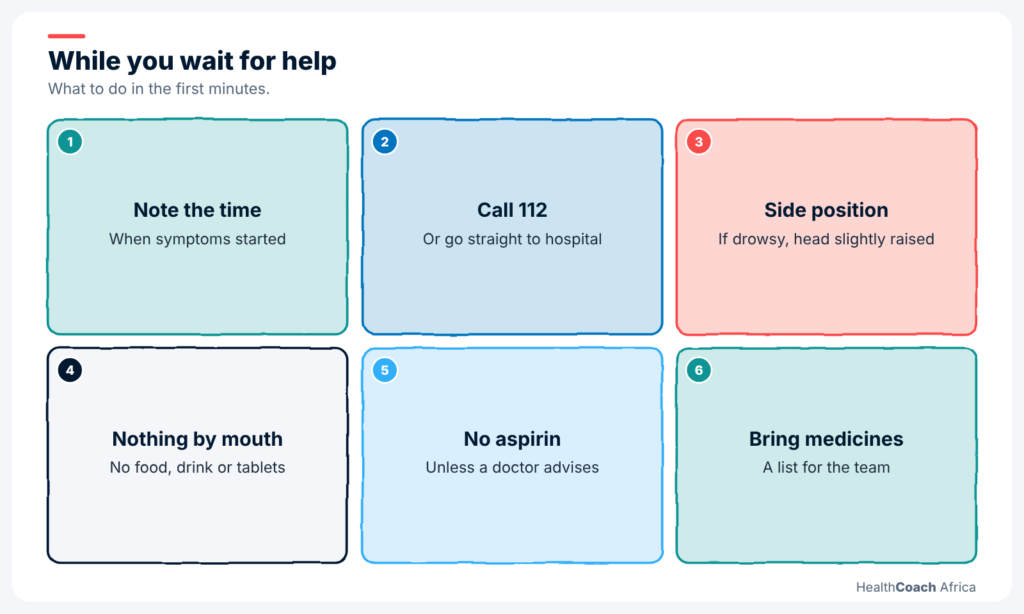
What to do while waiting for help
First aid steps after recognising stroke warning signs, from noting the time to protecting the airway
Go straight to a hospital that can scan the brain. Do not stop at a chemist.
Note the time the symptoms started. This guides treatment.
Keep the person lying on their side with the head slightly raised if they are drowsy.
Do not give food, drink or medicines by mouth, as swallowing may be affected.
Do not give aspirin unless a doctor advises it, because some strokes are caused by bleeding.
Loosen tight clothing and stay with them.
Bring a list of their medicines to the hospital.
Recognising stroke warning signs in children
Children can have strokes too, especially children with sickle cell disease. Signs include sudden weakness of one side, a drooping face, difficulty speaking, a severe headache, fits or unusual drowsiness. Children with sickle cell disease should have regular screening with a special ultrasound of the brain blood vessels, called transcranial Doppler, where available. Recognising stroke warning signs in a child and acting quickly can prevent lasting damage.
Getting to the right hospital
Not every hospital can scan the brain or give clot-busting treatment. Find out now which hospitals near you have a CT scanner and emergency services. Save the number of an ambulance service in your phone. In an emergency, go directly to a hospital that can treat strokes, rather than stopping at a clinic or chemist first.
Why time matters
For strokes caused by clots, clot-busting medicine can restore blood flow1 if given within about four and a half hours of symptoms starting. Some patients can have the clot removed with a procedure. Both treatments need a brain scan first. The sooner a person reaches a hospital that can do a CT scan, the better the chance of recovery.
Who is at risk?
The biggest risk factor for stroke is high blood pressure. In Nigeria, high blood pressure is very common and often untreated. Other risk factors include:
Diabetes
High cholesterol
Smoking
Heavy alcohol use
Being overweight
Physical inactivity
An irregular heartbeat called atrial fibrillation
Sickle cell disease, which can cause strokes even in children
A previous stroke or mini-stroke
Older age and family history
HUBPHARM PHARMACIST’S NOTE
Running out of blood pressure tablets is one of the commonest reasons for a stroke in people already on treatment. Ask HubPharm to put your blood pressure medicines on a monthly refill with reminders. A pharmacist will also check whether your tablets are taken at the right times and whether any other medicines, such as decongestants or anti-inflammatory painkillers, could raise your blood pressure. If you have had a stroke or mini-stroke, we will explain each new medicine, including blood thinners and statins.
Lowering your stroke risk
Most strokes can be prevented. Practical steps include:
Check your blood pressure at least once a year, more often if you are over 40 or have diabetes
Take blood pressure medicines every day2, even when you feel well
Cut down on salt and seasoning cubes
Stay active, aiming for 30 minutes of activity on most days
Stop smoking and limit alcohol
Manage diabetes and cholesterol
Keep a healthy weight
Treat an irregular heartbeat if one is found
Many people stop blood pressure tablets when they feel better or run out. Stopping suddenly can lead to dangerous rises in blood pressure.
Preventing a second stroke
People who have had one stroke are at higher risk of another. Prevention includes taking blood pressure medicines daily, blood thinners or aspirin if prescribed, statins to lower cholesterol, and controlling diabetes. Lifestyle changes matter too. Attend follow-up visits and report any new symptoms immediately. Family members should keep recognising stroke warning signs in mind, because a second stroke can happen suddenly.
Caring for a stroke survivor
Caregivers can help by encouraging exercises, preventing falls at home and supporting speech practice. Watch for low mood, which is common after a stroke. Make the home safer with good lighting, handrails and a clear path to the toilet. Look after your own health too, because caring is demanding.
Life after a stroke
Recovery depends on the type and size of the stroke and how quickly treatment started. Rehabilitation with physiotherapy, speech therapy and occupational therapy helps people regain movement, speech and independence. Recovery is often fastest in the first few months but can continue for longer. Family support, regular exercises at home and prevention of another stroke are essential.
Myths about stroke
“A stroke is a spiritual attack.” A stroke is a medical emergency caused by a blocked or burst blood vessel.
“Only old people have strokes.” Strokes can affect young adults and even children with sickle cell disease.
“If symptoms go away, there is no need to see a doctor.” Brief symptoms may be a mini-stroke, a warning of a major stroke.
“Rubbing the person with oil helps.” Delaying hospital care costs precious brain cells.
Teach your children
Children can learn the FAST test too. Many strokes happen at home, and a child who knows to call for help can save a grandparent’s life.
Can restore blood flow if given within about four and a half hours.
2
Blood pressure medicines
Prescription only
The most important step in preventing stroke. Take every day.
To order any of these, or to ask a pharmacist a question first, message HubPharm on WhatsApp or visit hubpharmafrica.com. Prescription medicines are supplied against a valid prescription.
National Institute for Health and Care Excellence. Stroke and transient ischaemic attack in over 16s: diagnosis and initial management (NG128). https://www.nice.org.uk/guidance/ng128
Fasting Safely With Diabetes: A Guide for Ramadan… Fasting is an important part of faith for millions of Nigerians. Muslims fast from dawn to sunset during Ramadan. Many Christians fast during Lent, at the start of the year or for special prayer periods,…
Heart Attack Warning Signs: Act Fast and Save a Life Heart disease is rising in Nigeria, driven by high blood pressure, diabetes, smoking and changing lifestyles. A heart attack is a medical emergency in which every minute counts. The faster treatment starts, the more heart…
Home Blood Pressure Monitoring: How to Get It Right… High blood pressure is called the silent killer because it rarely causes symptoms until it has damaged the heart, brain or kidneys. A single reading in a busy clinic often does not tell the full…
Coping With Panic Attacks: 6 Steps That Calm Your Body Fast Your heart pounds, your chest tightens and you are suddenly sure that something terrible is about to happen. Many people who rush to hospital convinced they are having a heart attack are in fact having…