Fasting is an important part of faith for millions of Nigerians. Muslims fast from dawn to sunset during Ramadan. Many Christians fast during Lent, at the start of the year or for special prayer periods, often until noon or 3 pm. For people with diabetes, long periods without food and drink can cause dangerous changes in blood sugar. With good planning, many people can fast with lower risk. This guide explains fasting safely with diabetes, who should avoid fasting and how to adjust meals and medicines.
Why fasting affects blood sugar
When you fast, your body has no new food to use for energy. Blood sugar may fall too low, especially if you take insulin or certain tablets that push sugar down. On the other hand, large meals at the end of the fast can push blood sugar too high. Not drinking water for many hours, particularly in hot weather, can lead to dehydration.
The main risks are:
Low blood sugar (hypoglycaemia)
High blood sugar after large meals
Diabetic ketoacidosis, a dangerous complication mainly in type 1 diabetes
Dehydration and blood clots
Plan ahead with your doctor
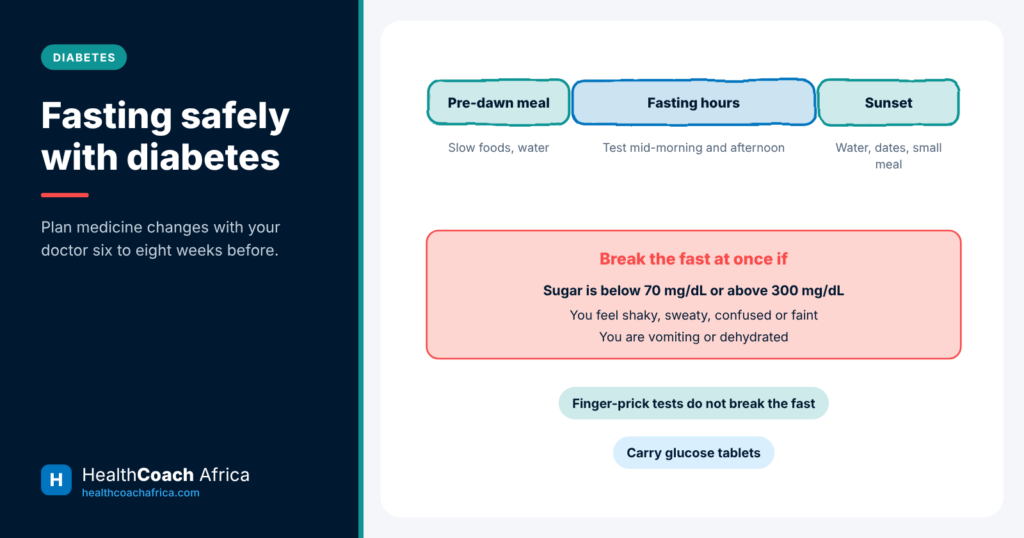
Speak to your doctor or diabetes nurse six to eight weeks before a planned fast. They will review your blood sugar control, medicines and other health conditions. Together, you can decide whether fasting is safe for you and how to adjust your treatment.
Many religious leaders recognise that people who are ill are exempt from fasting. If your doctor advises against fasting, discuss alternatives with your faith leader, such as giving charity or fasting on other days.
Fasting safely with diabetes: a risk check
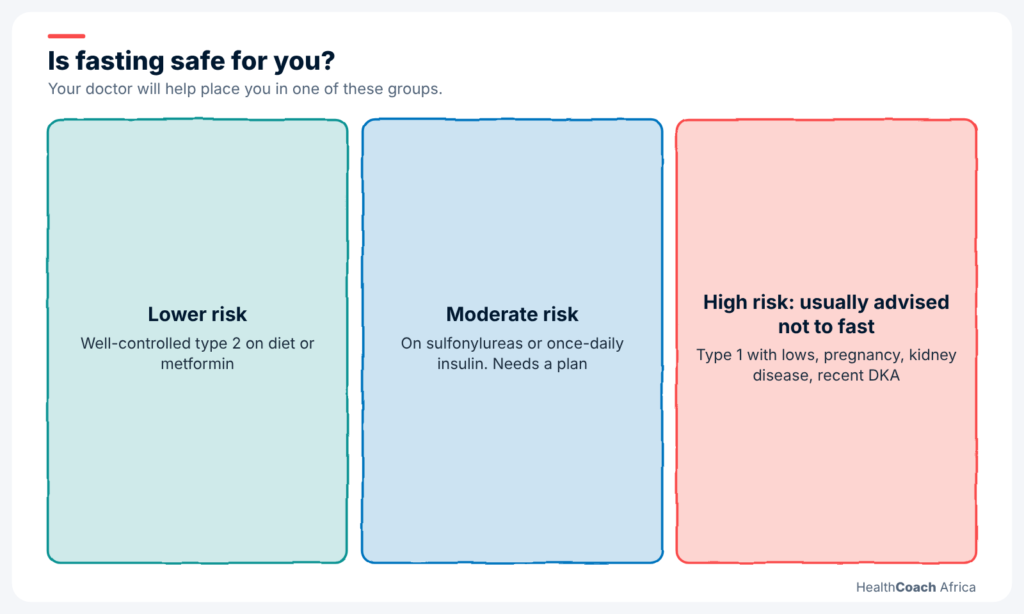
Risk groups for fasting safely with diabetes, from lower risk to people advised not to fast
A risk check six to eight weeks before the fast guides every other decision.
Before deciding to fast, your doctor will consider your type of diabetes, your treatment, your recent blood sugar control and any complications. People on insulin or sulfonylureas face a higher risk than people on diet or metformin alone. Your age, the length of the daily fast and the weather also matter. This risk check is the first step in fasting safely with diabetes.
Who should not fast
Fasting carries a very high risk for some people. You are usually advised not to fast if you:
Have type 1 diabetes with poor control or frequent lows
Have had a severe hypo or ketoacidosis in the past three months
Cannot recognise when your blood sugar is low
Are pregnant and have diabetes
Have advanced kidney disease or are on dialysis
Have serious heart disease
Are frail or elderly with other illnesses
People with well-controlled type 2 diabetes on diet or metformin alone usually face a lower risk.
HUBPHARM PHARMACIST’S NOTE
Changing medicine times for a fast is where most problems start. A tablet moved to the wrong meal, or an unchanged insulin dose, can cause a dangerous low in the afternoon. Send your current prescription to a HubPharm pharmacist at least two weeks before the fast. We will prepare a written timetable with your doctor’s changes, check every tablet for low blood sugar risk and supply glucose tablets and test strips. During the fast, message us any reading below 70 mg/dL or above 300 mg/dL, and we will help you act.
Adjusting your medicines
Never change medicines without advice. Your team may suggest changes such as:
Metformin: usually continued1, but the dose may be split between the evening and pre-dawn meals.
Sulfonylureas, such as glibenclamide or gliclazide2: these can cause lows during fasting. Glibenclamide is usually avoided. Doses of others may be reduced and given with the evening meal.
Insulin: doses are often reduced3, and timing changed. Long-acting insulin may be reduced by about a fifth to a third, but your team will set the exact dose.
Newer tablets, such as SGLT2 inhibitors: these may increase dehydration and need special advice.
Fasting safely with diabetes depends on getting these adjustments right before the first day.
Checking blood sugar during the fast
Checking your blood sugar with a finger-prick test does not break the fast, according to many Islamic scholars. Test regularly, especially:
Before the pre-dawn meal
Mid-morning and mid-afternoon
Before breaking the fast
Two hours after the evening meal
Whenever you feel unwell
When to break the fast
Your health comes first. Break the fast immediately if:
Blood sugar falls below 70 mg/dL (3.9 mmol/L)
Blood sugar rises above 300 mg/dL (16.7 mmol/L)
You feel shaky, sweaty, confused or faint
You have signs of dehydration, such as dizziness or very dark urine
You become unwell with vomiting or fever
Treat a low with fast-acting sugar, then eat a proper meal.
Signs of low blood sugar to watch for
Know the early signs of a low, so you can act quickly:
Shaking or trembling
Sweating
Feeling hungry, weak or dizzy
A fast heartbeat
Blurred vision
Confusion, irritability or unusual behaviour
Lows are more likely in the late afternoon, towards the end of the fast. Plan a test at this time.
Eating for safer fasting
The pre-dawn meal, called sahur or suhoor during Ramadan, should be eaten as late as possible. Choose slow-release foods that keep sugar steady:
Beans, moi moi or akara
Oats or whole grains
Eggs, fish or chicken
Vegetables
Plenty of water
When breaking the fast, start with water and one or two dates, then wait a little before the main meal. Avoid overeating. Limit fried foods, sugary drinks, sweet zobo, puff-puff and large portions of rice. Eat plenty of vegetables and protein.
Stay hydrated
Drink plenty of water between sunset and dawn. Avoid caffeine, which increases fluid loss. In hot weather, rest in a cool place during the day and avoid strenuous activity. Light activity, such as a short walk after the evening meal, is helpful.
Night prayers and activity
Long night prayers, such as Tarawih during Ramadan or night vigils, add physical activity. Bring water and a small snack, and test your blood sugar before and after. Avoid heavy exercise during fasting hours. If you exercise, do it after the evening meal.
Fasting safely with diabetes and older adults
Older adults are more prone to dehydration and lows. They may not notice symptoms early. Families should check on elderly relatives during the fast, encourage water after sunset and help with blood sugar tests. If an older person becomes confused, sleepy or weak, test their blood sugar straight away and seek help.
Make a written plan
Write down your medicine changes, testing times and when to break the fast. Keep a copy at home and share it with a family member. A clear plan makes fasting safely with diabetes easier to follow, especially in the first week when changes are new.
Christian fasts and partial fasts
Many Christian fasts allow food in the evening or after noon. Even these partial fasts can cause lows if you take insulin or sulfonylureas in the morning. Discuss your plan with your doctor. You may need to move or reduce your morning dose. Carry glucose tablets or sweets at all times, and tell someone at church that you have diabetes.
After the fast ends
When the fasting period ends, return to your usual medicine doses and meal pattern with your doctor’s guidance. Avoid heavy feasting at celebrations, which can cause high readings. Review how the fast went with your team. Notes on your readings help plan future fasts.
After a hypo during the fast
If you had to break the fast because of a low, do not try to fast again that day. Tell your doctor, because your medicine plan may need further changes for the days ahead.
Usually continued, often split between the evening and pre-dawn meals.
2
Sulfonylureas (such as gliclazide)
Prescription only
Higher risk of lows when fasting. Doses often changed.
3
Insulin
Prescription only, keep refrigerated
Doses usually reduced and timing changed during a fast.
To order any of these, or to ask a pharmacist a question first, message HubPharm on WhatsApp or visit hubpharmafrica.com. Prescription medicines are supplied against a valid prescription.
Nigerian Diet for Diabetes: A Practical Guide to Eating Well A diagnosis of diabetes often comes with a long list of foods you are told to stop eating. Many people believe they must give up eba, rice, yam and plantain for ever. That is not…
Low Blood Sugar Symptoms: Warning Signs and What to Do Fast Most conversations about diabetes focus on high blood sugar. Yet for people who use insulin or certain tablets, the more immediate danger is sugar that drops too low. Low blood sugar symptoms can progress from…
Nutrition During Cancer Treatment: What to Eat and Why Cancer and its treatment place heavy demands on the body. Chemotherapy, radiotherapy and surgery all increase your need for energy and protein, while side effects such as nausea and mouth sores make eating harder. Good…
Gestational Diabetes Diet Tips: Eating Well for You… Being told you have diabetes in pregnancy can be a shock. Many women worry about their baby and wonder what they can still eat. The good news is that most women with gestational diabetes can…