Being told you have diabetes in pregnancy can be a shock. Many women worry about their baby and wonder what they can still eat. The good news is that most women with gestational diabetes can keep their blood sugar in a healthy range by changing what and how they eat. This guide shares practical gestational diabetes diet tips built around familiar Nigerian meals. It also explains blood sugar targets, exercise and when medicine may be needed.
What is gestational diabetes?
Gestational diabetes is high blood sugar that develops during pregnancy in a woman who did not have diabetes before. Pregnancy hormones make the body less sensitive to insulin, the hormone that moves sugar from the blood into cells. In most women, the pancreas makes extra insulin to cope. When it cannot keep up, blood sugar rises.
It usually appears in the second half of pregnancy. Many hospitals test for it between 24 and 28 weeks with an oral glucose tolerance test. Women at higher risk may be tested earlier.
Why blood sugar control matters
High blood sugar in pregnancy passes to the baby. The baby then makes extra insulin and stores the extra sugar as fat. This can lead to:
A very large baby, making delivery more difficult
A higher chance of caesarean section
Low blood sugar in the baby after birth
Breathing problems and jaundice in the newborn
A higher risk of stillbirth if blood sugar stays very high
Keeping blood sugar in range greatly lowers these risks. Diet is the first and most important step.
Who is at higher risk?
Women who are overweight
Women who had gestational diabetes in a previous pregnancy
Women who previously had a baby weighing 4.5 kg or more
Women with a parent or sibling with diabetes
Women with polycystic ovary syndrome
Women over 35
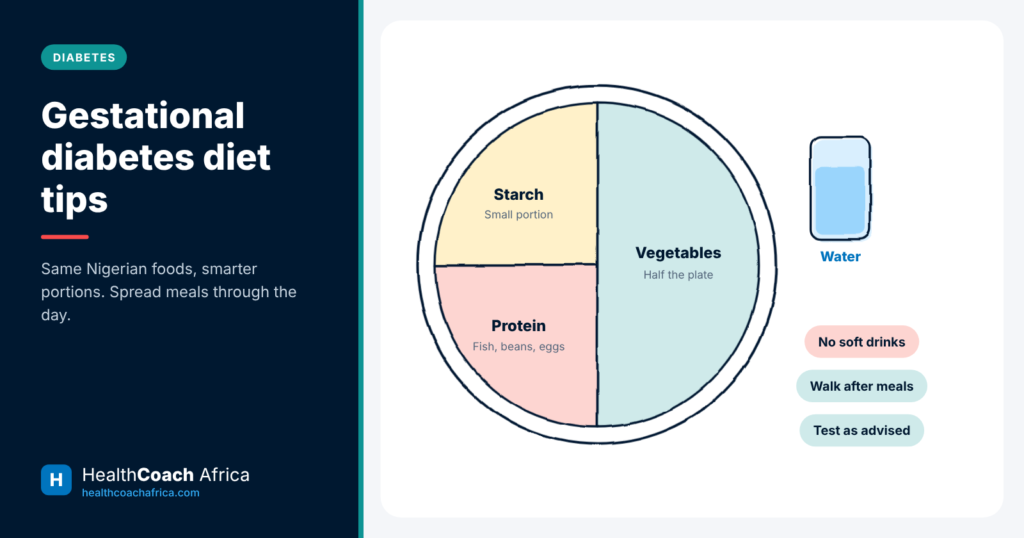
Gestational diabetes diet tips: the balanced plate
A simple way to plan meals is the plate method. Picture your plate in four parts:
Half the plate: vegetables, such as efo, ugwu, okra, garden egg, cabbage, carrots and salad
One quarter: protein, such as fish, chicken without skin, eggs, beans, moi moi or lean meat
One quarter: starch, such as a small portion of brown rice, boiled yam, sweet potato or a small wrap of swallow
Add a little healthy fat, such as a small amount of palm oil or groundnut oil, and drink water with meals.
Choosing and sizing your starch
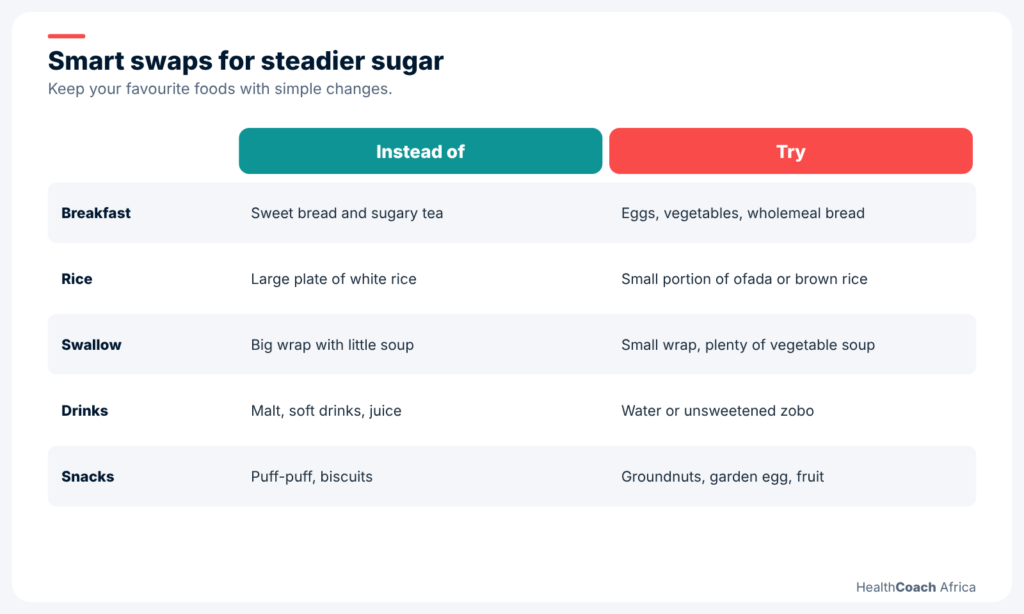
Food swap guide with gestational diabetes diet tips for common Nigerian meals and drinks
Pair every starch with protein and vegetables to slow the rise in sugar.
Starchy foods raise blood sugar more than any other food. You do not need to cut them out, but portion size matters most. Practical gestational diabetes diet tips for starch include:
Use a smaller plate or bowl
Measure rice with a cup at first, so you learn what a portion looks like
Choose unpolished rice, ofada rice, beans and whole grains more often than white rice and white bread
Eat swallow in smaller wraps, with plenty of vegetable soup
Pair starch with protein and vegetables, which slows the rise in sugar
Avoid eating two starches at one meal, such as rice with plantain and bread
A sample day of meals
This example day shows how gestational diabetes diet tips fit into normal Nigerian eating. Adjust portions with your dietitian:
Breakfast: two boiled eggs with sautéed vegetables and one slice of wholemeal bread
Mid-morning: a small orange and a handful of groundnuts
Lunch: a small portion of ofada rice with fish stew, plenty of vegetables and water
Afternoon: cucumber and carrot sticks with a boiled egg
Dinner: a small wrap of swallow with efo riro and chicken
Bedtime, if advised: plain yoghurt or a glass of milk
Breakfast matters
Blood sugar is often highest in the morning because of pregnancy hormones. Many women find that a sweet or starchy breakfast pushes their readings up. Good breakfast choices include:
Eggs with vegetables and a slice of wholemeal bread
Moi moi or akara with a small portion of pap made without sugar
Unsweetened oats with milk and a few groundnuts
Boiled plantain, not too ripe, with egg sauce
Avoid sweetened cereals, cornflakes with sugar, sweet bread and tea with several spoons of sugar.
Smart snacks
Eating three small meals and two or three snacks spreads sugar through the day. Choose snacks that combine fibre and protein:
A handful of groundnuts or cashews
Boiled egg
Garden egg with groundnut paste
A small apple, pear, orange or guava
Plain yoghurt without added sugar
Cucumber and carrot sticks
A small bedtime snack may help prevent very high morning readings. Ask your diabetes team.
Drinks and fruit
Sugary drinks raise blood sugar very quickly. Avoid soft drinks, malt drinks, sweetened juices, energy drinks and sweetened zobo or kunu. Water is the best choice. Unsweetened zobo, lemon water and plain tea are good alternatives.
Fruit is healthy, but spread it through the day and eat it whole rather than as juice. Very sweet fruits, such as ripe mango, ripe pawpaw and ripe banana, are best in small portions.
HUBPHARM PHARMACIST’S NOTE
Testing four times a day can feel overwhelming, and many women are unsure whether a reading is good or bad. Message a HubPharm pharmacist for a starter kit with a genuine glucose meter, strips and lancets, and a simple log sheet that shows your targets. Send us a photo of your readings each week, and we will help you spot patterns, such as a meal that always pushes your sugar up. If you start metformin or insulin, we will show you how to take it, store it and recognise low blood sugar.
Blood sugar targets
Your team will give you a meter1 and explain when to test. Common targets during pregnancy are:
One hour after meals: below 140 mg/dL (7.8 mmol/L)
Two hours after meals: below 120 mg/dL (6.7 mmol/L)
Targets vary slightly between hospitals. Follow the numbers your team gives you. Write every reading down and bring the record to each visit.
Eating out and family events
Parties, naming ceremonies and church events often serve jollof rice, fried rice, small chops and soft drinks. You can still enjoy them. Eat a small healthy snack before you go. Choose grilled chicken or fish and salad where available. Take a small portion of rice, skip the soft drinks and ask for water. Take a short walk afterwards. These gestational diabetes diet tips help you celebrate without a sharp rise in sugar.
Coping with worry
Many women feel guilty or anxious after the diagnosis. Gestational diabetes is not caused by anything you did wrong. Pregnancy hormones are the main driver. Share your feelings with your partner, midwife or a friend. Ask your family to eat the same healthy meals, so you do not feel left out. Their support makes it easier to keep going.
Gestational diabetes diet tips: what to limit
Limit these foods, which push blood sugar up quickly:
Soft drinks, malt drinks and sweetened juices
Cakes, biscuits, doughnuts and puff-puff
Sweet bread and white bread in large amounts
Large portions of white rice, pounded yam or eba
Very ripe fruit in large portions
Stay active
Gentle activity helps your muscles use sugar. A 15 to 30 minute walk after meals is one of the most effective ways to lower readings. Other safe options include swimming and pregnancy exercise classes. Avoid activities with a risk of falling or contact. Stop and seek advice if you feel dizzy, breathless or have pain or bleeding.
When diet is not enough
If your readings stay above target despite diet and activity, your doctor may prescribe medicine. Metformin tablets2 or insulin injections are commonly used3. Insulin is safe for the baby and does not cross the placenta. Needing medicine does not mean you have failed. Pregnancy hormones are powerful, and many women need extra help as pregnancy progresses.
After the baby is born
Gestational diabetes usually goes away after delivery. However, it raises your risk of type 2 diabetes later in life. Have a blood sugar test six to 13 weeks after birth, and then at least every year. Breastfeeding, a healthy weight and regular activity lower your future risk. These gestational diabetes diet tips are good habits to keep for life.
For checking fasting and after-meal readings during pregnancy.
2
Metformin
Prescription only
Tablet used when diet alone does not control blood sugar in pregnancy.
3
Insulin
Prescription only, keep refrigerated
Safe in pregnancy. Does not cross the placenta.
To order any of these, or to ask a pharmacist a question first, message HubPharm on WhatsApp or visit hubpharmafrica.com. Prescription medicines are supplied against a valid prescription.
National Institute for Health and Care Excellence. Diabetes in pregnancy: management from preconception to the postnatal period (NG3). https://www.nice.org.uk/guidance/ng3
Gestational Diabetes in Pregnancy: What Every Mother… Gestational diabetes is high blood sugar that develops during pregnancy in a woman who did not have diabetes before. It is becoming more common in Nigeria as more women enter pregnancy overweight or at an…
Nigerian Diet for Diabetes: A Practical Guide to Eating Well A diagnosis of diabetes often comes with a long list of foods you are told to stop eating. Many people believe they must give up eba, rice, yam and plantain for ever. That is not…
Nutrition During Cancer Treatment: What to Eat and Why Cancer and its treatment place heavy demands on the body. Chemotherapy, radiotherapy and surgery all increase your need for energy and protein, while side effects such as nausea and mouth sores make eating harder. Good…
Childhood Type 1 Diabetes: A Guide for Nigerian Families Many people think diabetes only affects older, overweight adults. However, children can develop diabetes too, and most children with diabetes have type 1. In Nigeria, childhood type 1 diabetes is often missed until the child…