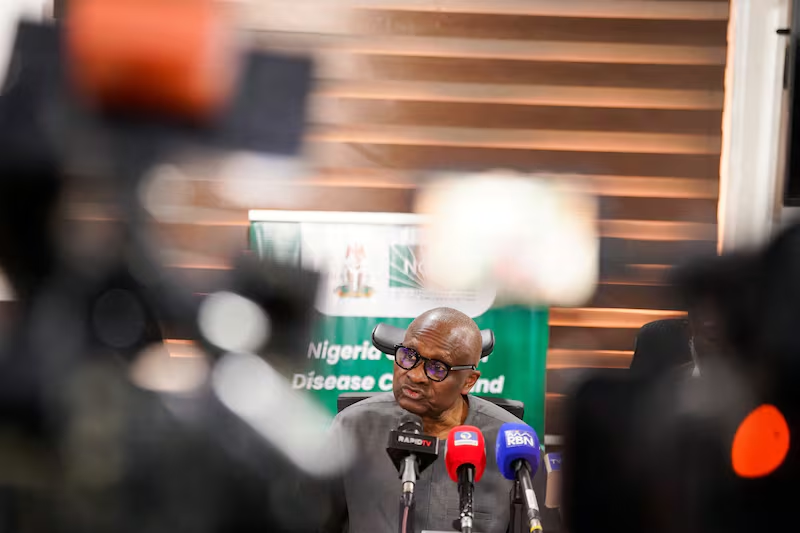
ABUJA, NIGERIA — Nigeria has completed Nigeria Ebola contact monitoring for all 62 people linked to its imported case of Bundibugyo virus disease without recording a single secondary infection, the Nigeria Centre for Disease Control and Prevention (NCDC) said on Friday, 13 November, Reuters and the News Agency of Nigeria reported.
NCDC Director-General Dr Jide Idris announced the results at a news conference in Abuja and said the last contact was discharged on Friday after completing the 21-day observation period.
What the Nigeria Ebola contact monitoring found
Of the 62 contacts, 13 developed fever or other non-specific symptoms during monitoring, but laboratory tests confirmed that all were negative for the virus, according to the reports. Seven suspected Ebola alerts in Adamawa, Rivers, Borno, Lagos and Ekiti states over the previous three weeks also tested negative.
The index case was confirmed on 20 October in the Federal Capital Territory (FCT). Health workers at an accredited private facility flagged the patient through the NCDC’s event-based surveillance system, according to Political Economist, citing NAN. The patient, a woman who had travelled from Uganda, and her husband were medically evacuated to Switzerland on 26 October. She has since recovered, tested negative and been discharged.
Nigeria Ebola contact monitoring ran for the full 21-day period because that is the longest time it can take for symptoms to appear after exposure to the virus. A contact who remains well for 21 days after the last exposure is considered free of infection.
Not yet over
Idris stressed that completing contact monitoring does not mean Nigeria is formally free of Ebola. “Completing contact monitoring does not remove the risk of possible Ebola importation,” he said. Under WHO protocols, a country must complete a 42-day countdown from the recovery or departure of the last confirmed patient before declaring an outbreak over.
As general background, Bundibugyo virus is one of the species of ebolavirus that cause severe disease in humans. The licensed Ebola vaccine used in recent outbreaks protects against the Zaire species, not Bundibugyo, which makes early detection, isolation and contact tracing the main tools for stopping spread.
The National Emergency Operations Centre remains activated, and the Incident Management System is at Level Three, the highest response tier, according to the reports. The NCDC urged the public and health workers not to assume every fever is malaria.
The NCDC said the response will remain active while the countdown continues, and urged health workers to keep a high index of suspicion for Ebola in patients with fever and a relevant travel history.
Why no secondary cases matters
Containing an imported case without onward spread is a significant public health achievement. In 2014, a single imported case in Lagos led to 19 further infections and eight deaths in total before Nigeria contained the outbreak.
Kenya, which also recorded an imported case in October, has had a different experience, with secondary infections recorded there. A Kenyan pathologist, Dr Ahmed Kalebi, has called for a comparative review of exposure patterns in Kenya, Uganda and Nigeria to understand why outcomes differed, Kenya Today reported on 15 November.
Early recognition by the private facility that first saw the patient was crucial. When Ebola is suspected quickly, health workers can use protective equipment, isolate the patient and begin tracing contacts before transmission occurs.
Contact tracing involves listing everyone who may have been exposed to a patient, including family members, health workers and fellow travellers, and checking on each of them every day for fever or other symptoms. It is labour intensive, but it is the most reliable way to stop an outbreak at its source.
The Nigeria Ebola contact monitoring exercise also tested the country’s laboratory network, since every symptomatic contact and every alert had to be tested quickly so that results could guide the response.
Remaining risks
The Bundibugyo outbreak in the Democratic Republic of Congo continues to grow, with the DRC Health Ministry reporting more than 11,000 cases and WHO reporting a slightly lower total. Nigeria’s position as a major travel hub means new importations remain possible.
Health workers are advised to ask patients with fever about recent travel, use standard infection prevention measures with every patient and report suspected cases immediately. Members of the public who develop fever after travel to affected countries should call the NCDC toll-free line, 6232, before visiting a facility.
The successful Nigeria Ebola contact monitoring outcome is a milestone, but the NCDC said vigilance must continue until the outbreak is formally declared over.
Why it matters: Nigeria stopped Ebola at one case through early detection and tracing, but the 42-day countdown and regional risks remain.
NCDC Says Three Ebola Contacts With Symptoms Tested Negative LAGOS, NIGERIA — Three Nigerian Ebola contacts who developed symptoms last week tested negative, and Ebola surveillance in Nigeria will continue for all 54 primary contacts of the country’s only confirmed patient, the Director-General of…
Nigeria Marks 21 Days Without New Ebola Case as… ABUJA, NIGERIA — Nigeria has recorded no further confirmed Ebola case in the 21 days since it confirmed an imported Bundibugyo virus infection, the Nigeria Centre for Disease Control and Prevention (NCDC) said in a Nigeria…
Lassa Fever Warning Signs: Early Action Saves Lives Lassa fever is a viral illness that is found in West Africa, and Nigeria reports more cases than any other country. Each year, outbreaks peak during the dry season, from about December to April. In…
NCDC Expects to Finish Monitoring 62 Ebola Contacts… ABUJA, NIGERIA — Nigeria Ebola contact monitoring is expected to end by 13 November, when the last of 62 people exposed to the country’s only confirmed case complete their follow-up period, the Nigeria Centre for…