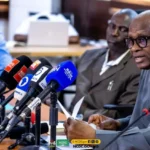
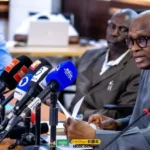
LAGOS, NIGERIA — Three Nigerian Ebola contacts who developed symptoms last week tested negative, and Ebola surveillance in Nigeria will continue for all 54 primary contacts of the country’s only confirmed patient, the Director-General of the Nigeria Centre for Disease Control and Prevention (NCDC), Dr Jide Idris, said.
“Three contacts developed symptoms and were tested, but all returned negative results,” Idris said at a virtual capacity-building workshop for journalists on Ebola reporting held on Tuesday in Lagos, according to a News Agency of Nigeria (NAN) report published by Vanguard. “However, we cannot stop monitoring them because the results are reassuring.”
Why Ebola surveillance in Nigeria continues
Idris cautioned against premature declarations. “The fact that we currently have no confirmed case does not mean we should declare Nigeria Ebola-free,” he said. “We must continue surveillance and ensure that all contacts are properly monitored.”
Most of the 54 contacts are quarantined in Abuja, and a few are self-quarantining at home, NAN reported. They remain under daily surveillance. The NCDC has approved ₦100,000 a week in support for quarantined contacts and is engaging the Federal Capital Territory Administration on its responsibilities towards people in quarantine. The response hotline is 6232.
Nigeria confirmed the imported case of Bundibugyo virus disease on 20 October after the patient returned to Abuja from Uganda. She was evacuated to Switzerland with her husband on 26 October at the request and expense of the Swiss government, according to the report.
Idris also dismissed rumours linking the Ebola response to a possible postponement of the 2027 general elections. He said earlier this week that there was currently no need to postpone the polls, which the Independent National Electoral Commission has fixed for 16 January 2027.
According to World Health Organization figures cited by Premium Times on 29 October, Nigeria has recorded one imported case and no deaths, and 54 contacts were traced and under follow-up as of 26 October.
Counting down to an Ebola-free declaration
Coordinating Minister of Health and Social Welfare Muhammad Pate has said Nigeria could declare its Ebola outbreak over as early as 7 December if no further confirmed or probable cases are detected. That date depends on the NCDC and the WHO validating a 42-day countdown, equal to two full 21-day incubation periods.
Testing contacts who develop symptoms is a key part of Ebola surveillance in Nigeria. Early signs of Ebola, such as fever, headache, muscle pain and weakness, are common to many illnesses, including malaria, so laboratory testing is the only way to rule infection in or out. A negative result is reassuring, but contacts must still complete their full monitoring period, because symptoms can appear up to 21 days after the last exposure.
Daily monitoring typically involves a health worker checking each contact’s temperature and asking about symptoms, in person or by phone, so that any change triggers immediate testing. Ebola surveillance in Nigeria also relies on alerts from hospitals and the public, and the NCDC hotline, 6232, is one route for reporting suspected cases.
Channels Television reported on 26 October that many of the 54 contacts were in quarantine, consistent with NAN’s account that most are in facilities in Abuja and a few at home. Nigeria contained its 2014 outbreak after 20 cases and eight deaths through rapid tracing and monitoring of contacts, experience that still shapes the response.
The workshop for journalists reflects the NCDC’s concern about misinformation. Idris warned at the weekend that false information can create fear and discourage people from reporting symptoms, and urged Nigerians to rely on verified sources. Accurate reporting helps contacts understand why they are being monitored and encourages people with symptoms to seek care rather than hide.
The response has also exposed gaps. Idris acknowledged this week that some treatment isolation centres across the country have broken down, including one in Abuja, and said the federal agency had to fund the quarantine allowance after expected state support did not arrive.
Health workers are advised to isolate any suspected case without waiting for laboratory confirmation and to report it immediately.
Across the region, the outbreak has passed 10,000 confirmed cases, almost all in the Democratic Republic of the Congo, and Africa CDC has warned that the continent is not yet winning the fight.
Vanguard’s page did not display a publication date; the workshop is dated to Tuesday, 27 October, from the report’s references to the patient’s evacuation.
Why it matters: Negative tests are reassuring, but monitoring every contact to the end is what allows Nigeria to declare itself Ebola-free.
NCDC Says Allowance Followed Threats by Contacts to… Nigeria’s disease control agency began paying ₦100,000 a week to Ebola contacts in quarantine after some of them threatened to leave, and the payment was neither planned nor budgeted, the Director-General of the Nigeria Centre…
Newly Diagnosed With Breast Cancer? Your First 30 Days Guide If you have just been newly diagnosed with breast cancer, start here. You do not need to understand everything today. You need to know what to do next, and in what order. This guide breaks…
NCDC Explains Ebola Evacuation as Nigeria Eyes… ABUJA, NIGERIA — Clarifying diplomatic and biosecurity protocols behind recent aeromedical logistics, the NCDC explains ebola evacuation procedures for Nigeria's index patient to Switzerland while establishing a provisional December 7 target date to declare the…
Nigeria Tracks 53 Ebola Contacts, Approves Weekly… ABUJA, NIGERIA — As nigeria tracks 53 ebola primary contacts following expanded epidemiological tracing around its confirmed case, the Nigeria Centre for Disease Control and Prevention (NCDC) has approved a direct weekly allowance of ₦100,000…