Burning when you pass urine, needing the toilet every few minutes and a dull ache in the lower belly are hard to ignore. Urinary tract infections are among the most common infections, especially in women. Many people treat them by buying antibiotics from a chemist without a test. Sometimes this works. Often the wrong medicine is used, the infection returns and bacteria become harder to treat. This guide explains urinary tract infection treatment that works, when to see a doctor and how to prevent repeat infections.
What is a urinary tract infection?
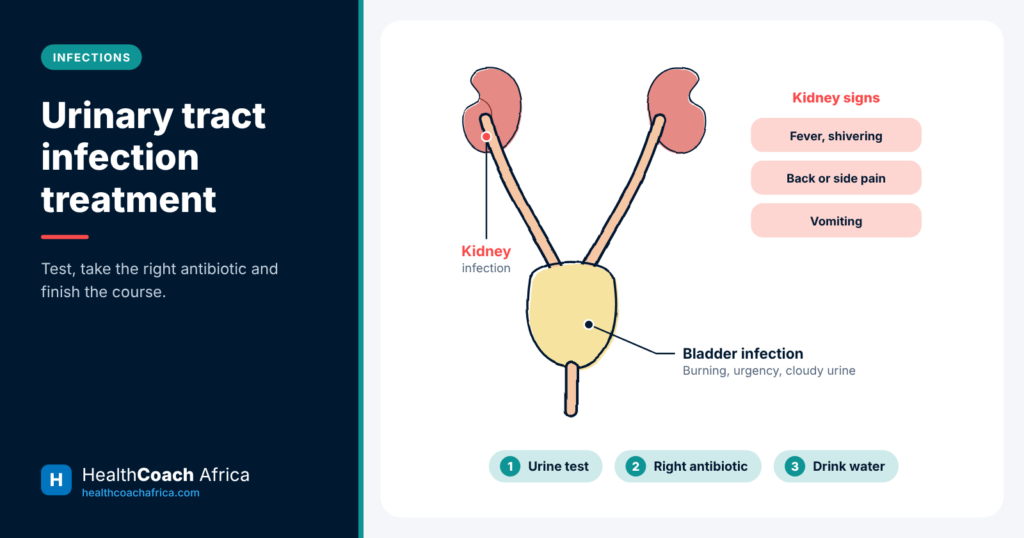
A urinary tract infection (UTI) happens when bacteria, usually from the bowel, enter the urinary system. The urinary system includes:
The urethra, the tube that carries urine out of the body
The bladder, where urine is stored
The ureters, which carry urine from the kidneys to the bladder
The kidneys, which filter the blood and make urine
Most UTIs affect the bladder, an infection called cystitis. Infection that spreads to the kidneys is more serious.
Who gets UTIs?
Women get UTIs far more often than men, because the urethra is shorter and closer to the anus. Other risk factors include:
Sexual activity
Pregnancy
Menopause
Diabetes
Kidney stones or anything blocking urine flow
An enlarged prostate in men
Using a urinary catheter
Not drinking enough water
Symptoms of a bladder infection
Burning or pain when passing urine
Needing to pass urine often and urgently
Passing small amounts of urine
Cloudy, dark or strong-smelling urine
Blood in the urine
Pain in the lower belly
Older adults may become confused or unusually weak without typical symptoms. Babies and young children may have fever, vomiting, poor feeding or irritability.
Signs of a kidney infection
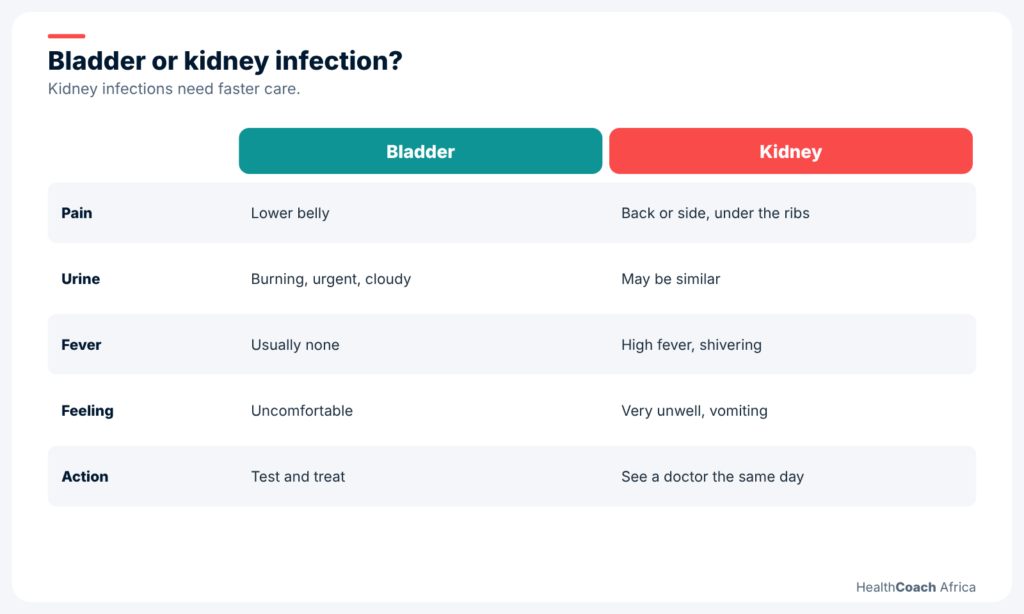
Comparison of bladder and kidney infection symptoms to guide urinary tract infection treatment
Pregnant women, men and children with UTI symptoms should see a doctor.
A kidney infection needs prompt medical care. Signs include:
High temperature and shivering
Pain in the back or side, under the ribs
Nausea and vomiting
Feeling very unwell
Seek urgent care if you have these symptoms, especially if you are pregnant, have diabetes or are a man.
Getting tested
A urine test helps confirm the infection. A dipstick test gives a quick result. A urine culture, done in a laboratory, identifies the bacteria and shows which antibiotics will work. Culture is especially important for men, pregnant women, children, people with repeat infections and anyone whose infection has not cleared after treatment.
To give a clean sample, wash your hands, clean the genital area, pass the first part of the urine into the toilet and collect the middle part in a sterile container.
Urinary tract infection treatment
Most bladder infections are treated with a short course of antibiotics. Common choices include nitrofurantoin1, fosfomycin and others chosen according to local resistance patterns and your health. The doctor or pharmacist will choose based on:
Whether you are a woman, man, child or pregnant
Whether the infection is in the bladder or kidneys
Your urine culture results, if available
Your kidney function and other medicines
Allergies
Women with a simple bladder infection often need just three days of treatment. Men, pregnant women and people with kidney infections usually need longer courses. Take every dose as prescribed, even if you feel better.
HUBPHARM PHARMACIST’S NOTE
Many people arrive at our pharmacies having already taken two or three different antibiotics for the same urine infection. Message a HubPharm pharmacist before you buy anything. Tell us your symptoms, whether you are pregnant and what you have already taken. We will tell you whether a urine test is needed first, which antibiotic is appropriate if a prescriber recommends one and how to take every dose. Men, pregnant women and anyone with fever or back pain should see a doctor promptly.
Why self-medication often fails
Many people buy antibiotics such as ciprofloxacin or amoxicillin without a test. In Nigeria, bacteria that cause UTIs are often resistant to these older antibiotics. Using the wrong one, stopping early or taking too low a dose can:
Leave the infection untreated
Allow it to spread to the kidneys
Help resistant bacteria grow
Always ask a health worker which antibiotic is right for you. Proper urinary tract infection treatment protects you and slows antibiotic resistance in the community.
Urinary tract infection treatment and antibiotic resistance
Antibiotic resistance is a growing problem worldwide. When bacteria are exposed to antibiotics that do not kill them, resistant bacteria survive and multiply. This makes future infections harder and more expensive to treat. Good urinary tract infection treatment means using the right antibiotic, at the right dose, for the right length of time, after a proper assessment. Never share antibiotics or keep leftover tablets for later.
Urinary tract infection treatment for children
UTIs in children need a doctor’s assessment. Babies and young children may not have typical symptoms. Fever without an obvious cause should prompt a urine test. Children with a UTI usually need antibiotics and sometimes a scan to check for problems in the urinary system. Prompt treatment protects the kidneys as they grow.
Easing symptoms
While antibiotics work:
Drink plenty of water
Take paracetamol for pain if needed2
Rest
Avoid caffeine and alcohol, which can irritate the bladder
Symptoms usually start to improve within two days. If they do not, or they get worse, return to your health worker.
UTIs in pregnancy
Pregnant women are more likely to develop kidney infections, which can trigger early labour. Pregnant women may also have bacteria in the urine without symptoms. Antenatal urine tests help detect this. Some antibiotics are not safe in pregnancy, so never self-treat. See your antenatal team.
UTIs in men
UTIs are less common in men. When they happen, they may point to an underlying problem, such as an enlarged prostate or a stone. Men with UTI symptoms should see a doctor for a urine culture and an examination.
Preventing UTIs
Drink enough water to pass pale urine
Pass urine when you need to, rather than holding it
Pass urine soon after sex
Wipe from front to back after using the toilet
Avoid perfumed soaps, douches and sprays in the genital area
Wear cotton underwear
Manage diabetes well
Is it a UTI or something else?
Several conditions can cause similar symptoms:
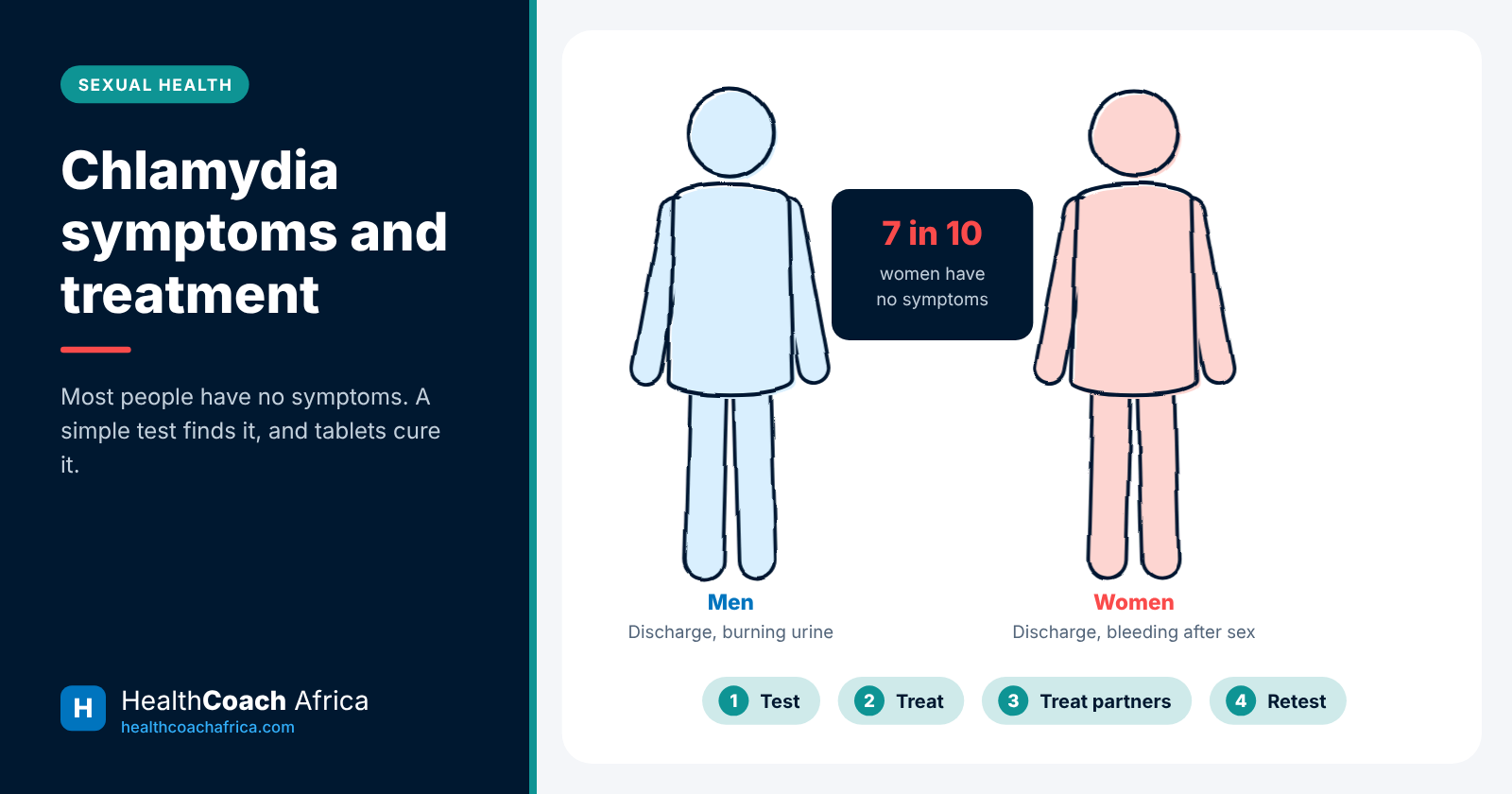
Sexually transmitted infections, such as chlamydia and gonorrhoea
Vaginal thrush or bacterial vaginosis
Kidney stones
Prostate problems in men
Bladder irritation from soaps or sprays
If symptoms keep returning or tests do not show a clear infection, ask your doctor to look for other causes. Correct diagnosis is the first step in effective urinary tract infection treatment.
UTIs and diabetes
People with diabetes are more likely to have UTIs, and infections can be more serious. High blood sugar in the urine helps bacteria grow. Keeping blood sugar under control lowers the risk. Some diabetes tablets increase the chance of genital infections, so good hygiene and plenty of water are important.
Repeat infections
Some women have repeat UTIs. A doctor may recommend further tests, such as an ultrasound scan. Options may include a low-dose antibiotic after sex or for a few months, vaginal oestrogen after menopause and lifestyle changes. Do not take long-term antibiotics without medical supervision.
Questions to ask your health worker
Do I need a urine culture before treatment?
Which antibiotic is best for me, and for how many days?
What should I do if symptoms do not improve in two days?
How can I prevent repeat infections?
Finish the course
Finishing every dose of the prescribed antibiotic is part of good urinary tract infection treatment, even when you feel better after a day.
Common treatment for simple bladder infections in women.
2
Paracetamol
Over the counter
Eases pain while antibiotics work.
To order any of these, or to ask a pharmacist a question first, message HubPharm on WhatsApp or visit hubpharmafrica.com. Prescription medicines are supplied against a valid prescription.
National Institute for Health and Care Excellence. Urinary tract infection (lower): antimicrobial prescribing (NG109). https://www.nice.org.uk/guidance/ng109
Urinary Tract Infection Symptoms, Causes and Treatment A burning feeling when you pass urine is hard to ignore. Urinary tract infections, or UTIs, are among the most common bacterial infections, and at least half of all women will have one at some…
Gonorrhoea Symptoms and Treatment: What You Need to Know Gonorrhoea is one of the most common sexually transmitted infections. It is caused by bacteria that infect the genitals, rectum and throat. Many people, especially women, have no symptoms and do not know they are…
Chlamydia Symptoms and Treatment: The Silent… Chlamydia is one of the most common sexually transmitted infections in the world. Most people who have it feel completely well. Without testing, it can quietly damage the reproductive organs and cause infertility, especially in…
Sickle Cell Pain Crisis: Triggers, Home Care and Red Flags Nigeria has more people living with sickle cell disease than any other country, and about 150,000 babies are born with the condition here every year. For most of them, the defining experience is pain. A…