Nigeria’s Lassa fever fatality rate has risen to 23.4 per cent so far in 2026, up from 18.3 per cent at the same point last year, according to the Nigeria Centre for Disease Control and Prevention (NCDC), Arise News reported on 14 November.
The NCDC’s latest Lassa Fever Situation Report, covering epidemiological week 44 (26 October to 1 November), recorded 179 suspected cases, 13 confirmed cases and four deaths. Confirmed cases rose from nine the previous week.
What the Lassa fever fatality rate shows
Between weeks 1 and 44 of 2026, Nigeria recorded 8,968 suspected cases, 1,186 confirmed cases and 278 deaths across 26 states and 122 local government areas, the report said. In the same period of 2025, there were 177 deaths among 966 confirmed cases.
The higher Lassa fever fatality rate means that nearly one in four people with confirmed infection this year has died.
Five states account for 87 per cent of confirmed cases: Ondo (37 per cent), Bauchi (23 per cent), Taraba (12 per cent), Edo (10 per cent) and Benue (5 per cent). The remaining 13 per cent came from 21 other states. New confirmed infections in week 44 were reported in Ondo, Bauchi, Edo, Taraba and Nasarawa.
People aged 21 to 30 were the most affected. Confirmed cases ranged from one to 93 years old, with a median age of 31. No new infections among health workers were reported in week 44.
Ondo State, which accounts for more than a third of confirmed cases, has long been one of Nigeria’s main Lassa fever hotspots, along with Edo and Bauchi. The concentration of cases in a few states allows targeted prevention, but the spread to 26 states shows that the disease is not limited to traditional hotspots.
Why so many patients are dying
The NCDC cited “late presentation of patients at health facilities” as a major driver of the high fatality rate, along with the cost of treatment and low public awareness, Arise News reported.
A shortage of laboratory reagents at the testing centre at Irrua Specialist Teaching Hospital could delay diagnosis, the agency said. Irrua is one of Nigeria’s main Lassa fever treatment and research centres.
As general background, Lassa fever can only be confirmed by laboratory testing, usually a PCR test. Nigeria has expanded its network of Lassa testing laboratories in recent years, but reagent shortages at any one centre can create backlogs for surrounding states that depend on it.
The NCDC has deployed rapid response teams to seven high-burden states and developed a 30-day protection plan for health workers, according to the report. NCDC Director-General Dr Jide Idris briefed journalists in Abuja.
At the same briefing, Idris confirmed that Nigeria’s Ebola patient had recovered in Switzerland and tested negative.
How Lassa fever spreads
As general background, Lassa fever is a viral haemorrhagic illness carried by the multimammate rat. People are infected through contact with food or household items contaminated with rat urine or droppings, and the virus can spread between people through contact with blood and body fluids, especially in health facilities without adequate infection control.
Most infections are mild or show no symptoms, but severe cases can cause bleeding, breathing difficulty, shock and organ failure. Early symptoms, such as fever, weakness, headache, sore throat and vomiting, are easily mistaken for malaria or typhoid.
The antiviral ribavirin is most effective when started early, which is why late presentation is so dangerous. Delays in testing, whether due to distance, cost or reagent shortages, also delay treatment.
Reducing the Lassa fever fatality rate therefore depends on getting patients tested and treated within the first few days of illness. That requires public awareness, health workers who suspect the disease early, accessible testing and affordable treatment, since many families cannot pay for prolonged hospital care.
Protecting households and health workers
Lassa fever cases in Nigeria usually peak during the dry season, from about December to April. With the season approaching, prevention measures are important.
Households are advised to store food in rodent-proof containers, keep homes clean, avoid drying food in the open and dispose of rubbish properly. Anyone with a fever that does not improve with malaria treatment should seek care promptly and tell health workers about possible rodent exposure.
Health workers should use standard precautions with all patients and maintain a high index of suspicion. The rising Lassa fever fatality rate shows the cost of delays in reaching care, testing and treatment.
Why it matters: Nearly one in four confirmed Lassa patients has died this year, mainly because people reach care too late for effective treatment.
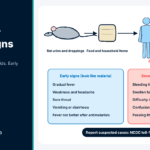
Lassa Fever Warning Signs: Early Action Saves Lives Lassa fever is a viral illness that is found in West Africa, and Nigeria reports more cases than any other country. Each year, outbreaks peak during the dry season, from about December to April. In…
Diabetes in Nigeria: Why Blood Sugar Control Fails Diabetes in Nigeria does not usually fail in the clinic. Among people who reach a specialist and stay in care, control is often reasonable. It fails in the years before anyone tests you, and it…
Newly Diagnosed With Breast Cancer? Your First 30 Days Guide If you have just been newly diagnosed with breast cancer, start here. You do not need to understand everything today. You need to know what to do next, and in what order. This guide breaks…
Breast Cancer Screening in Nigeria: Where to Go and Costs Breast cancer screening in Nigeria confuses people for a simple reason: nobody tells you which test you need. A woman of 32 asks for a mammogram and is told she does not need one. A…