A diagnosis of genital herpes often brings shock, shame and fear. Many people worry that they will never have a normal relationship again. Yet genital herpes is very common worldwide, and most people who have it do not know. For most, it is a manageable skin condition with occasional outbreaks. Effective treatment and simple precautions make living with genital herpes much easier. This guide explains the infection, outbreaks, treatment, relationships and pregnancy.
What is genital herpes?
Genital herpes is caused by the herpes simplex virus (HSV). There are two types:
HSV-2 mainly causes genital herpes.
HSV-1 commonly causes cold sores around the mouth but can also cause genital herpes through oral sex.
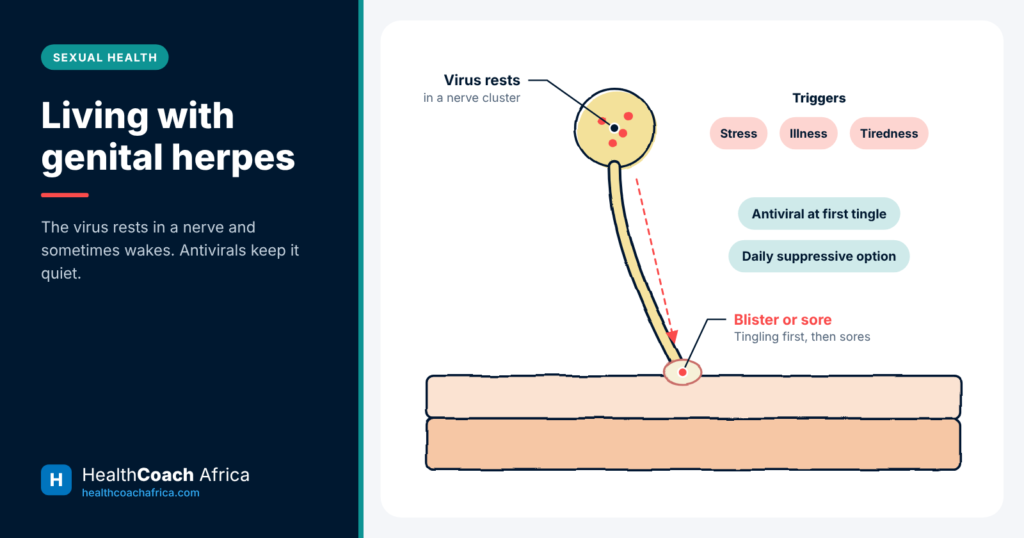
The World Health Organization estimates that hundreds of millions of people worldwide live with genital herpes. After infection, the virus stays in nerve cells for life. It can reactivate from time to time, causing outbreaks.
How it spreads
Herpes spreads through skin-to-skin contact with the genital or anal area, including vaginal, anal and oral sex. It can spread even when there are no visible sores, because the virus can be shed from the skin without symptoms. A mother can pass it to her baby during birth.
Symptoms of a first outbreak
Many people have no symptoms or very mild symptoms. When a first outbreak happens, it often appears within two to twelve days of exposure and can include:
Tingling, itching or burning in the genital area
Small, painful blisters that burst to leave sores
Pain when passing urine
Flu-like symptoms, such as fever, aches and swollen glands in the groin
The first outbreak is usually the most severe and can last two to four weeks.
Recurrent outbreaks
After the first episode, some people have repeat outbreaks. These are usually milder and shorter. Many people notice warning signs, such as tingling or itching, a day or two before sores appear. Outbreaks often become less frequent over time.
Common triggers include:
Stress
Illness or fever
Tiredness
Friction during sex
Menstruation
Weak immunity
How it is diagnosed
A health worker can take a swab from a sore to test for the virus. Testing works best when sores are fresh. Blood tests can show past infection but are less useful for diagnosing a current outbreak. Other conditions, including syphilis, can cause genital sores, so testing is important.
Living with genital herpes: suppressive treatment explained
Suppressive treatment means taking an antiviral tablet every day, even without symptoms. It reduces outbreaks by around 70 to 80 percent in people with frequent recurrences and lowers the chance of passing herpes to a partner. Many people take it for six to twelve months and then review with their doctor. It is safe for long-term use in most people. Ask your doctor whether it suits you.
Treatment options
There is no cure, but antiviral medicines work well:
Episodic treatment: take aciclovir or valaciclovir1 for a few days at the first sign of an outbreak to shorten it.
Suppressive treatment: take a daily antiviral to prevent outbreaks. This is helpful for people with frequent outbreaks and lowers the risk of passing herpes to a partner.
The first outbreak is usually treated with a five-day course or longer. Start treatment as early as possible.
Easing symptoms during an outbreak
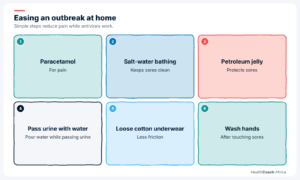
Home care steps for living with genital herpes during an outbreak
Start antiviral tablets at the first tingle for the best effect.
Take paracetamol for pain
Bathe the area in salt water
Apply petroleum jelly to sores2
Pass urine in a bath or while pouring water over the area if it stings
Wear loose cotton underwear
Keep the area clean and dry
Wash hands after touching sores
HUBPHARM PHARMACIST’S NOTE
Antivirals work best when they are started at the first tingle, so it helps to have a supply at home before an outbreak begins. Message a HubPharm pharmacist about keeping aciclovir or valaciclovir on hand, as prescribed, and about whether daily suppressive treatment could suit you. We deliver discreetly, never label parcels with the condition and keep every conversation confidential. We can also help you prepare for a conversation with a new partner.
Living with genital herpes and relationships
Telling a partner can feel frightening. Choose a calm, private time before sex. Explain that herpes is common, manageable and that you can take steps together to lower the risk. Many couples where one partner has herpes have long, healthy relationships.
To reduce the risk of passing it on:
Avoid sex during outbreaks and when you feel warning signs
Use condoms every time
Consider daily suppressive treatment
Avoid oral sex if you have a cold sore
Cold sores and genital herpes
Cold sores around the mouth are usually caused by HSV-1. If you have a cold sore, avoid kissing and oral sex until it has healed completely, because the virus can spread to a partner’s genitals. Wash your hands after touching a cold sore. Antiviral creams or tablets can shorten cold sore outbreaks.
Herpes and HIV
Genital herpes sores make it easier to catch and pass on HIV. People with herpes should be offered an HIV test. People living with HIV may have more frequent or severe outbreaks, and taking HIV treatment helps.
Pregnancy and herpes
Most women with herpes have healthy babies. The greatest risk to the baby is when a woman catches herpes for the first time late in pregnancy. Tell your antenatal team if you or your partner have herpes. You may be offered antiviral medicine in late pregnancy. If you have sores when labour starts, a caesarean section may be recommended. Newborn herpes is rare but serious.
Living with genital herpes: practical tips
Keep a diary of outbreaks and possible triggers
Keep antiviral tablets at home, so you can start early
Get enough sleep and manage stress
Use a water-based lubricant to reduce friction during sex
Wear loose, breathable clothing
See a health worker if outbreaks become more frequent or severe
These habits make living with genital herpes more predictable and less stressful.
Herpes and other STIs
Having herpes does not protect you from other STIs. Regular testing for HIV, syphilis, chlamydia and gonorrhoea is still important, especially with new partners. Some genital sores that look like herpes are caused by syphilis, which needs different treatment, so any new sore should be checked.
Living with genital herpes and disclosure
Deciding when to tell a new partner is personal. Many people find it easier to share early, before the relationship becomes sexual. Have accurate information ready. Partners often respond with more understanding than expected, especially when they learn how common herpes is.
Emotional wellbeing
The emotional impact can be greater than the physical symptoms. Feelings of shame, anger or worry are common. Remember that herpes says nothing about your worth. Talking to a counsellor, a trusted friend or a support group helps. Living with genital herpes becomes easier with time and accurate information.
Myths about genital herpes
“Herpes means your life is over.” Most people live normal lives with herpes.
“You can only spread herpes when you have sores.” It can spread without symptoms, though less often.
“Herpes is caused by bad hygiene.” It is a viral infection spread by skin contact.
“Herbal mixtures cure herpes.” There is no cure, but antivirals control it well.
Questions to ask your doctor
Is this HSV-1 or HSV-2?
Should I take episodic or daily treatment?
How can I lower the risk for my partner?
What should I do if I become pregnant?
Keep perspective
Most people find that outbreaks become fewer and milder over time. Herpes is one part of your health, not your whole life.
Antivirals that shorten outbreaks or prevent them when taken daily.
2
Petroleum jelly
Over the counter
Protects sores and eases pain when passing urine.
To order any of these, or to ask a pharmacist a question first, message HubPharm on WhatsApp or visit hubpharmafrica.com. Prescription medicines are supplied against a valid prescription.
Mpox Symptoms and Prevention: A Clear Guide Mpox, formerly known as monkeypox, is a viral infection that has been reported in Nigeria for many years. Since 2017, cases have been recorded across many states, and the disease has gained global attention through…
Skin Cancer in Albinism: How to Prevent It and Spot It Early People with albinism have little or no melanin, the pigment that colours skin and protects it from the sun. In a sunny country like Nigeria, this makes the skin very vulnerable. Skin cancer in albinism…
Preparing for Pregnancy Checklist: A Healthy Start… The months before pregnancy are an important time to prepare. Many of a baby's organs form in the first weeks, often before a woman knows she is pregnant. Good health before conception lowers the risk…
Syphilis Symptoms and Treatment: A Complete Guide Syphilis is a sexually transmitted infection that has been known for centuries, yet it remains common worldwide. It can cause serious damage to the heart, brain, eyes and nerves if left untreated, and it can…