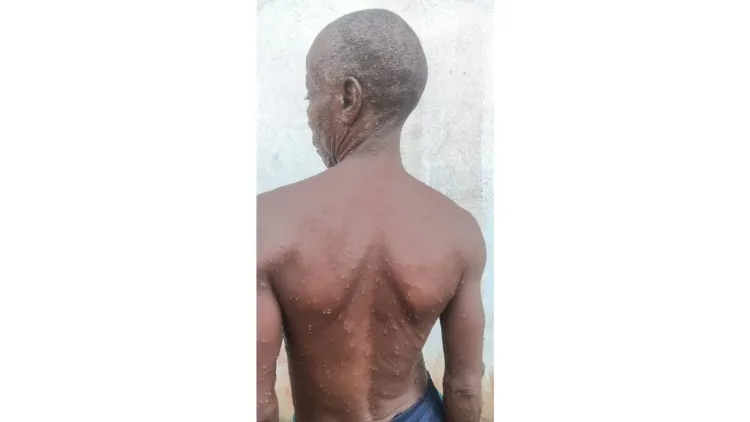
YENAGOA, NIGERIA – A community health group has raised the alarm over an Ondewari skin disease outbreak in Southern Ijaw Local Government Area of Bayelsa State, suspected to be chickenpox or monkeypox (mpox) and affecting both children and adults, Premium Times reported on 23 November, citing the News Agency of Nigeria.
The Ondewari Health Education and Environmental Project (OHEEP) issued a field report on Sunday, signed by programme officer Woyeinbrakemi Adaka, calling for urgent medical intervention.
What is known about the Ondewari skin disease outbreak
One affected resident, Tontiemotei Yeiyei, who is in his 60s, said a doctor at the Korokorosei health facility suspected monkeypox and referred him to the Niger Delta University Teaching Hospital in Okolobiri, the report said.
The cause of the Ondewari skin disease outbreak has not been confirmed by laboratory testing, and the number of people affected was not given in the report. No statement from the Bayelsa State Ministry of Health or the Nigeria Centre for Disease Control and Prevention had been reported.
“The organisation lamented that Ondewari currently lacked a functional health facility,” the report said. A health centre built by the Nigerian Agip Oil Company more than 10 years ago is not functional, according to OHEEP.
“The organisation warned that failure to address the situation promptly could expose more residents to health risks,” the report said.
The community also recalled a 2010 measles outbreak that killed several children and was contained with the help of Médecins Sans Frontières, and reported the death of Simeon Thompson, 43, after a snake bite, highlighting the lack of local care, according to Premium Times. Seitonkumo Erefawei, public relations officer of the Ondewari youth body, was also cited.
The lack of a working health facility means residents must travel to other communities, such as Korokorosei, or to the teaching hospital in Okolobiri for care, which can take hours by boat and road and adds cost.
Chickenpox or mpox?
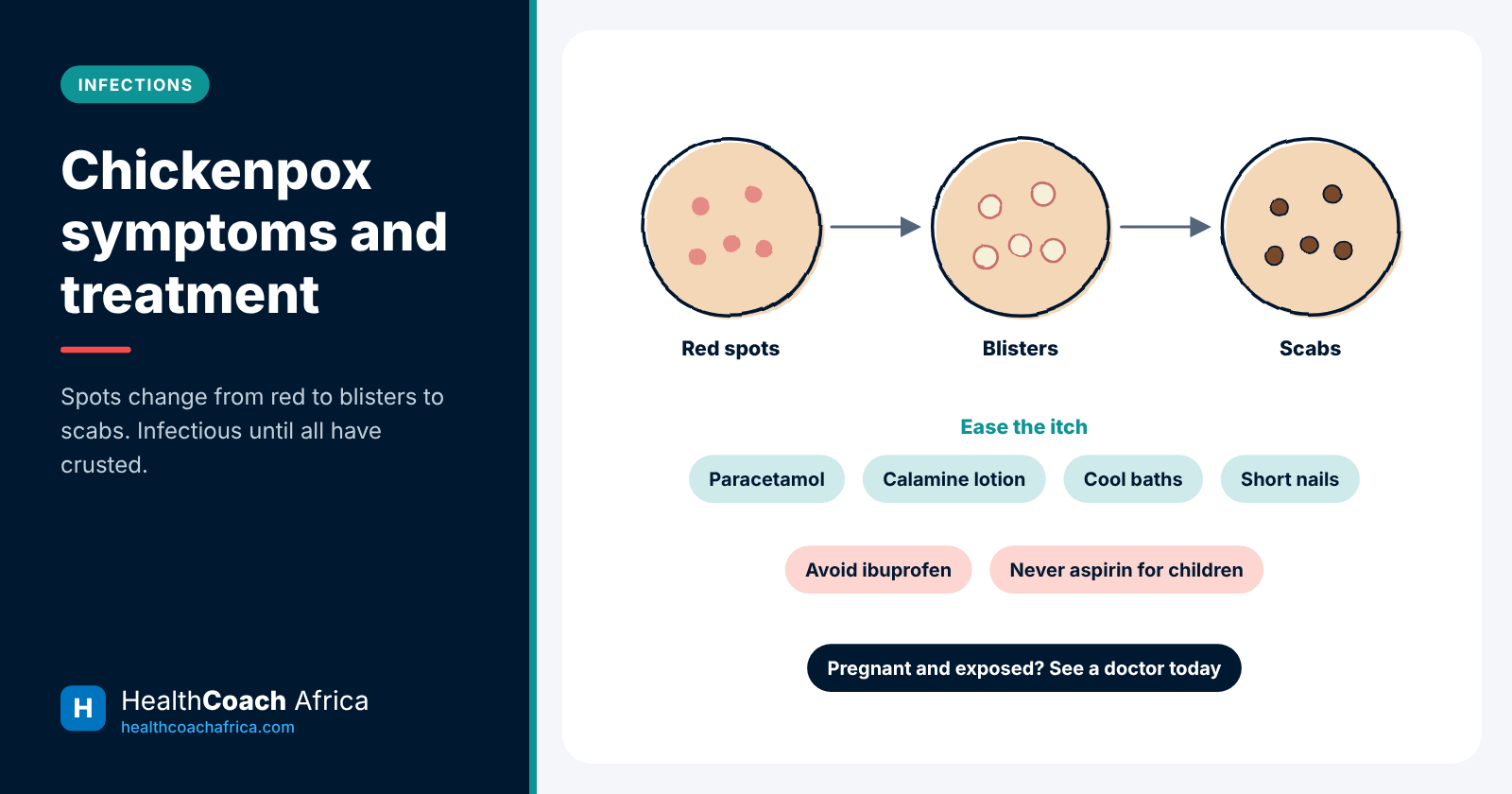
As general background, chickenpox and mpox can both cause fever and a blistering rash, but they are caused by different viruses and are managed differently. Chickenpox usually causes crops of itchy spots at different stages and is most common in children. Mpox often causes swollen lymph nodes and lesions that may be concentrated on the face, hands, feet or genitals, and all lesions tend to be at the same stage.
Only laboratory testing can confirm which disease is present. Nigeria has reported mpox cases since 2017, with Bayelsa among the states where the disease was first identified in that period. Confirming the cause quickly allows health authorities to isolate cases, trace contacts and, where appropriate, offer vaccination.
Mpox spreads through close contact with an infected person’s skin lesions, body fluids or contaminated materials, and in some cases through respiratory droplets during prolonged face-to-face contact. Most people recover within two to four weeks, but the disease can be severe in young children, pregnant women and people with weakened immune systems.
Chickenpox spreads easily through the air and by contact with blisters. It is usually mild in children but can cause complications, including pneumonia and skin infections, especially in adults. Vaccines exist for both diseases, though availability in Nigeria is limited.
What residents should do
People with fever and a new rash are advised to avoid close contact with others, avoid sharing bedding and towels, keep lesions clean and covered, and seek care at the nearest functioning facility. Health workers should report suspected mpox cases to the state epidemiologist for testing.
As general background, Nigeria’s mpox response involves state epidemiology units working with the Nigeria Centre for Disease Control and Prevention to collect samples, confirm cases in reference laboratories and provide guidance on isolation and care. Prompt reporting of the Ondewari skin disease outbreak would allow that system to respond.
Riverine communities in the Niger Delta often face long journeys by boat to reach health facilities, which delays diagnosis and treatment. HealthCoach Africa’s infections category explains how infectious diseases spread and how they can be prevented.
A wider access gap
The Ondewari skin disease outbreak adds to concerns about primary health care in hard-to-reach areas. The Society of Family Physicians of Nigeria said last week that only about 20 per cent of the country’s more than 30,000 primary health care centres are fully functional.
The community has asked the state government and health agencies to send medical teams, confirm the diagnosis and restore a functioning health centre.
Why it matters: An unconfirmed rash outbreak in a community without a working clinic needs rapid testing to rule out mpox and stop further spread.
Chickenpox Symptoms and Treatment: Caring for Itchy… Chickenpox is a common childhood illness that causes an itchy rash of spots and blisters. Most children recover within a week or two without problems. However, chickenpox can be more serious in babies, teenagers, adults,…
Mpox Symptoms and Prevention: A Clear Guide Mpox, formerly known as monkeypox, is a viral infection that has been reported in Nigeria for many years. Since 2017, cases have been recorded across many states, and the disease has gained global attention through…
Landmark Collaborative Research Project Launched to… In a remarkable display of collaboration and scientific dedication, a consortium of esteemed institutions, including the Nigeria Centre for Disease Control and Prevention (NCDC), the National Veterinary Research Institute, the Niger Delta University Teaching Hospital,…
South Africa Mpox Cases Climb to 26 as Donated Vaccines Wait CAPE TOWN, SOUTH AFRICA — South Africa mpox cases have risen to 26 this year, with 20 recorded since August, and the national Department of Health says donated vaccine stock will be deployed as needed,…