CAPE TOWN, SOUTH AFRICA — South Africa mpox cases have risen to 26 this year, with 20 recorded since August, and the national Department of Health says donated vaccine stock will be deployed as needed, Spotlight reported on 2 November.
According to the figures, valid as of 27 October, the Western Cape has recorded 18 cases, Gauteng three, the Eastern Cape and the Free State two each, and KwaZulu-Natal one. Seven people have been admitted to hospital, and no deaths have been reported.
Which strains are behind South Africa mpox cases
Of the 26 cases, 19 were caused by clade Ib, four by clade IIb and three by a clade that has not been determined, Spotlight reported. Clade Ib is the newer strain linked to the large outbreak that began in the Democratic Republic of Congo (DRC) in 2023 and spread to neighbouring countries. Clade IIb drove the global outbreak of 2022.
The rise in clade Ib infections matters because the strain has spread through households and sexual networks in central and East Africa, and has caused outbreaks beyond the groups most affected in 2022.
Dr Jacqueline Weyer of the National Institute for Communicable Diseases (NICD) said outbreaks can take different forms. “Outbreaks may be large, small and confined,” she said. “We cannot rule out the possibility of further cases.”
Vaccine stock and the plan to use it
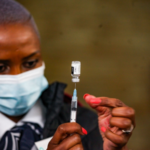
Africa CDC donated just over 10,000 doses of the MVA-BN mpox vaccine to South Africa in 2025, according to Spotlight. Of these, 2,365 doses have been given and 3,865 remain, with an expiry date of 31 August 2027. Additional vaccines have been imported under Section 21, which allows the use of unregistered medicines in specific circumstances.
Department of Health spokesperson Foster Mohale said the stock would be deployed as needed. South Africa uses a targeted approach, offering vaccines to close contacts of cases and to people at higher risk rather than running mass campaigns.
The department also has more than 40 containers of tecovirimat, an antiviral medicine used to treat severe mpox, the report said.
MVA-BN is given as two doses, usually four weeks apart. It can be offered before exposure to people at high risk, or soon after contact with a case to reduce the chance of infection or severe illness.
The department has not announced a wider vaccination campaign. Health experts say targeted use of the remaining doses, guided by contact tracing and the location of cases, is the most efficient approach while numbers remain small, and that the expiry date leaves time to use the stock if clusters grow.
How mpox spreads and what to look for
Mpox spreads mainly through close, prolonged skin-to-skin contact, including sexual contact, and through contact with contaminated bedding, towels or clothing. It can also pass from a pregnant woman to her baby.
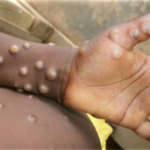
Symptoms usually include a rash or sores, which may appear on the face, hands, feet, mouth, genitals or anus, along with fever, swollen lymph nodes, headache, muscle aches and tiredness. Most people recover within two to four weeks, but illness can be severe in young children, pregnant women and people with weakened immune systems, including those with advanced HIV that is not controlled by treatment.
South Africa has one of the world’s largest HIV treatment programmes, and keeping people on antiretroviral therapy reduces the risk of severe outcomes from infections such as mpox. Testing for HIV is often offered to people diagnosed with mpox for this reason.
Clinicians also look out for mpox in people who present with sexually transmitted infections, because the sores can be mistaken for herpes or syphilis. Accurate testing helps ensure that South Africa mpox cases are counted and that contacts are reached.
Why the Western Cape leads the count
The Western Cape accounts for most South Africa mpox cases this year. Spotlight did not report a single cause for the concentration, and the higher count may reflect transmission chains, testing and reporting practices, or both.
Public health officials say people who notice an unexplained rash or sores should seek care early, avoid close contact with others until assessed, and not share bedding or towels. Health workers should test suspected cases and report them so contacts can be traced and offered vaccination.
Reducing stigma is also important. Fear of being judged has discouraged some people from seeking care during past mpox outbreaks, which allows the spread of infections through contact to continue unseen.
With 3,865 doses left and an expiry date in 2027, the department’s approach will be tested if South Africa mpox cases continue to rise. NICD is expected to publish further updates as new cases are confirmed.
Why it matters: Most new cases are clade Ib, so targeted vaccination, early testing and HIV care are key to keeping clusters small.
Malaria Vaccine for Children: A Guide for Nigerian Parents For generations, Nigerian parents have relied on nets, drugs and prayer to protect their children from malaria. Now there is another tool. In December 2024, Nigeria introduced a malaria vaccine into its routine childhood immunisation…
South Africa Mpox Cases Rise to 22 in Western Cape PRETORIA, SOUTH AFRICA — South Africa has confirmed four new laboratory-tested infections, bringing the total number of south africa mpox cases to 22. According to an official update released by the National Department of Health,…
South Africa Issues Alert Over Rapid Increase in Mpox Cases PRETORIA, SOUTH AFRICA — The South African Department of Health has issued an urgent public health advisory following a rapid increase in confirmed mpox cases across key urban hubs. Spurred by the south africa mpox…
Measles Symptoms and Vaccination: What Every Parent… Measles is one of the most contagious diseases in the world. It spreads quickly among children who are not vaccinated and can cause blindness, brain damage and death. Outbreaks still occur in Nigeria, especially…