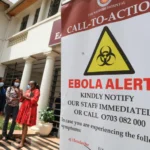
NAIROBI, KENYA — The Government of Kenya has published comprehensive, legally binding regulations to prevent the spread of ebola rules in kenya, establishing mandatory 21-day contact quarantines, strict reporting obligations, and safe burial protocols.Issued under the Public Health Act as Legal Notice No. 204 by Health Cabinet Secretary Aden Duale, the Public Health (Ebola Disease) Rules, 2026, follow the detection of the nation’s first imported case.
The statutory declaration formally classifies Bundibugyo Ebola as a formidable epidemic disease, granting public health officers and law enforcement agencies the legal authority to enforce contact tracing, isolation orders, and transport screening across all entry points.
Regulatory Framework and Ebola Rules in Kenya
Disclosures released in the official government gazette outline the legal obligations and infection control measures enforced under Legal Notice No. 204:
Regulatory Category
Statutory Mandate & Legal Parameters
Legal Authorization
Legal Notice No. 204 (2026) issued under the Public Health Act
Mandatory Contact Quarantine
21-day quarantine and daily symptom monitoring for exposed contacts
Diagnostic Testing Protocol
Testing restricted strictly to national reference laboratories
Legislative Oversight
Mandatory policy review every 3 months; automatic lapse after 12 months
Technical Mechanics and Enforcement of Ebola Rules in Kenya
To disrupt viral transmission chains and prevent secondary community spread, health authorities have established explicit operational mechanics for ebola rules in kenya:
Mandatory Cross-Sector Reporting: Requiring healthcare workers, facility directors, international flight operators, and public transport drivers to report suspected viral cases and maintain passenger logs immediately.
Safe Funeral and Burial Restrictions: Prohibiting traditional washing, dressing, or embalming of deceased bodies, and banning international repatriation of Ebola victims to prevent mourner exposure.
Quarantine Human Rights Safeguards: Mandating that state-ordered isolation orders provide free medical treatment, food, and water at public facilities, with restrictions lifted immediately upon negative diagnostic confirmation.
Epidemiology, Contact Tracing, and Safe Burial Mechanics
Burial practices involving direct physical contact with deceased victims represented a primary transmission driver during historical West African Ebola outbreaks. The new regulations reconcile strict infection control with community grief by permitting families to observe non-contact religious and cultural rites while requiring trained teams in full personal protective equipment (PPE) to handle leak-resistant body bags.
Concurrently, public health teams in Nairobi continue daily monitoring of more than 100 documented contacts linked to the initial imported case.Section 164 of the Public Health Act establishes criminal penalties for individuals who evade quarantine orders, provide false contact tracing information, or resist screening procedures.
International Travel Protocols and Institutional Accountability
The framework balances aggressive epidemic control with civil liberties, prohibiting health officials from imposing blanket quarantines on travelers based solely on country of origin without individual exposure assessments.Every formal quarantine order must state explicit clinical justifications, duration parameters, and legal review mechanisms.
By formalizing reporting channels, securing law enforcement backup for health officers, and centralizing laboratory testing at national reference facilities, Kenya has established a transparent legal blueprint to contain potential viral chains.Maintaining public trust through fair, transparent enforcement remains essential as the Ministry of Health works to safeguard national and regional health security.
Why It Matters: Legally binding rules for 21-day contact quarantines and safe burials give health authorities the enforcement tools needed to stop Ebola outbreaks before community transmission escalates.
Kenya Traces All 122 Ebola Contacts, Moves to Create… NAIROBI, KENYA — Kenya's Ministry of Health has successfully identified, listed, and verified all 122 contacts linked to its first imported Ebola case, confirming that none have developed clinical symptoms to date as part of…
Kenya’s Ebola Cases Reach Nine, All Within One… NAIROBI, KENYA — The Ministry of Health has confirmed a ninth case of Ebola in a 24-year-old man who was already under strict quarantine, reaffirming that all ebola cases in kenya remain strictly confined to…
Mental Health Challenges in Nigeria: Funding,… The World Health Organization (WHO) has consistently emphasized the critical importance of mental health, making it a global concern for the past three years through their World Mental Health Day themes. In 2021, the WHO…
Kenya Classifies Illicit Alcohol as Organised Crime NAIROBI, KENYA — In a major policy shift, the Government of Kenya has formally reclassified the illicit manufacturing, distribution, sale, and consumption of adulterated alcohol as a syndicate threat, declaring that kenya classifies illicit alcohol…