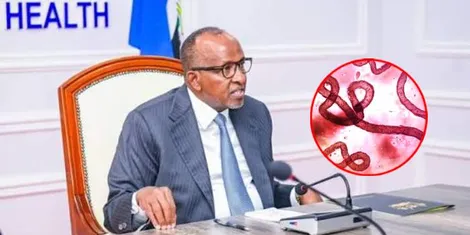
NAIROBI, KENYA — Kenya’s Ministry of Health has successfully identified, listed, and verified all 122 contacts linked to its first imported Ebola case, confirming that none have developed clinical symptoms to date as part of the ongoing ebola response in kenya.Announcing the public health update, Health Cabinet Secretary Aden Duale reported that 108 of these contacts—representing 88.5 percent of the total cohort—are currently in active quarantine and undergoing daily health monitoring by epidemiological surveillance teams.
The contact verification update marks a significant expansion from earlier operational counts. The health ministry had previously reported tracing 57 contacts, while the World Health Organization (WHO) had initially cataloged 28 local contacts alongside 23 passengers and four crew members from the patient’s commercial flight.Although health officials did not explicitly detail the factors behind the increased contact tally, intensive epidemiological contact tracing across transit routes and clinical facilities accounts for the thorough inclusion.
The primary case involved a 35-year-old Kenyan national who had been residing in the Democratic Republic of the Congo (DRC). The individual traveled through Uganda before arriving in Nairobi, where he subsequently fell ill and died on October 5. Surveillance teams have processed 293 biological samples collected from 289 public health alerts nationwide as of October 11, with laboratory testing confirming that only the index case has tested positive for the virus.
Simultaneously, the Ministry of Health has initiated formal administrative and legal steps to establish a dedicated Kenya Centre for Disease Control and Prevention.Published in a Gazette Notice dated October 9, the draft order seeks to establish a centralized technical command authority under the State Corporations Act.The proposed agency will unify national disease surveillance, emergency response coordination, public health security, and specialized laboratory networks to streamline future epidemic management.
Operational Surveillance and Ebola Response in Kenya Metrics
Data released by the Ministry of Health outlines the current epidemiological status, diagnostic testing turnaround, and clinical isolation capacity supporting national public health operations:
Operational Parameter
Surveillance Metrics & System Readiness
Verified Contact Cohort
122 contacts listed and verified (108 in active daily quarantine; 0 symptomatic)
Border Health Screening
667,675 travellers screened across 26 points of entry (2,345 in recent 24 hours)
Laboratory Diagnostic Capacity
5 designated testing laboratories, returning RT-PCR results in 6 to 12 hours
National Isolation Capacity
241 isolation beds across 5 hospitals in Nairobi, Eldoret, and Mombasa
Intensive Care Allocation
50 dedicated ICU beds staged at Moi Teaching and Referral Hospital in Eldoret
Trained Healthcare Personnel
4,197 health workers trained in viral hemorrhagic fever management and IPC
Institutional Frameworks and Public Health Operations
To consolidate national health security and streamline emergency response mechanisms, public health authorities are advancing targeted structural reforms:
Establishment of Kenya CDC: Formally replacing the 2022 public health institute framework to create a central command authority for disease surveillance and emergency preparedness.
Public Participation Forums: Hosting nationwide stakeholder consultations across major regional hubs—including Kisumu, Garissa, Mombasa, and Nairobi—to review the proposed 2026 order.
Rapid Response Workforce: Deploying over 4,100 healthcare personnel trained in specialized viral hemorrhagic fever management and biosecurity protocols.
Containment Deadlines and Regional Health Security
The imported case involves the Bundibugyo ebolavirus strain, for which no licensed vaccine or targeted antiviral treatment currently exists. With the 21-day incubation monitoring period scheduled to conclude in late October, health authorities maintain that strict contact tracing and border screening have successfully contained the single imported event.
Establishing a permanent national CDC aligns Kenya with regional peers like Nigeria and Uganda, creating a centralized technical body capable of rapid epidemiological detection, biosecurity governance, and coordinated outbreak management.
Why It Matters: Achieving universal health coverage relies on a competent, well-supported health workforce; reforming medical education and addressing brain drain are critical to meeting national healthcare demands.
Kenya Gazettes Ebola Rules With 21-Day Quarantine… NAIROBI, KENYA — The Government of Kenya has published comprehensive, legally binding regulations to prevent the spread of ebola rules in kenya, establishing mandatory 21-day contact quarantines, strict reporting obligations, and safe burial protocols. Issued…
Mental Health Challenges in Nigeria: Funding,… The World Health Organization (WHO) has consistently emphasized the critical importance of mental health, making it a global concern for the past three years through their World Mental Health Day themes. In 2021, the WHO…
Kenya Says Ebola End Within Reach NAIROBI, KENYA — As kenya says ebola end within reach following zero reported secondary infections in recent testing rounds, health authorities in Nairobi are preparing to discharge the first cohort of quarantined contacts on October…
Kenya’s Ebola Cases Reach Nine, All Within One… NAIROBI, KENYA — The Ministry of Health has confirmed a ninth case of Ebola in a 24-year-old man who was already under strict quarantine, reaffirming that all ebola cases in kenya remain strictly confined to…