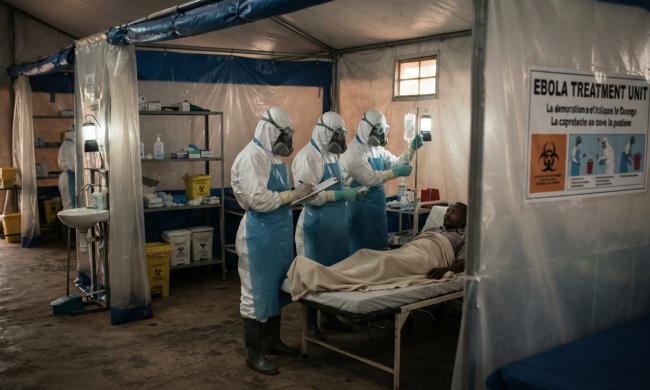
NAIROBI, KENYA — As kenya says ebola end within reach following zero reported secondary infections in recent testing rounds, health authorities in Nairobi are preparing to discharge the first cohort of quarantined contacts on October 25. A public health statement signed by Director-General for Health Dr. Patrick Amoth confirmed that all nine confirmed cases of Bundibugyo ebolavirus stem from a single epidemiologically linked cluster, with no evidence of ongoing community transmission across the country.
The national response framework has successfully isolated all secondary cases—comprising four family members and four healthcare workers exposed to the index patient who passed away on October 5—preventing secondary chains of infection inside quarantine centers.
Operational Benchmarks for Kenya Says Ebola End
Data released by the Ministry of Health and the National Public Health Institute outline the containment metrics across Kenya:
8 patients stable and recovering in specialized isolation facilities
Contact Tracing Fulfillment
135 contacts identified and monitored under strict 21-day quarantine
Port of Entry Screening
>709,000 travellers screened across international points of entry
Technical Mechanics: Kenya Says Ebola End
Understanding the containment strategy behind why kenya says ebola end within reach underscores vital biosecurity and contact-tracing principles:
Strict 21-Day Incubation Monitoring: The viral incubation period for Bundibugyo ebolavirus ranges from 2 to 21 days. Contacts who complete a full 21-day quarantine without developing fever, gastrointestinal symptoms, or malaise pose zero risk of secondary viral transmission and can safely reintegrate into their communities.
Rapid Diagnostic Testing Protocols: Polymerase chain reaction (PCR) assays conducted on 14 suspect samples over a 24-hour window yielded zero positive results, bringing total laboratory evaluations to 461 since surveillance heightened. Negative serial PCR results confirm the absence of undetected community clusters.
Formal WHO Outbreak Declaration Criteria: While releasing contacts marks a critical operational milestone, the World Health Organization (WHO) formally declares an Ebola outbreak over only after 42 consecutive days—representing two full 21-day incubation cycles—have elapsed since the last confirmed patient tests negative or receives safe burial.
Cross-Border Technical Support, Hotline Channels, and Public Misinformation
Kenya’s effective containment strategy offers vital operational lessons for Nigeria, which confirmed an imported Bundibugyo ebolavirus case on October 20. Technical epidemiologists who managed Kenya’s response have arrived in Abuja to assist the Nigeria Centre for Disease Control and Prevention (NCDC) in establishing similar contact tracking networks.
To combat online rumors and false claims—which a GeoPoll survey indicated had reached 52 percent of respondents via broadcast and social media—the ministry has expanded public education through the toll-free hotline 719 and the automated Jali WhatsApp service. Federal authorities emphasized that domestic trade, international travel, and routine public gatherings remain unrestricted.
Health System Preparedness, Bilateral Learning, and Sector Outlook
The Ministry of Health reiterated that continuous vigilance at border checkpoints remains active, with over 3,000 international travellers screened daily. Public health managers stress that maintaining rigorous infection prevention controls in primary hospitals prevents healthcare-associated transmission during the final stages of outbreak containment.
By combining rapid contact isolation with transparent public communication, Kenya demonstrates how aggressive early interventions can successfully limit Ebola to a localized cluster as kenya says ebola end milestones are achieved.
Why It Matters: Rapid contact tracing and strict quarantine enforcement can successfully contain Ebola to a single cluster, providing a proven operational model for neighboring African nations.
Kenya’s Ebola Cases Reach Nine, All Within One… NAIROBI, KENYA — The Ministry of Health has confirmed a ninth case of Ebola in a 24-year-old man who was already under strict quarantine, reaffirming that all ebola cases in kenya remain strictly confined to…
Nigeria Confirms Imported Ebola Case in Abuja,… ABUJA, NIGERIA — The Federal Ministry of Health and Social Welfare has confirmed an imported ebola case in abuja, placing 44 high-risk contacts in strict 21-day quarantine after an international traveler tested positive for the…
Kenya Traces All 122 Ebola Contacts, Moves to Create… NAIROBI, KENYA — Kenya's Ministry of Health has successfully identified, listed, and verified all 122 contacts linked to its first imported Ebola case, confirming that none have developed clinical symptoms to date as part of…
Kenya’s Ebola Cases Rise to Eight, Including Three… NAIROBI, KENYA — Public health authorities in Kenya have confirmed that total ebola cases in kenya have risen to eight, following the diagnosis of three frontline health workers and five contacts linked to the index…