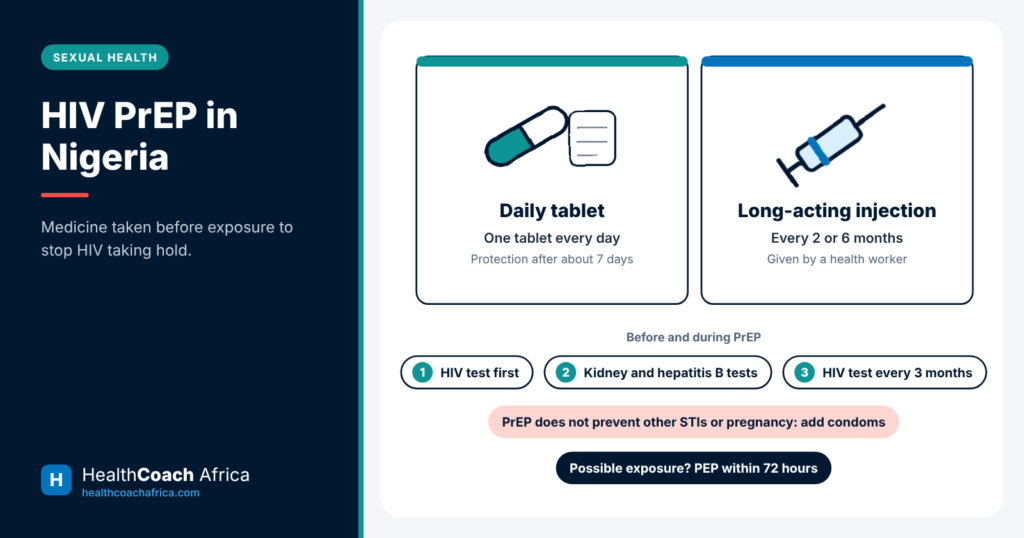
Nigeria has one of the largest numbers of people living with HIV in the world. Yet many new infections can now be prevented with a simple medicine. Pre-exposure prophylaxis, or PrEP, is medicine taken by people who do not have HIV to stop them from getting it. It is highly effective, safe and, in many programmes, free. This guide explains HIV PrEP in Nigeria: who it is for, the different options, how to start and how to stay protected.
What PrEP is
PrEP uses antiretroviral medicines, the same family of drugs used to treat HIV. When taken before exposure, these medicines build up in the body and stop the virus from establishing an infection.
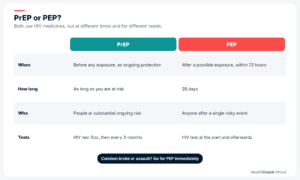
PrEP is different from post-exposure prophylaxis, or PEP. PEP is an emergency course of medicine taken after a possible exposure, such as condom breakage or sexual assault. It must start within 72 hours and lasts 28 days. PrEP, by contrast, is taken before exposure, as ongoing protection.
Comparison of PrEP and PEP to explain options for HIV PrEP in Nigeria
PEP is an emergency option. PrEP is ongoing protection for people at continued risk.
How well does it work?
When taken as prescribed, oral PrEP is highly effective at preventing HIV from sex, and studies show near-complete protection in people who take it consistently. Protection falls sharply when doses are missed. That is why taking PrEP consistently is so important.
PrEP does not protect against other sexually transmitted infections or pregnancy. Using condoms as well gives the widest protection. Learn more in our article on condoms and safe sex.
Who should consider PrEP?
PrEP is recommended for people at substantial risk of HIV. You may benefit if you:
Have a sexual partner living with HIV, especially if their viral load is not yet suppressed
Have more than one sexual partner, or a partner with other partners, and do not always use condoms
Have recently had a sexually transmitted infection
Exchange sex for money, goods or favours
Inject drugs and share needles or equipment
Have used PEP more than once in the past year
If you are unsure whether PrEP is right for you, a health worker can help you decide in a confidential conversation.
The options for HIV PrEP in Nigeria
Several forms of PrEP are now available or being introduced:
Daily oral PrEP. One tablet taken every day, usually tenofovir combined 1 with emtricitabine or lamivudine. This is the most widely available option.
Long-acting injectable cabotegravir 2 . An injection given every two months by a health worker.
Twice-yearly lenacapavir. An injection given every six months. Nigeria began introducing it in 2026, starting in selected states.
The dapivirine vaginal ring. A ring that women insert and replace monthly, offered in some countries.
The choice depends on availability, personal preference and health factors. Injections suit people who find daily pills hard to remember.
Tests before you start
Before starting HIV PrEP in Nigeria, you will need:
An HIV test to confirm that you do not already have HIV. PrEP alone is not enough to treat HIV.
A kidney function test for oral PrEP, because tenofovir is cleared by the kidneys.
A hepatitis B test, because some PrEP medicines also act on hepatitis B.
Screening for other sexually transmitted infections and, for women, a pregnancy test.
If you have had a possible exposure in the last 72 hours, tell the health worker. You may need PEP first.
How to take daily oral PrEP
Take one tablet at the same time every day, with or without food. Linking it to a daily habit, such as brushing your teeth, helps you remember. Phone alarms and pill boxes help too.
Oral PrEP needs about seven days of daily use to reach good protection. If you miss a dose, take it as soon as you remember, then continue as usual. Never take more than two tablets in a day.
If you decide to stop PrEP, keep taking it for seven days after your last possible exposure. Speak to your health worker before stopping.
A typical first PrEP visit
Knowing what to expect makes the first visit easier. A health worker will ask about your health, your sexual life and any recent risks, in private. You will have an HIV test and the other tests described above. If everything is in order, you may receive your first supply of PrEP on the same day, usually for one month. At the next visit, you will have another HIV test and collect a longer supply.
Bring a list of any medicines you take, including herbal products. Ask any questions you have. There is no wrong question when starting HIV PrEP in Nigeria.
Side effects
Most people have no side effects. Some notice mild nausea, stomach upset, headache or tiredness in the first few weeks, which usually settle. Oral PrEP can slightly affect kidney function and bone density in some people, which is why regular check-ups are needed. Injections can cause pain or swelling at the injection site.
HUBPHARM PHARMACIST’S NOTE If you ever have a possible exposure while not on PrEP, PEP must start within 72 hours, and the sooner it starts the better. Message a HubPharm pharmacist at any hour, and we will direct you to the nearest place that can start PEP and talk you through your options. This conversation is confidential.
Regular follow-up
People on PrEP have an HIV test every three months, along with checks for side effects and other infections. Kidney tests are repeated from time to time. These visits also allow you to collect your next supply. Keep every appointment, because staying on PrEP and testing regularly go together.
PrEP in pregnancy and breastfeeding
Women who are pregnant or breastfeeding and at risk of HIV, for example because their partner is living with HIV, can safely use oral PrEP. Preventing HIV in the mother also protects the baby. Discuss the options with your antenatal clinic. Not every newer injectable option is yet recommended in pregnancy, so ask your provider.
Where to get PrEP
HIV PrEP in Nigeria is offered through public HIV clinics, some primary health centres, sexual health clinics and programmes run by non-governmental organisations. In many of these, it is free. Some private clinics and pharmacies also provide PrEP services. Ask your nearest HIV testing centre where PrEP is available in your area.
Staying on PrEP
Many people find PrEP easy at first but struggle after a few months. Common reasons include travel, running out of tablets, side effects and stigma. Some practical tips help:
Keep a few spare tablets in your bag
Set a refill reminder a week before you run out
Store tablets in their original bottle, away from heat
Tell a trusted friend, who can support you
Talk to your clinic before stopping, so you can stop safely
Your need for PrEP can change over time, for example when a relationship changes. That is fine. You can stop and restart with the guidance of a health worker. HIV PrEP in Nigeria works best as part of regular sexual health care, including STI testing and condoms.
Myths about PrEP
“PrEP is only for certain groups.” Anyone at substantial risk of HIV can benefit, including married people with a partner living with HIV.
“Taking PrEP means you are promiscuous.” PrEP is a responsible health choice, like using condoms or getting vaccinated.
“PrEP is the same as HIV treatment.” PrEP prevents HIV in people who are negative. People living with HIV need full treatment.
PrEP and partners living with HIV
If your partner is living with HIV, their treatment is also prevention. People who take HIV treatment and maintain an undetectable viral load do not pass HIV on through sex. PrEP adds extra protection while your partner’s viral load is being brought down, or if you are unsure of their results.
Getting help
HIV PrEP in Nigeria is one of the most powerful prevention tools available. The WHO HIV fact sheet has more background.For a confidential conversation about PrEP, PEP, HIV self-test kits 3 or side effects, message a HubPharm pharmacist or chat with Afiya on WhatsApp.
Medicines and products in this article
#
Medicine or product
What to know
1
Oral PrEP (tenofovir with emtricitabine or lamivudine)
Prescription, often free in programmes
One tablet daily. Needs about seven days of daily use for good protection.
2
Long-acting injectable PrEP
Clinic only
Cabotegravir every two months or lenacapavir every six months, where available.
3
HIV self-test kit
Over the counter
Private home test. A positive result must be confirmed at a health facility.
To order any of these, or to ask a pharmacist a question first, message HubPharm on WhatsApp or visit hubpharmafrica.com. Prescription medicines are supplied against a valid prescription.
Stopping HIV in its Tracks: The Role of PrEP and PEP HIV remains one of the most pressing public health challenges in Africa. According to UNAIDS, over 25 million people in Sub-Saharan Africa are living with HIV, and thousands of new infections occur every day. While…
Normal Blood Pressure Reading: What Your Numbers Mean You have two numbers and no idea what they mean. Worse, you searched them and found an American page telling you that 134 over 86 is Stage 1 hypertension, while your doctor in Lagos looked…
Diabetes in Nigeria: Why Blood Sugar Control Fails Diabetes in Nigeria does not usually fail in the clinic. Among people who reach a specialist and stay in care, control is often reasonable. It fails in the years before anyone tests you, and it…
Endometriosis and Getting Pregnant: What Women Need to Know Endometriosis is a common condition that causes painful periods, pelvic pain and, for some women, difficulty conceiving. Many women in Nigeria live with symptoms for years before diagnosis, because severe period pain is often dismissed…