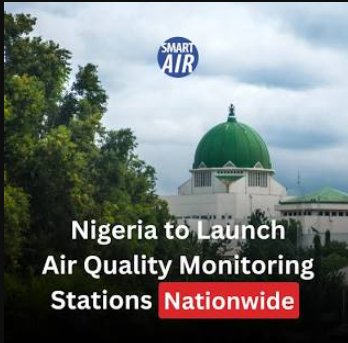
ABUJA, NIGERIA — Nigeria’s federal government has unveiled a comprehensive Nigeria emissions testing framework to monitor motor vehicles and diesel generators, expand regional air quality monitoring stations, and accelerate transition toward cleaner domestic fuels. Environment Minister Balarabe Abbas Lawal, represented by Permanent Secretary Dr. Salihu Aminu Usman during the International Day of Clean Air, stressed that economic development must align with public health and environmental protection.
The national initiative comes as public health experts warn of escalating respiratory and cardiovascular illnesses caused by fine particulate matter across urban centers.
The Nigeria emissions testing framework introduces vehicle checks and air monitoring stations to combat toxic pollution and protect public health.
Severe Health Impacts Driving National Action
According to the 2025 World Air Quality Report, Nigeria ranked as the third most polluted nation in Africa, recording average fine particulate levels of 23.4 micrograms per cubic metre—nearly 4.8 times higher than World Health Organization safety guidelines. Globally, ambient air pollution contributes to roughly 8.4 million premature deaths each year.
Policy Metric / Environmental Benchmark
Recorded Level / Target Goal
African Pollution Ranking
3rd Most Polluted Country (2025 Report)
Average Particulate Matter (PM2.5)
23.4 µg/m³ (4.8x WHO Safety Limits)
Clean Cooking Access Goal
100% Universal Access Target by 2030
EcoGenius Youth Network
~1,000 Active Environmental Members
Grassroots Advocacy and Clean Energy Goals
Environmental advocates are urging collective public action to support enforcement. Benjamin Suleiman, founder of the Save the Planet Initiative—whose EcoGenius program mobilizes nearly 1,000 members—emphasized that community participation is vital to curbing toxic fumes.
In tandem with vehicle standards, federal authorities aim to achieve universal access to clean cooking solutions by 2030 to drastically cut indoor pollution.
Why It Matters: Prolonged exposure to toxic airborne particles severely aggravates asthma, heart disease, and stroke—placing immense strain on Nigerian healthcare facilities already managing heavy chronic disease burdens.
Climate Change Poses Severe Threat to Pregnant Women… Pregnant women, infants, and children are facing severe health risks due to climate catastrophes, demanding immediate attention, according to a recent Call for Action issued by United Nations (UN) agencies. The call comes ahead of…
Access to Clean Water and Sanitation in Africa Access to clean water and proper sanitation is a fundamental human right and a cornerstone of public health. Yet in Africa, millions of people still struggle to obtain safe drinking water and hygienic sanitation facilities.…
Respiratory Challenges: A Comprehensive Guide to… Respiratory infections are a common health concern, affecting millions of people worldwide each year. Among the various respiratory infections, pneumonia and bronchitis stand out as significant contributors to global morbidity and mortality rates. These conditions…
Sleep Inequality in Africa: Gender, Class & Urban Divide Sleep is often seen as a basic human need, but in Africa, not everyone enjoys the same opportunity for quality rest. Just as inequalities affect access to education, healthcare, and income, they also shape who…