Traffic, rising prices, job insecurity, family responsibilities and unreliable power can make daily life in Nigeria feel like a constant uphill climb. Some stress is a normal part of life and can even help us rise to a challenge. However, long-term stress harms both the body and the mind. Learning how to manage stress is one of the most valuable skills for health and happiness. This guide explains what stress does and offers practical steps that work.
What stress is
The World Health Organization describes stress as a state of worry or mental tension caused by a difficult situation. When we face a threat, the body releases hormones such as adrenaline and cortisol. The heart beats faster, breathing quickens and muscles tense. This “fight or flight” response helps us react quickly.
The problem arises when stress is constant. The body stays on alert, and over time this wears it down.
Signs that stress is affecting you
Stress shows up in many ways:
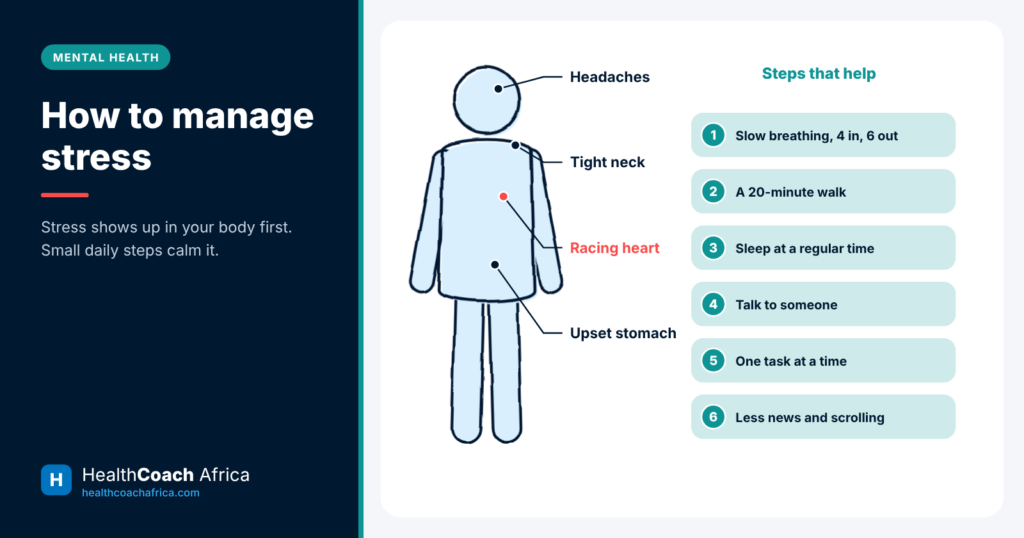
Body: headaches, tight shoulders, stomach upsets, fast heartbeat, tiredness and frequent illness
Mind: worry, racing thoughts, poor concentration and forgetfulness
Emotions: irritability, anger, feeling overwhelmed, sadness or anxiety
Behaviour: poor sleep, eating too much or too little, smoking or drinking more, and withdrawing from people
Noticing these signs early makes it easier to act.
How long-term stress harms health
Chronic stress is linked to high blood pressure, heart disease, stroke, type 2 diabetes, weight gain, digestive problems, weakened immunity, depression and anxiety. It also makes existing conditions harder to manage. For example, stress can raise blood sugar and blood pressure readings 1 .
Common sources of stress
Stress can come from:
Work pressure, long hours and long commutes
Money worries, debt and unemployment
Family conflict, caring for relatives or relationship problems
Health problems
Exams and academic pressure
Major life changes, such as moving, marriage or loss
Identifying your main sources helps you decide what you can change and what you need to cope with.
How to manage stress in the moment
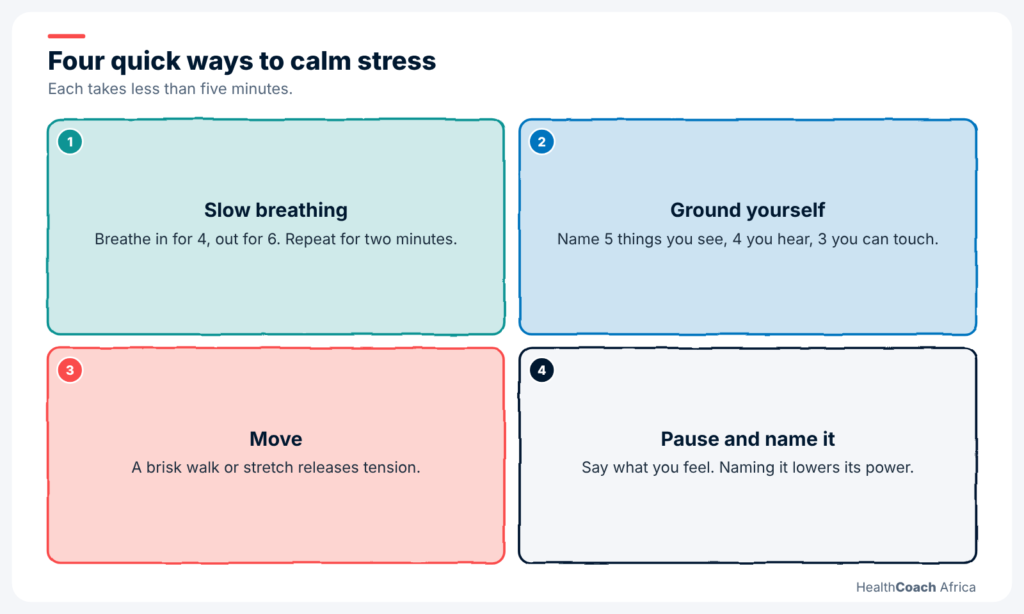
When stress builds up, these quick techniques help calm the body:
Slow breathing. Breathe in through your nose for four counts, hold briefly and breathe out for six counts. Repeat for two to three minutes.
Muscle release. Tense your shoulders for five seconds, then let them drop. Work through other muscle groups.
Step away. A short walk, a glass of water or a few minutes outside can reset your mind.
Name it. Saying “I am feeling stressed because…” can reduce its intensity.
Four quick techniques showing how to manage stress in the moment
Practise these when you are calm, so they are easier to use under pressure.
How to manage stress at work
Workplaces can be major sources of stress. Take short breaks during the day. Step away from your desk at lunch. Talk to your manager about unclear tasks or unrealistic deadlines. Organise your workspace. Leave work at work where possible. If you work from home, keep a set finishing time. Learning how to manage stress at work protects both your health and your performance.
Daily habits that build resilience
Long-term, the most effective ways of learning how to manage stress are everyday habits:
Move your body. Regular activity, such as brisk walking, dancing or football, lowers stress hormones and improves mood.
Protect your sleep. Aim for seven to eight hours. Keep a regular bedtime and limit screens at night.
Eat regular, balanced meals. Skipping meals and relying on sugary snacks and drinks affects mood and energy.
Limit caffeine and alcohol. Both can worsen anxiety and sleep.
Stay connected. Time with supportive friends and family is one of the strongest buffers against stress.
Make time for things you enjoy, such as music, faith activities or hobbies.
Managing your time and boundaries
Feeling overwhelmed often comes from trying to do too much. Try:
Writing a short daily list and focusing on the top three tasks
Breaking big tasks into smaller steps
Saying no to extra commitments when your plate is full
Setting limits on work messages outside working hours
Asking for help at home and work
Tackling the problem, not just the feelings
Some stress comes from problems that can be solved. Problem-solving involves defining the problem, listing possible solutions, choosing one and trying it. For money stress, for example, a simple budget, advice on debt or a conversation with your employer may help. Learning how to manage stress includes both calming your body and dealing with causes where possible.
Limiting news and social media
Constant news about crime, the economy and politics can keep the mind on high alert. Choose set times to check the news, mute stressful groups and notice how social media affects your mood.
A simple daily stress plan
Here is an easy plan to try for two weeks:
Morning: five minutes of slow breathing or prayer before checking your phone
Midday: a short walk or stretch break
Afternoon: a glass of water and a healthy snack
Evening: time with family or a hobby, with screens off for an hour before bed
Bedtime: write down one thing that went well today
Small, steady steps show you how to manage stress in a way that fits your life.
Myths about stress
“Stress is all in your head.” Stress has real effects on the heart, gut, immune system and sleep.
“Strong people do not get stressed.” Everyone experiences stress. Strength lies in recognising it and responding well.
“Only big events cause stress.” Small daily hassles, such as traffic and power cuts, add up over time.
“Relaxing is a waste of time.” Rest restores energy and improves focus, so it makes you more productive.
Getting the family involved
Stress affects the whole household. Share tasks fairly. Plan meals and budgets together. Agree on quiet times. Children notice adult stress, so explain things simply and reassure them. Learning how to manage stress as a family makes home a place of rest.
Stress and your physical health conditions
If you live with high blood pressure, diabetes or asthma, stress can make your condition harder to control. Check your readings regularly. Take your medicines on time. Tell your doctor if stress is affecting your health. Knowing how to manage stress is part of managing any long-term condition.
HUBPHARM PHARMACIST’S NOTE Stress often shows up in your numbers first: a higher blood pressure reading, a raised blood sugar, or more headaches needing painkillers. Message a HubPharm pharmacist for a free check of your blood pressure log or medicine list. We will tell you whether anything needs a doctor’s review, and help you avoid quick fixes that make stress worse.
Avoiding unhealthy coping
Many people turn to alcohol, smoking, overeating, sleeping tablets or drugs such as tramadol to cope with stress. These may bring short-term relief but make stress worse over time and cause new health problems. If you find yourself relying on them, it is time to seek support.
When stress needs professional help
See a doctor or counsellor if:
Stress lasts for weeks and affects your work, relationships or sleep
You feel anxious or low most of the time
You have panic attacks
You are using alcohol or drugs to cope
You have thoughts of harming yourself
Talking therapies, such as cognitive behavioural therapy, are effective. In some cases, a doctor may suggest medicine for anxiety or depression. Learn more in our article on understanding anxiety. If you are thinking about ending your life, go to the nearest emergency department or call 112.
Stress and sleep
Stress and poor sleep feed each other. Keep a regular bedtime, even at weekends. Put screens away an hour before bed. Write down worries and a plan for tomorrow, then set them aside. Good sleep is one of the simplest answers to how to manage stress.
Getting help
Knowing how to manage stress protects your heart, mind and relationships. Start with one small change this week. If stress is affecting your blood pressure, blood sugar or sleep, or you want to review medicines you are taking, message a HubPharm pharmacist. You can also chat with Afiya on WhatsApp for support at any time.
Medicines and products in this article
#
Medicine or product
What to know
1
Home blood pressure monitor
Over the counter
Helps you see how stress and lifestyle changes affect your readings.
To order any of these, or to ask a pharmacist a question first, message HubPharm on WhatsApp or visit hubpharmafrica.com. Prescription medicines are supplied against a valid prescription.
Signs of Work Burnout: How to Recognise It and Recover Long hours, heavy traffic, financial pressure and the constant ping of work messages are part of daily life for many Nigerian workers. Over time, this pressure can lead to burnout, a state of deep exhaustion…
All You Need To Know About Anxiety Are you anxious? Maybe you are disturbed about a particular problem. Maybe you have butterflies in your stomach while waiting for the results of a medical test. Maybe you get nervous when driving home in…
Mental Health Challenges in Nigeria: Funding,… The World Health Organization (WHO) has consistently emphasized the critical importance of mental health, making it a global concern for the past three years through their World Mental Health Day themes. In 2021, the WHO…
Happiness Is Your Birthright "We think happiness is a destination. when it’s actually a starting point, it enables all the positive outcomes in our lives if we choose to do it first.” – Pasricha Can you truly excel in your…