NAIROBI, KENYA — Kenya has achieved 100 per cent Kenya Ebola contact tracing coverage, tracing all 135 contacts of its cases and surpassing the 85 per cent global benchmark, Health Cabinet Secretary Aden Duale told a Senate committee, KBC reported on 17 November.
No new cases have been reported since 19 October and there is no evidence of community transmission, according to the report. The final batch of contacts was released on 11 November after completing monitoring.
The 135 contacts included family members, health workers and others who had been exposed to Kenya’s confirmed patients, all of whom were monitored daily for symptoms. Kenya’s last Ebola patient was discharged earlier this month, which started the 42-day countdown.
Where the Kenya Ebola contact tracing effort stands
Kenya is in a mandatory 42-day countdown that, if no new confirmed cases emerge, would allow an Ebola-free declaration on 23 December 2026, KBC reported. Surveillance, traveller screening and other response measures remain heightened.
Duale cited preparedness figures including more than 810,000 travellers screened at 26 points of entry, nearly 5,000 response personnel on standby, more than 4,900 trained health workers, 349 rapid response teams and five designated testing laboratories.
Those figures reflect a response that was built up quickly after Kenya confirmed its imported case in October, with support from WHO and other partners.
The success of Kenya Ebola contact tracing means every person known to have been exposed was followed up daily through the 21-day incubation period, a key reason the outbreak did not spread into the wider community.
Senate reviews emergency regulations
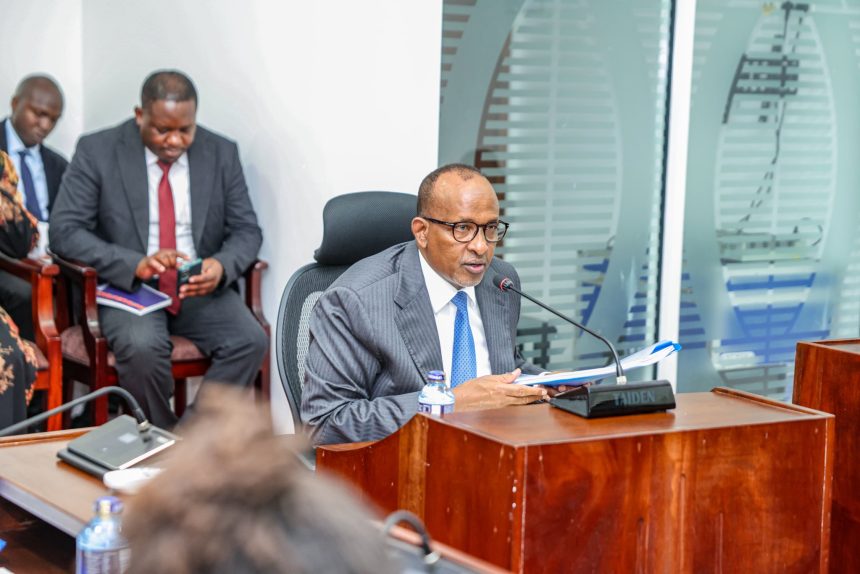
Duale appeared before the Senate Standing Committee on Delegated Legislation, chaired by Tharaka Nithi Senator Mwenda Gataya, at Bunge Towers in Nairobi. The committee considered the Public Health (Declaration of Formidable Epidemic Disease) Order, 2026 and the Public Health (Ebola Disease) Rules, 2026, published as Legal Notices No. 203 and 204.
Duale said the urgency of the outbreak meant the instruments were published without prior public participation, under Section 5A(2) of the Statutory Instruments Act. He outlined the legal framework covering surveillance, testing, isolation, contact tracing, quarantine and infection prevention, and called for “continued implementation of the regulations.”
He was accompanied by Principal Secretary Mary Muthoni, Director-General for Health Dr Patrick Amoth, Acting Kenya National Public Health Institute Director-General Dr Maureen Kamene and Director of Public Health Dr Stephen Muleshe.
The 42-day period is twice the maximum 21-day incubation period of the virus, in line with WHO guidance for declaring an Ebola outbreak over. Any new confirmed case would reset the countdown.
Officials have urged the public to continue reporting any suspected symptoms promptly.
Why legal frameworks matter in outbreaks
As general background, outbreak response often requires powers to isolate patients, quarantine contacts and screen travellers that restrict individual freedoms. Clear legal instruments define those powers, their limits and the rights of affected people, and parliamentary review provides oversight.
Balancing speed with accountability is a common challenge. Emergency regulations may be issued quickly, but review afterwards helps ensure they are proportionate and lapse when no longer needed.
The Senate committee’s review is part of that process. Senators can approve the instruments, recommend amendments or annul them if they are found to exceed the powers granted by the parent law.
Regional risk remains
Kenya’s achievement comes as the Ebola outbreak in the Democratic Republic of Congo, caused by the Bundibugyo strain, continues. Africa CDC said on 15 November that the DRC outbreak was still not under control, with more than 11,200 cases and 5,500 deaths reported by the government.
Nigeria also completed monitoring of all 62 contacts of its imported case without secondary transmission, though its outbreak has not yet been formally declared over.
As general background, there is no licensed vaccine or specific treatment for Bundibugyo virus disease, so early detection, isolation, contact tracing and infection prevention in health facilities remain the main defences. Health workers are advised to ask patients with fever about recent travel and use standard precautions with every patient.
The Kenya Ebola contact tracing effort also offers lessons for other outbreaks. The same skills, including rapid case finding, daily follow-up of contacts and clear communication with communities, are used against cholera, measles and other infectious diseases.
The Kenya Ebola contact tracing results show what a well-resourced public health response can achieve, but officials say vigilance must continue until the countdown ends. HealthCoach Africa’s infections hub explains how infectious diseases spread and how they can be prevented.
Why it matters: Tracing every Ebola contact helped Kenya stop spread, but with the DRC outbreak uncontrolled, screening and vigilance must continue.
Kenya and WHO Review Ebola Response After Three… NAIROBI, KENYA — Kenya and the World Health Organization (WHO) have held a Kenya WHO Ebola review after the country recorded three consecutive weeks without a new confirmed case, and agreed to develop a joint…
Kenya Discharges Last Ebola Patient, Starts 42-Day… NAIROBI, KENYA — Kenya has discharged its Kenya last Ebola patient and begun a 42-day countdown to being declared free of the disease, Health Cabinet Secretary Aden Duale announced at a news conference in Nairobi…
Kenya Reports Child Health Gains but Newborn Deaths… NAIROBI, KENYA — Kenya has recorded significant Kenya child health gains, with under-five deaths falling and stunting dropping sharply, but newborn mortality remains well above the national target, KBC reported on 12 November, citing the Ministry…
Kenya Records Sixth Ebola Recovery as 42-Day Countdown Nears NAIROBI, KENYA — Kenya has recorded its sixth Ebola recovery and gone 18 days without a new infection, moving closer to the Kenya Ebola recovery countdown that must be completed before the outbreak can be…