A migraine is much more than a bad headache. It is a neurological condition that can cause severe, throbbing pain, sickness and sensitivity to light and sound, often forcing people to lie down in a dark room for hours. Many people with migraine miss school, work and family events. Understanding migraine triggers and treatment helps you reduce how often attacks happen and stop them sooner when they do.
What a migraine feels like
A typical migraine attack causes:
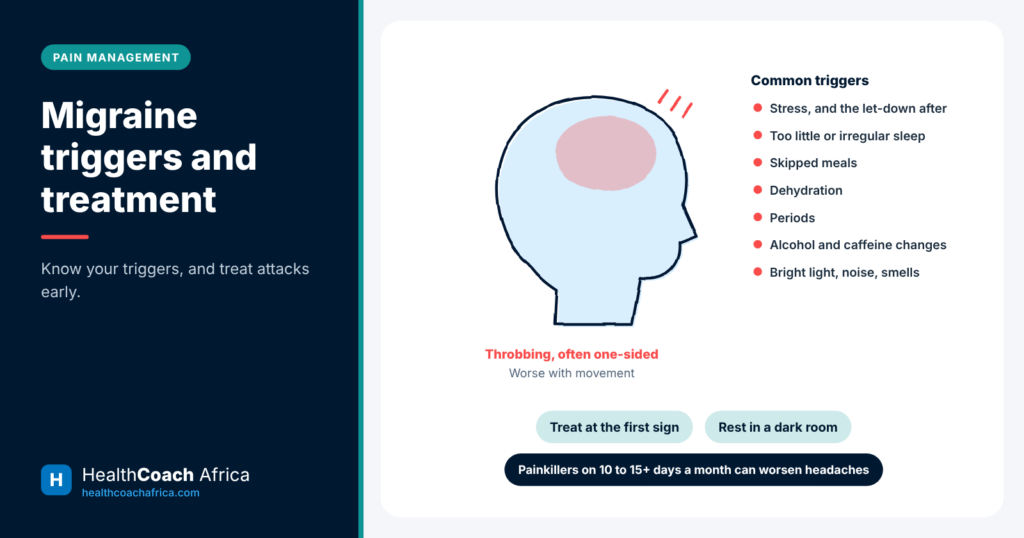
Moderate to severe headache, often on one side of the head
Throbbing or pulsing pain
Pain that gets worse with movement, such as climbing stairs
Nausea or vomiting
Sensitivity to light, sound and sometimes smells
An untreated attack usually lasts between 4 and 72 hours. The World Health Organization lists migraine as one of the most disabling health conditions worldwide.
Migraine with aura
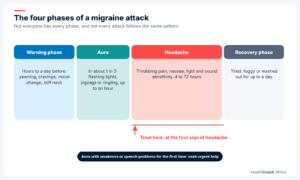
About one in three people with migraine have an aura before or during some attacks. An aura is a temporary disturbance, most often visual, such as flashing lights, zigzag lines or blind spots. Some people have tingling in the face or hand, or difficulty speaking. Aura usually lasts between 5 and 60 minutes.
Aura can be frightening the first time. If you have never had it before, or if weakness or speech problems occur, seek medical advice urgently to rule out a stroke.
Timeline of the four phases of a migraine attack to guide migraine triggers and treatment
Treating early, at the start of the headache phase, gives medicines the best chance of working.
Common migraine triggers
A trigger does not cause migraine on its own. Instead, it can tip a sensitive brain into an attack. Common triggers include:
Stress, and also the relaxation after stress, such as weekends
Changes in sleep, whether too little, too much or irregular
Skipped or delayed meals
Dehydration
Hormonal changes, particularly around periods
Alcohol, especially red wine
Caffeine, either too much or sudden withdrawal
Bright or flickering light, loud noise and strong smells
Weather changes and heat
Certain foods, such as aged cheese or processed meats, in some people
Triggers vary greatly from person to person, and often act in combination.
Keeping a migraine diary
A diary is one of the most useful tools for understanding migraine triggers and treatment. For two to three months, record:
The date, time and length of each attack
Your symptoms and how severe they were
What you ate and drank, your sleep and your stress level
Where you were in your menstrual cycle
Which medicines you took and how well they worked
Patterns often appear that you would not otherwise notice. Bring the diary to your doctor.
Migraine triggers and treatment at work and school
Migraine often strikes at inconvenient times. Keep your medicines with you. Drink water and eat regular snacks during long days. Reduce screen glare with brightness settings and breaks. Tell your employer or school about your condition. A quiet room to rest for a short time can shorten an attack. Many people return to work sooner when they treat early.
Treating an attack early
The key to treating an attack is to act early, ideally at the first sign of headache. Options include:
Simple painkillers, such as ibuprofen, aspirin or paracetamol 1 , taken at a full dose early in the attack
Anti-sickness medicines, such as metoclopramide 2 or domperidone, which reduce nausea and help painkillers to be absorbed
Triptans, such as sumatriptan 3 , which are specific migraine medicines for moderate to severe attacks
Triptans are not suitable for people with heart disease, previous stroke or uncontrolled high blood pressure. Rest in a quiet, dark room, sip water and apply a cool cloth to the forehead.
HUBPHARM PHARMACIST’S NOTE Many headache tablets sold in Nigeria combine painkillers with caffeine, and people often take them on more days than they realise. Send a HubPharm pharmacist a list of what you take and how often, and we will help you spot medication overuse and plan a safer routine.
Beware of medication overuse headache
Taking painkillers too often can make headaches worse. This is called medication overuse headache. It can happen if you take simple painkillers on 15 or more days a month, or triptans or combination painkillers on 10 or more days a month. If you need painkillers this often, see a doctor about preventive treatment.
Migraine in children
Children get migraine too. Their attacks are often shorter. The pain may affect both sides of the head. Tummy pain and vomiting can be the main symptoms. Regular sleep, meals and water are very important for children. Paracetamol or ibuprofen at the right dose for the child’s age or weight usually helps. Do not give aspirin to children under 16. See a doctor if headaches are frequent, wake the child at night or come with vomiting in the morning.
Preventive treatment
If you have frequent or very disabling attacks, a doctor may recommend a daily preventive medicine. This is usually considered if you have four or more migraine days a month. Options include:
Propranolol, a beta blocker 4
Amitriptyline, taken at a low dose at night
Topiramate, an anti-epilepsy medicine, which must not be used in pregnancy
Candesartan, a blood pressure medicine
Newer injectable medicines that target a protein called CGRP are available in some countries for people who do not respond to other treatments. Preventive medicines usually take several weeks to show their full effect.
Lifestyle changes that help
Many people reduce their attacks by keeping a steady routine:
Go to bed and wake up at the same time every day
Eat regular meals and do not skip breakfast
Drink plenty of water
Keep caffeine intake moderate and consistent
Exercise regularly, building up slowly
Use relaxation techniques, such as breathing exercises
Migraine and women’s health
Migraine is about three times more common in women than men, partly because of hormones. Some women have attacks mainly around their periods. Women who have migraine with aura should not use the combined contraceptive pill, because it raises the risk of stroke. Discuss contraception with your doctor. Many migraine medicines need extra care in pregnancy.
Natural approaches that may help
Some people find extra help from non-drug approaches. Regular aerobic exercise can reduce attacks. Relaxation training and cognitive behavioural therapy help with stress. Acupuncture helps some people. Riboflavin, also called vitamin B2, and magnesium have some evidence for prevention. Ask a pharmacist before starting any supplement, because doses matter. These options work best alongside a clear plan for migraine triggers and treatment.
Building your personal plan
Every person’s migraine is different. A good plan has three parts. First, know and reduce your triggers. Second, have a clear plan for treating attacks early. Third, consider prevention if attacks are frequent. Review the plan with your doctor every few months. Understanding migraine triggers and treatment is a process, and most people improve with time. Write the plan down. Keep a copy in your bag or on your phone. Share it with family and colleagues, so they know what to do. Review your migraine triggers and treatment diary before each clinic visit.
Red flags: when a headache is an emergency
Seek urgent medical help for a headache that:
Comes on suddenly and reaches maximum intensity within a minute
Comes with fever, a stiff neck or a rash
Comes with weakness, numbness, confusion or difficulty speaking
Follows a head injury
Is new and severe after the age of 50
Keeps getting worse over days or weeks
Happens during pregnancy or after childbirth with high blood pressure
Getting help
Understanding migraine triggers and treatment gives you more control over your life. Read more about different kinds of pain in our article on common causes of pain.For advice on choosing and timing painkillers, anti-sickness medicines or preventive treatment, message a HubPharm pharmacist or chat with Afiya on WhatsApp.
Medicines and products in this article
#
Medicine or product
What to know
1
Ibuprofen or aspirin
Pharmacy medicine
Take a full dose at the first sign of a migraine. Not for frequent daily use.
2
Metoclopramide
Prescription only
Reduces nausea and helps painkillers to be absorbed during an attack.
3
Sumatriptan
Prescription only
Specific migraine medicine. Not for people with heart disease or uncontrolled blood pressure.
4
Propranolol or amitriptyline
Prescription only
Daily preventive medicines for frequent attacks.
To order any of these, or to ask a pharmacist a question first, message HubPharm on WhatsApp or visit hubpharmafrica.com. Prescription medicines are supplied against a valid prescription.
Coping With Panic Attacks: 6 Steps That Calm Your Body Fast Your heart pounds, your chest tightens and you are suddenly sure that something terrible is about to happen. Many people who rush to hospital convinced they are having a heart attack are in fact having…
Asthma Attack Warning Signs: Know Them and Act Fast Asthma is one of the most common long-term conditions in Nigeria, affecting children and adults alike. Most of the time, it can be well controlled with the right inhalers. However, asthma attacks still send many…
Heart Attack Warning Signs: Act Fast and Save a Life Heart disease is rising in Nigeria, driven by high blood pressure, diabetes, smoking and changing lifestyles. A heart attack is a medical emergency in which every minute counts. The faster treatment starts, the more heart…
Gout Diet and Treatment: How to Stop the Attacks Gout causes some of the most intense pain a person can experience. An attack can turn a big toe hot, red and so tender that even a bed sheet feels unbearable. Gout is becoming more…