LAGOS, NIGERIA — The Nigerian Association of Chambers of Commerce, Industry, Mines and Agriculture (NACCIMA) has honoured Mojisola Adeyeye for NAFDAC DG regulatory reforms that business leaders say have strengthened public health protection and industry development, BusinessDay reported on 4 November.
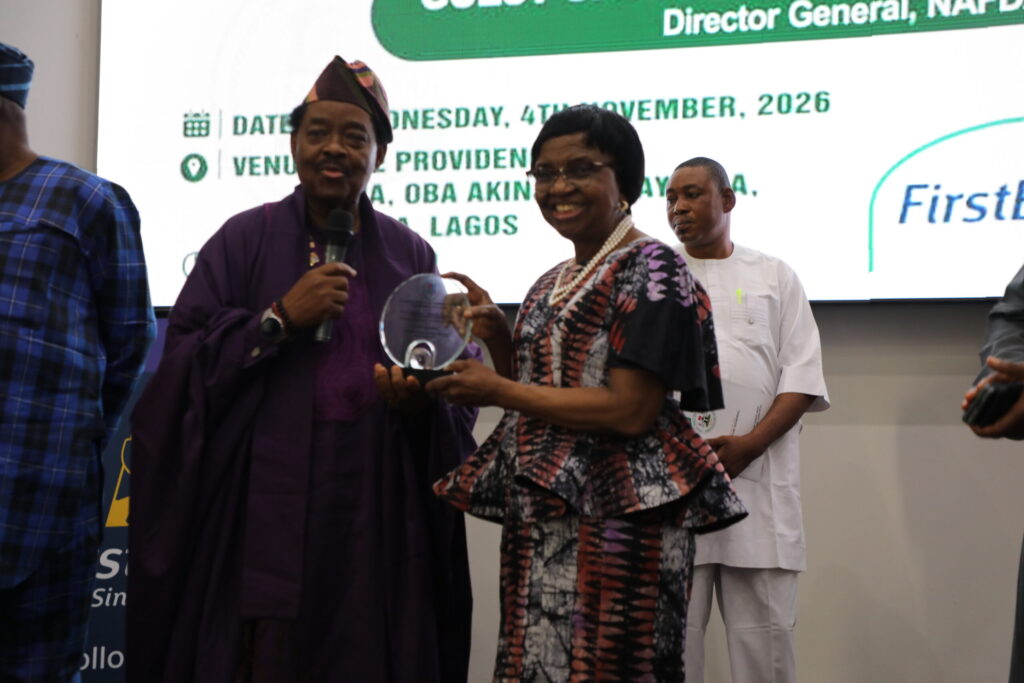
Adeyeye, Director-General of the National Agency for Food and Drug Administration and Control (NAFDAC), received an Award of Excellent Performance at a breakfast roundtable organised by NACCIMA at Providence Hotel in Lagos. Industry representatives at the event praised her leadership and the agency’s efforts against fake and substandard medicines, according to the report.
What NAFDAC DG regulatory reforms aim to do
In her address, Adeyeye said NAFDAC’s framework is “science-driven and transparent” and designed to support businesses while making sure products meet safety and quality standards. She spoke about the agency’s reforms and its efforts to balance consumer protection with ease of doing business, BusinessDay said.
According to a NAFDAC statement cited in the report, the roundtable brought together NACCIMA members, business leaders and other stakeholders from the organised private sector.
NAFDAC regulates the manufacture, importation, exportation, distribution, advertisement, sale and use of food, drugs, cosmetics, medical devices, packaged water, chemicals and detergents in Nigeria. Its decisions affect manufacturers, importers, pharmacies, supermarkets and street vendors, as well as every household that buys medicine or packaged food.
The agency’s work also covers post-marketing surveillance, which means checking medicines and foods after they reach the market. This includes testing samples from pharmacies and markets, monitoring reports of side effects and recalling products that fail quality checks.
NAFDAC DG regulatory reforms under Adeyeye, who has led the agency since 2017, have included work towards international benchmarks. In 2024, the World Health Organization announced that Nigeria’s regulatory system for medicines had reached maturity level 3, which signals a stable, well-functioning system and is a requirement for some international procurement and local vaccine production goals.
The fight against fake and substandard medicines
Fake and substandard medicines remain a serious problem in Nigeria. They can contain the wrong ingredient, too little of the right one, or harmful contaminants, and they cause treatment failure, drug resistance and deaths. Antimalarials, antibiotics and medicines for chronic conditions are among those most often affected.
NAFDAC carries out raids, seizes and destroys falsified products, and works with the Pharmacy Council of Nigeria and other agencies to shut illegal outlets. It also runs public alerts on products found to be fake or unsafe, and encourages consumers to report suspicious medicines.
Pharmacist groups have repeatedly called for the closure of open drug markets, where medicines are sold outside a regulated supply chain. A coordinated wholesale centre system, intended to move legitimate wholesalers into regulated hubs, has been proposed for years but has been slow to take shape.
Why business and regulators are talking
Manufacturers and importers often complain about the cost and time involved in product registration and inspections. Regulators argue that strict checks protect consumers and the reputation of Nigerian products, including those exported to other African markets.
The NACCIMA roundtable reflects efforts to find a middle ground. Faster, more predictable registration could help local manufacturers grow and reduce reliance on imports, while strong enforcement against falsified products protects legitimate businesses from unfair competition.
Business groups have also raised concerns about the cost of compliance for small manufacturers, including fees, laboratory testing and the time taken for inspections. NAFDAC DG regulatory reforms that digitise applications and set clear timelines could reduce these costs, while keeping safety standards in place.
Food safety is part of the same agenda. NAFDAC has warned about harmful practices such as the use of calcium carbide to ripen fruit and the sale of food in damaged cans, which shows that the agency’s work reaches far beyond pharmacies.
Local production has become a priority for the Federal Government, which has encouraged investment in medicines, diagnostics and active pharmaceutical ingredients. Stakeholders have warned that heavy reliance on imported ingredients leaves Nigeria’s medicine supply exposed to price shocks and global shortages.
For patients, regulation is felt at the pharmacy counter. Buying medicines from licensed pharmacies, checking packaging, batch numbers and expiry dates, and reporting side effects or suspicious products all help regulators protect the public.
The award adds to recognition Adeyeye has received for NAFDAC DG regulatory reforms. The agency has also said it needs more personnel and resources to cover a large market, and how quickly it can expand inspections, digital tracking and enforcement will shape the next phase of its work.
Why it matters: Strong, predictable regulation protects patients from fake medicines and helps Nigerian manufacturers compete and grow.
Professor Mojisola Adeyeye: The Pharmacist Who… When Professor Mojisola Adeyeye walked into NAFDAC headquarters in November 2017, she inherited an agency with a debt of more than three billion naira, laboratories that did not work and a reputation that its own…
PSHAN's Annual Gala and Awards Ceremony Recognizes… The Private Sector Health Alliance of Nigeria (PSHAN) gathered industry leaders, global health experts, and distinguished guests at the Civic Centre in Lagos for its highly anticipated Annual Gala and Awards Ceremony on November 3,…
NAFDAC's Plan to Review Sanctions on Exporters of… The National Agency for Food and Drug Administration and Control (NAFDAC) has announced its intention to review the sanctions imposed on exporters of substandard products [1]. This decision comes in response to the increasing rejection of…
Medicine Traceability in Nigeria: How a Barcode… A fake antimalarial looks exactly like a real one. The box, the blister and the colour of the tablet can all be copied. What cannot be copied easily is a unique digital identity that is…