As general background, Lassa fever response has relied partly on external partners for laboratory supplies, training and research. With global health funding falling, domestic financing for the N129.4 billion plan will be a key test. The plan was unveiled at the same time as state health budgets have risen to more than N3.3 trillion, according to the health minister.
Investments in laboratories, isolation centres anABUJA, NIGERIA
The Nigeria Centre for Disease Control and Prevention (NCDC) has unveiled a National Lassa Fever Strategic Plan 2026 to 2030, a Lassa fever strategic plan that will require an estimated N129.4 billion over five years to cut infections and deaths, Africa Health Report reported on 20 November.
Nigeria accounts for more than 92 per cent of reported Lassa fever cases in West Africa, according to the plan. The report said West Africa records an estimated 100,000 to 300,000 infections and about 5,000 deaths a year.
What the Lassa fever strategic plan prioritises
NCDC Director-General Dr Jide Idris wrote the plan’s foreword, describing “a coordinated One Health approach that connects human, animal and environmental health systems,” the report said. The plan draws on more than 57 years of epidemiological evidence since Lassa fever was first identified in Nigeria.
Its priorities are surveillance, early diagnosis and treatment, laboratory capacity and community-based prevention, according to Africa Health Report.
As general background, a strategic plan of this kind typically sets targets for each priority, assigns responsibilities to federal and state agencies and partners, and provides a framework for tracking progress. The Lassa fever strategic plan gives the NCDC and states a common reference for planning and budgeting until 2030.
Laboratory capacity is a particular focus because Lassa fever can only be confirmed by testing. Nigeria has expanded its network of testing laboratories, but shortages of reagents and long distances to testing centres can still delay diagnosis in rural areas.
The plan identifies poor food storage, household waste and practices that attract rodents as drivers of transmission. It also notes that “human-to-human transmission can also occur, particularly in healthcare settings” where infection control is weak.
Why the plan is needed now
The Lassa fever strategic plan comes as Nigeria records a high death toll this year. NCDC data reported earlier this month showed 1,186 confirmed cases and 278 deaths between weeks 1 and 44 of 2026, a case fatality rate of 23.4 per cent, up from 18.3 per cent at the same point in 2025.
The NCDC has blamed late presentation at health facilities, the cost of treatment and low public awareness for the high fatality rate, and flagged a shortage of laboratory reagents at the Irrua Specialist Teaching Hospital testing centre.
Lassa fever cases usually rise during the dry season, from about December to April, so the plan’s launch comes just before the peak period.
Ondo, Bauchi, Edo, Taraba and Benue states accounted for most confirmed cases this year, according to NCDC data, and the Lassa fever strategic plan is expected to guide targeted action in such high-burden states.
Funding the response
d trained health workers also strengthen preparedness for other outbreaks, including Ebola, cholera and meningitis.
How Lassa fever spreads and can be prevented
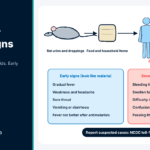
As general background, Lassa fever is a viral haemorrhagic illness carried by the multimammate rat. People are infected through contact with food or household items contaminated by rat urine or droppings. Early symptoms, including fever, weakness, headache, sore throat and vomiting, are easily mistaken for malaria or typhoid.
The antiviral ribavirin is most effective when started early, which is why rapid testing is central to the plan. Health workers are at risk when they care for patients without knowing they have Lassa fever, so standard infection prevention measures are essential in every facility.
Delays of even a few days can make the difference between recovery and death, which is why awareness among patients and health workers matters.
Households can reduce risk by storing food in rodent-proof containers, keeping homes and surroundings clean, disposing of rubbish properly and avoiding drying food in the open. Anyone with a fever that does not improve after malaria treatment should seek care quickly. HealthCoach Africa’s infections category covers how infectious diseases spread and how they can be prevented.
The success of the Lassa fever strategic plan will depend on whether its funding is released and whether states, which run most health facilities, carry out its community and clinical measures.
Why it matters: Nearly one in four confirmed Lassa patients died this year, and the new plan’s funding will decide whether faster testing reaches high-risk states.
Pate Says State Health Budgets Rise to N3.3… LAFIA, NIGERIA — Nigeria state health budgets have risen from N1.97 trillion in 2023 to more than N3.3 trillion in 2026, Coordinating Minister of Health and Social Welfare Prof. Muhammad Ali Pate said on Thursday, 19…
Lassa Fever Warning Signs: Early Action Saves Lives Lassa fever is a viral illness that is found in West Africa, and Nigeria reports more cases than any other country. Each year, outbreaks peak during the dry season, from about December to April. In…
Nigeria Records 43 New Lassa Fever Cases in Two Weeks ABUJA, NIGERIA Nigeria recorded 43 new Lassa fever confirmed cases in epidemiological weeks 45 and 46 of 2026, bringing the year’s total to 1,226 confirmed cases, according to the latest situation report from the Nigeria…
Family Physicians Say Only 20 Percent of Nigeria’s… ABUJA, NIGERIA, Only about 20 per cent of Nigeria’s more than 30,000 primary health care centres are fully functional, the Society of Family Physicians of Nigeria (SOFPON) has said, raising questions about how many functional primary…