Nigeria recorded 43 new Lassa fever confirmed cases in epidemiological weeks 45 and 46 of 2026, bringing the year’s total to 1,226 confirmed cases, according to the latest situation report from the Nigeria Centre for Disease Control and Prevention (NCDC), Leadership reported on 25 November.
There were 18 confirmed cases in week 45 and 22 in week 46, the report said. Suspected cases rose from 141 in week 45 to 151 in week 46.
Trend in Lassa fever confirmed cases
No new deaths among confirmed cases were recorded in the two weeks, but 278 people have died since January, giving a case fatality rate of 22.7 per cent, according to the report. Cases have been recorded in 26 states and 122 local government areas.
The case fatality rate of 22.7 per cent among Lassa fever confirmed cases means that more than one in five people with a laboratory-confirmed infection this year has died. As general background, that rate is far higher than in many earlier years, and the NCDC has linked it to patients arriving late at health facilities.
The figures “highlight the need for sustained vigilance, early detection and prompt response to the disease,” the report said.
The rise in Lassa fever confirmed cases comes as Nigeria approaches the dry season, when cases usually increase. In week 44, the NCDC had reported 13 confirmed cases and a case fatality rate of 23.4 per cent, compared with 18.3 per cent at the same point in 2025.
A new five-year plan
Last week, the NCDC unveiled a National Lassa Fever Strategic Plan 2026 to 2030, which will require an estimated N129.4 billion over five years. Nigeria accounts for more than 92 per cent of reported Lassa fever cases in West Africa, according to the plan.
The plan prioritises surveillance, early diagnosis and treatment, laboratory capacity and community-based prevention, using a One Health approach that connects human, animal and environmental health.
As general background, strategic plans of this kind provide a framework for federal agencies, states and partners to coordinate spending and activities. Whether the N129.4 billion is mobilised will determine how quickly testing, treatment and community prevention expand in the states that record most Lassa fever confirmed cases.
The NCDC has blamed late presentation at health facilities, the cost of treatment and low awareness for the high fatality rate this year, and has deployed rapid response teams to high-burden states.
A shortage of laboratory reagents at the Irrua Specialist Teaching Hospital testing centre was flagged earlier this month as a potential cause of diagnostic delays. As general background, Irrua in Edo State is one of Nigeria’s main Lassa fever treatment and research centres, and testing delays there can affect surrounding states.
Prevention advice
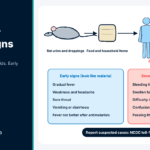
The NCDC advises households to control rodents, store food in covered containers, dispose of waste properly and seek medical care promptly for symptoms such as fever, weakness, headache or bleeding, Leadership reported.
As general background, Lassa fever is carried by the multimammate rat and spreads to people through contact with food or household items contaminated with rat urine or droppings. It can also spread between people through contact with blood and body fluids, especially in health facilities without adequate infection control.
Early symptoms are easily mistaken for malaria or typhoid. The antiviral ribavirin works best when started early, which is why anyone whose fever does not improve after malaria treatment should seek testing quickly. Health workers should use standard precautions with every patient.
Infections among health workers have occurred in past seasons when patients were not suspected of having Lassa fever, which is why hand hygiene, gloves and safe handling of blood and body fluids are essential in every facility, as general background.
Why the season matters
As general background, Lassa fever cases in Nigeria usually peak between December and April, when dry conditions drive rodents into homes in search of food. The weeks ahead are therefore a critical period for prevention, early detection and preparedness in health facilities.
Ondo, Bauchi, Taraba, Edo and Benue have accounted for most cases this year. Testing capacity, including reagent supplies at key laboratories, will be important as the number of suspected cases rises. HealthCoach Africa’s infections category explains how infectious diseases spread and how they can be prevented.
The NCDC is expected to continue publishing weekly updates on Lassa fever confirmed cases as the season progresses.
Why it matters: Lassa cases are climbing as the dry season begins, and with more than one in five confirmed patients dying, early testing saves lives.
Lassa Fever Warning Signs: Early Action Saves Lives Lassa fever is a viral illness that is found in West Africa, and Nigeria reports more cases than any other country. Each year, outbreaks peak during the dry season, from about December to April. In…
Nigeria’s Lassa Fever Death Rate Climbs to 23.4… ABUJA, NIGERIA Nigeria’s Lassa fever fatality rate has risen to 23.4 per cent so far in 2026, up from 18.3 per cent at the same point last year, according to the Nigeria Centre for Disease…
NCDC Says Lassa Season Has Started Early as Early… ABUJA, NIGERIA — Nigeria’s Lassa fever season began early in November, with infections among health workers, officials said in an NCDC health security update presented at the close of the 2026 Health Sector Joint Annual Review,…
NCDC Unveils N129.4 Billion Five-Year Plan to Cut… As general background, Lassa fever response has relied partly on external partners for laboratory supplies, training and research. With global health funding falling, domestic financing for the N129.4 billion plan will be a key test.…