Nigeria granted pharmaceutical manufacturers tax waivers worth N24 billion in 2025 and 2026 under a presidential executive order to boost local production of medicines and health products, Coordinating Minister of Health and Social Welfare Muhammad Pate said, Premium Times reported on 11 November.
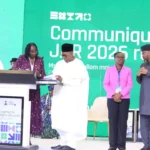
“The Executive Order signed by Mr President in 2024 has supported N24 billion in tax waivers for pharmaceutical manufacturers in 2025 to 2026,” Pate said at the 2026 Nigeria Health Sector Joint Annual Review (JAR) in Abuja on Tuesday.
How the pharmaceutical manufacturers tax waivers work
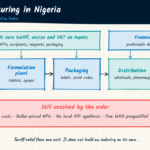
President Bola Tinubu signed the executive order in July 2024. It provides relief from tariffs, excise duties and value added tax on specified pharmaceutical machinery, equipment and raw materials, according to Premium Times. At a pharma expo in Lagos earlier this year, Minister of State for Health Iziaq Salako said 87 local manufacturers were benefiting from zero tariffs on machinery, active pharmaceutical ingredients (APIs) and other production materials.
Pate said the government has secured 12 technology-transfer agreements and is pursuing prospective health manufacturing investments worth more than 5 billion US dollars. “Our task is to help those prospective investments become operating businesses,” he said.
Ten factories or manufacturing lines have been commissioned under the health industrialisation programme, six of them in 2026, producing pharmaceuticals, rapid diagnostic tests, long-lasting insecticidal nets and medical oxygen, Pate said. He acknowledged the Presidential Initiative for Unlocking the Healthcare Value Chain (PVAC), coordinated by Abdu Mukhtar.
Local share of the market
Salako said locally made medicines held 50 per cent of Nigeria’s pharmaceutical market in 2026, up from 30 per cent in 2023. Figures from the Pharmaceutical Group of the Manufacturers Association of Nigeria and NAFDAC show about a 10 per cent rise in the number of active local pharmaceutical companies, according to the report.
The government has set a target of at least 70 per cent local production of essential health products by 2030. PVAC has secured about 2 billion US dollars in financing commitments at single-digit interest rates, with roughly 50 Nigerian health companies in advanced funding talks, Salako said earlier.
Pate said NAFDAC is strengthening measures against falsified medicines, and the government is working to make Medipool, a group purchasing organisation for health products, fully operational.
Why tax relief matters for drug makers
Nigerian manufacturers face high costs that make it hard to compete with imports, particularly from India and China. Most APIs, the chemical ingredients that make a medicine work, are imported, leaving producers exposed to exchange rate swings and global supply disruptions. Electricity is another major burden; drug makers have said power costs swallow a large share of their revenue because they rely on diesel generators.
Removing tariffs and VAT on machinery and inputs can lower the cost of setting up and running factories. Stakeholders at a recent Nigeria Health Watch and World Bank meeting warned that reliance on imported APIs threatens the country’s medicine security, and called for support for local API production, infrastructure and financing.
What it could mean for patients
For patients, the benefits of local production depend on whether medicines become cheaper, more available and of assured quality. Local production can shorten supply chains and reduce stock-outs, especially for essential medicines such as antimalarials, antibiotics and treatments for hypertension and diabetes.
Quality is critical. Locally made products must meet NAFDAC and international standards, and regulators must monitor them after they reach the market. Group purchasing through Medipool could help public facilities buy quality-assured local products at lower prices if it is run transparently.
Pharmacists and pharmacy businesses will also play a role in distributing local products, advising patients and reporting quality concerns through NAFDAC’s pharmacovigilance channels.
The pharmaceutical manufacturers tax waivers are likely to work best alongside faster customs clearance of exempted inputs, clear implementation guidelines and stable policy. Investors in factories need confidence that incentives will last long enough for them to recover the cost of new plants, which often take years to become profitable.
Local manufacturers also face competition from smuggled and falsified products in informal markets, which is why NAFDAC enforcement and the closure of illegal outlets are seen as part of the same industrial strategy.
Experts say tax relief alone will not build a competitive industry. Reliable power, access to long-term finance, investment in API production, skilled workers and predictable procurement by government are also needed. The pharmaceutical manufacturers tax waivers are one step in that direction, and their impact will be measured by new factories, jobs and medicines on pharmacy shelves.
Why it matters: Cheaper inputs for local drug makers could reduce Nigeria’s reliance on imports and improve medicine security, if quality and pricing benefits reach patients.
Tinubu Says Nigeria Must Build Healthcare Economy,… ABUJA, NIGERIA — President Bola Tinubu has said Nigeria must build a domestic healthcare economy that manufactures medicines and medical equipment, creates jobs and competes internationally, setting out his government’s plans for the Nigeria healthcare value…
Drug Manufacturing in Nigeria: Is the Executive… When the naira lost more than half its value in 2023 and 2024, Nigerians felt it at the pharmacy counter before they felt it almost anywhere else. Prices of common medicines climbed sharply because most…
Nigeria’s Health Review Ends With 12 Resolutions on… ABUJA, NIGERIA Nigeria’s 2026 Health Sector Joint Annual Review closed on Thursday with 12 Joint Annual Review resolutions on health financing, workforce, primary health care, data, local manufacturing, regulation and emergency care, the News Agency…
Pate Says State Health Budgets Rise to N3.3… LAFIA, NIGERIA — Nigeria state health budgets have risen from N1.97 trillion in 2023 to more than N3.3 trillion in 2026, Coordinating Minister of Health and Social Welfare Prof. Muhammad Ali Pate said on Thursday, 19…