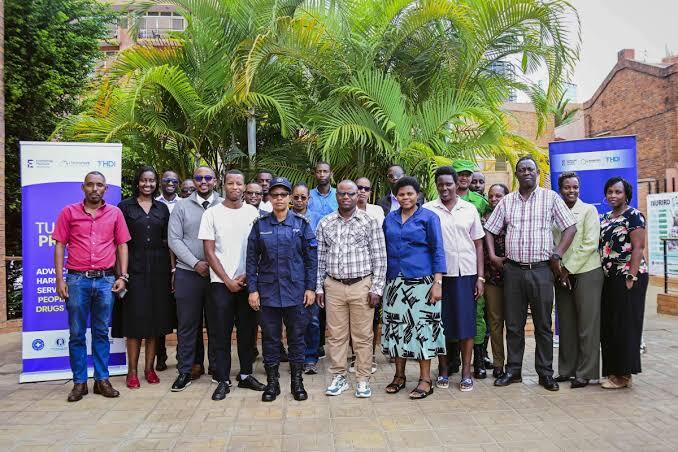
KIGALI, RWANDA — Public health authorities in Rwanda are drafting national harm reduction guidelines aimed at expanding access to HIV prevention, overdose response, and mental health services for people who inject drugs.Developed with technical support from the Rwanda Biomedical Centre (RBC) and civil society organizations under the TUBITEHO Project, the proposed framework seeks to address persistent healthcare gaps driven by social stigma and criminalization.
Speaking at a stakeholder validation meeting in Kigali, Dr. Zephanie Nzeyimana, HIV Key Population Strategic Officer at the RBC, emphasized that harm reduction interventions focus on mitigating direct health risks among vulnerable groups while integrating them into national health systems.
Epidemiological Profile and Harm Reduction in Rwanda
Surveillance metrics disclosed by public health agencies highlight significant HIV prevalence disparities between key populations and the general public:
Indicator Category
National Metrics & Key Population Data
HIV Prevalence Gap
11.2% prevalence among people who inject drugs vs. 2.2% general population
Mapped Key Population
3,339 people who inject drugs identified nationwide (1,443 in Kigali)
High-Risk Behaviors
91% report sharing needles; 43% know someone who died of an overdose
National HIV Benchmark
Rwanda achieved UNAIDS 95-95-95 targets by December 2024
Service Delivery and Harm Reduction in Rwanda
To close remaining transmission gaps and reach UNAIDS targets, the draft framework establishes key operational mechanisms for harm reduction in rwanda:
Needle and Syringe Services: Distributing sterile injection equipment to reduce blood-borne transmission of HIV and Hepatitis C.
Opioid Substitution Therapy: Integrating medication-assisted treatments, such as methadone, and distributing naloxone for emergency overdose reversal.
Integrated Mental Health: Linking addiction management with community mental health services to address co-occurring substance use disorders.
Stigma, UNAIDS Targets, and Health System Equity
Rwanda reached the UNAIDS 95-95-95 benchmark for HIV diagnosis, treatment, and viral suppression in late 2024. However, remaining viral transmission chains are heavily concentrated among marginalized key populations. Fear of legal prosecution, social discrimination, and healthcare worker bias frequently deter individuals who inject drugs from seeking routine clinical care, diagnostic testing, or pre-exposure prophylaxis (PrEP).
Furthermore, mental health data indicates a substantial burden of psychological disorders across the general population, compounding vulnerability to substance use disorders.By involving community organizations of people who use drugs directly in policy design, health authorities aim to establish non-judgmental care pathways that encourage early health-seeking behavior and ensure equitable access to life-saving interventions.
Why It Matters: HIV prevalence is five times higher among Rwandans who inject drugs; implementing formal harm reduction guidelines closes critical coverage gaps to sustain national HIV epidemic control.
Rwanda to Roll Out Six-Month HIV Prevention… KIGALI, RWANDA — Rwanda will begin offering the Rwanda lenacapavir HIV injection, a prevention shot given once every six months, on 1 December to coincide with World AIDS Day, The New Times reported on 4 November.…
Mental Health Challenges in Nigeria: Funding,… The World Health Organization (WHO) has consistently emphasized the critical importance of mental health, making it a global concern for the past three years through their World Mental Health Day themes. In 2021, the WHO…
Tramadol and Codeine Addiction: Signs, Dangers and… Tramadol and codeine are opioid medicines used to relieve pain and, in the case of codeine, to suppress coughs. Used correctly for a short time, they are helpful. However, misuse has become a serious problem…
AI in Healthcare: A Strategic Guide for African… How should healthcare organizations in Africa approach emerging artificial intelligence solutions? In an era where artificial intelligence (AI) is rapidly advancing in the realm of healthcare, African health organizations are presented with the challenge of…