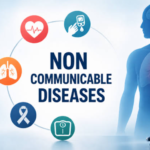
KIGALI, RWANDA — Non-communicable diseases accounted for 49.5 percent of facility deaths and 58.8 percent of community deaths in 2025, health experts revealed on 6 September 2026. The rising Rwanda NCD care strain is fundamentally shifting hospital dynamics across the nation as late clinical detection turns routine outpatient appointments into prolonged, costly inpatient admissions.
Health officials emphasize that medical management alone cannot solve the crisis, calling for structural healthcare financing reforms to sustain continuous treatment models.
Mortality Impact Fueling Rwanda NCD Care Strain
Addressing chronic illness requires reorganizing healthcare delivery, as long-term management replaces episodic acute care. Health advocates are pressing government bodies to allocate at least 5 percent of total health tax revenue specifically toward chronic disease prevention and clinical control.
Health Outcome Metric
Reported Percentage / Volume
Strategic Care Requirement
Health Facility Deaths (2025)
49.5% of total mortality
Early screening & community-level prevention
Community Deaths (2025)
58.8% of total mortality
Expanded local diagnostic access
Cancer Treatment Facilities
Scaled from 4 to 5 centers
Specialized tertiary oncology care expansion
Proposed Financing Allocation
$\ge 5\%$ of health tax revenue
Dedicated funding for non-communicable disease control
Financing Challenges Surrounding Rwanda NCD Care Strain
Chronic health conditions cause repeat hospitalizations, extended bed stays, and high ongoing pharmacy costs. This structural shift tests Rwanda’s Community-Based Health Insurance (CBHI) scheme, which was originally designed for short-term infectious illness rather than lifelong medical therapy.
Because CBHI covers the vast majority of citizens, Rwanda serves as an early testing ground for whether regional risk-pooling mechanisms can adapt to support rising chronic care burdens without exhausting public reserves.
Why It Matters: The Rwanda NCD care strain illustrates how chronic disease is forcing African health systems to move away from short-term treatment models toward continuous care financing.
Rwanda's Non-Communicable Disease Burden Reaches… KIGALI, RWANDA — Vital statistics from 2025 reveal a sharp epidemiological transition in Rwanda, with the rwanda non communicable disease burden now dominating mortality patterns. Non-communicable diseases (NCDs) account for 49.5 percent of deaths in…
Acute vs Chronic Pain: Key Differences and Why They Matter Pain is something everyone experiences, but not all pain is the same. Many people confuse acute pain—the short-term type—with chronic pain, which can last for months or even years. Understanding the difference is not just…
Health Emergency Initiative Receives Grant to Fight… In a significant effort to combat infant mortality and improve the well-being of vulnerable children, the Health Emergency Initiative (HEI) has received a grant for their project [1]. The grant was presented by TotalEnergies Nigeria Staff…
Rwanda Takes Handover of 837-Bed Masaka Hospital in Kigali Rwanda has taken handover of the renovated and expanded Masaka Hospital in Kicukiro District, a 837-bed facility that becomes the country's largest hospital complex, with the University Teaching Hospital of Kigali due to relocate services…