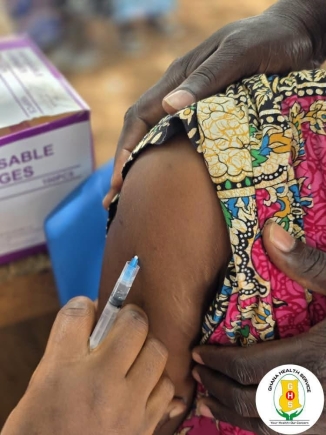
WA, GHANA — The Ghana Health Service (GHS) has completed an intensive five-day reactive campaign providing yellow fever vaccination in ghana across three vulnerable districts in the Upper West Region, targeting approximately 244,869 residents following a fatal viral outbreak.Rollout began on October 14, 2026, across Wa West, Sissala East, and Sissala West districts, prioritizing all individuals aged nine months to 60 years after laboratory tests confirmed three fatal yellow fever cases.
Health authorities established fixed vaccination centers at public hospitals and clinics while deploying mobile teams to high-density public areas—including markets, bus terminals, schools, churches, and mosques—to intercept viral transmission chains rapidly.
Outbreak Benchmarks and Yellow Fever Vaccination in Ghana
Data published by the Ghana Health Service, Ministry of Health, and the World Health Organization details the regional containment parameters:
Campaign Parameter Category
Regional Containment Data & Target Metrics
Target Population
244,869 residents across 3 districts (aged 9 months to 60 years)
Focus Administrative Districts
Wa West, Sissala East, and Sissala West (Upper West Region)
Confirmed Outbreak Cases
3 laboratory-confirmed cases (all three patients deceased)
National Surveillance Volume
~450 suspected cases recorded nationwide (June–September 2026)
Transmission Mechanics and Population Health Strategies
Implementing targeted reactive campaigns for yellow fever vaccination in ghana addresses specific vector transmission mechanics and clinical risks:
Mosquito Vector Dynamics: Yellow fever is transmitted to humans through the bite of infected Aedes mosquitoes (the vector for dengue fever), rendering vector management and stagnant water elimination vital complementary controls.
Single-Dose Lifelong Immunity: Administering a single yellow fever vaccine dose confers lifelong immunity for the majority of recipients, rapidly creating community-wide herd protection.
Severe Jaundice and Organ Failure Risks: While most infections remain mild, approximately 15 percent of clinical cases progress to toxic visceral phases characterized by jaundice, internal hemorrhage, and organ failure.
Outreach to Pastoralist Communities and Immunization Cards
Upper West Regional Director of Health Services Dr. Josephat Nyuzaghl and Deputy Director of Public Health Dr. Collins Boateng Danquah led field inspection teams into Sissala East and West to ensure outreach reached nomadic Fulani pastoralist settlements.Mobile herding families frequently miss routine childhood immunizations due to seasonal migration and geographical isolation from fixed health posts, making tailored outreach essential to closing regional immunity gaps.
Vaccinated individuals were issued official Yellow Cards as verifiable proof of immunization.Public health directors urged citizens to secure these credentials, as documented proof of vaccination is required for school enrollment, routine medical consultations, and international border travel.
National Coverage Gaps, Vector Control, and Public Health Response
While Ghana’s national routine yellow fever immunization coverage ranges between 88 and 95 percent, localized pockets of low immunity remain susceptible to seasonal outbreaks.Because no specific antiviral therapy exists for severe yellow fever cases, reactive immunization campaigns combined with community vector control—such as sleeping under insecticide-treated bed nets and covering household water storage vessels—serve as the primary defense.
By mobilizing community health workers, securing field logistics across remote northern districts, and ensuring full inclusion of mobile pastoralist populations, the Ghana Health Service aims to prevent secondary transmission and protect regional health security.
Why It Matters: A single dose of yellow fever vaccine provides lifelong immunity; reaching mobile pastoralist communities quickly halts viral transmission and prevents fatal disease complications.
Nigeria Vaccinates 18 Million Girls Against HPV ABUJA, NIGERIA — In a major public health milestone, nigeria vaccinates 18 million girls against human papillomavirus (HPV), reaching roughly 76 percent of its national coverage target, according to official agency disclosures. Dr. Rufai Ahmed…
Ghana Launches School Campaign to Vaccinate Girls… ACCRA, GHANA — The Ghana Health Service (GHS), in direct collaboration with the Ghana Education Service (GES), has launched a nationwide school-based campaign providing the hpv vaccine in ghana to protect young girls aged 9…
Ghana Confirms Yellow Fever in Sissala East After… TUMU, GHANA — Health authorities in the Upper West Region of Ghana have confirmed an outbreak of yellow fever in Sissala East Municipality following the deaths of at least seven individuals, predominantly children and young…
Malaria and Typhoid Fever: How to Tell Them Apart… "You have malaria and typhoid." It is one of the most common diagnoses given in Nigeria, and millions of people are treated for both at the same time. Yet malaria and typhoid fever are two…