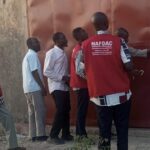
LAGOS, NIGERIA — Nigeria’s food and drug regulator has detected pesticide residues above permitted international safety limits in bean samples taken from local markets, while seizing over ₦800 million worth of banned agrochemicals across the country.Announcing the findings, the National Agency for Food and Drug Administration and Control (NAFDAC) warned that unapproved chemical preservation methods for pesticide residues in beans pose serious acute and chronic health hazards to consumers.
NAFDAC Director General Prof. Mojisola Adeyeye confirmed that recent market surveillance revealed residues of dimethoate—a chemical unapproved for stored grain preservation—and pyrethroids exceeding safe safety thresholds.The agency has initiated nationwide enforcement following the full expiration of the phase-out period for toxic agrochemicals including paraquat, chlorpyrifos, and atrazine.
Seizure Profile and Pesticide Residues in Beans Risk
Data released by NAFDAC demonstrates the scale of illegal agrochemical enforcement and market safety interventions across geopolitical zones:
Enforcement Sector
Official Seizure Metrics & Regulatory Actions
South-West Seizures
>₦800 million in banned agrochemicals seized across Ogun, Ondo, Osun, and Oyo
North-West Interceptions
2,974 cartons of paraquat (~₦148m) and 120 cartons of chlorpyrifos seized
Kebbi State Operations
67,428 litres of paraquat and 500 cartons of atrazine intercepted
Enforcement Expansion
Zonal enforcement offices expanded from 3 to 6 to cover all geopolitical zones
Regulatory Interventions for Pesticide Residues in Bean
Regulatory Interventions for Pesticide Residues in Beans
To halt improper post-harvest grain preservation and eliminate dangerous agrochemicals from the agricultural supply chain, NAFDAC is executing targeted regulatory measures:
Dichlorvos Packaging Ban: Prohibiting the importation, domestic manufacture, and retail sale of 100ml dichlorvos packs in open markets and supermarkets.
Factory Shutdowns: Sealing unauthorized pesticide manufacturing facilities in Bichi, Kano State, and prosecuting illicit producers.
Agro-Dealer Accreditation: Training over 2,000 agro-input dealers on authentic product identification, safe handling, and mandatory post-spray waiting periods.
Health Hazards and Food Supply Safety
Beans are a primary staple and essential protein source for millions of Nigerian households. Because chemical residues cannot be detected by sight or taste, consumers face invisible risks of chronic toxic exposure. Improper application or premature harvesting after spraying can cause acute poisoning, organ damage, and long-term neurological health complications.
While NAFDAC continues to expand its zonal enforcement presence, experts note that monitoring millions of informal food vendors remains challenging given current staffing constraints.Ensuring food safety from farm to table requires sustained farmer education, strict input regulation, and robust enforcement against unapproved storage chemicals.
Why It Matters: Unsafe chemical residues in everyday food staples expose millions of families to invisible health hazards, making strict enforcement of agrochemical bans critical for public health.
Professor Mojisola Adeyeye: The Pharmacist Who… When Professor Mojisola Adeyeye walked into NAFDAC headquarters in November 2017, she inherited an agency with a debt of more than three billion naira, laboratories that did not work and a reputation that its own…
NAFDAC Seals Kano Warehouses, Seizes N560m in Banned… KANO, NIGERIA — The National Agency for Food and Drug Administration and Control (NAFDAC) has sealed four warehouses and seized banned chemicals worth N560 million in a NAFDAC Kano paraquat seizure, arresting two people over the…
NAFDAC Destroys N100 Billion in Fake Drugs and… OGERE REMO, NIGERIA The National Agency for Food and Drug Administration and Control (NAFDAC) has carried out a NAFDAC counterfeit products destruction exercise covering fake, expired and banned goods with an estimated street value of…
NACCIMA Honours NAFDAC DG Adeyeye for Regulatory… LAGOS, NIGERIA — The Nigerian Association of Chambers of Commerce, Industry, Mines and Agriculture (NACCIMA) has honoured Mojisola Adeyeye for NAFDAC DG regulatory reforms that business leaders say have strengthened public health protection and industry development,…