The National Agency for Food and Drug Administration and Control (NAFDAC) has carried out a NAFDAC counterfeit products destruction exercise covering fake, expired and banned goods with an estimated street value of N100 billion, Premium Times reported on 21 November.
The products were destroyed on Friday, 20 November, at the Ogwama dumpsite in Ogere Remo, Ogun State. “The estimated street value of these products being destroyed today stands at N100 billion only,” NAFDAC said in a statement issued by its spokesperson, Christiana Obiazikwor.
What the NAFDAC counterfeit products destruction covered
Director-General Prof. Mojisola Adeyeye said the items included counterfeit, expired, controlled, unregistered and banned medicines, as well as unwholesome food and cosmetics, according to the report.
Products destroyed included banned alcohol in sachets and PET bottles smaller than 200ml, banned Analgin injections, expired codeine cough syrups and expired oxytocin injections, Premium Times reported.
NAFDAC said the exercise was aimed at “preventing dangerous products from re-entering the Nigerian market,” according to the report.
Illegal factories uncovered
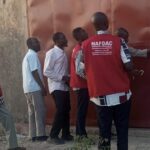
Enforcement operations uncovered a Lagos warehouse producing illegal cosmetics, cartons of Augmentin and Ampicillin antibiotics, a facility in Lagos or Ogun producing counterfeit alcohol brands, and a residential building used to make herbal mixtures, the report said.
NAFDAC also seized more than 100,000 cartons of banned small-pack alcohol across Lagos and Ogun states. In May, the agency destroyed products worth N1.8 billion in Kuje, Abuja, according to Premium Times.
The discovery of a residential building used to make herbal mixtures echoes concerns raised in the House of Representatives this week, where lawmakers warned that unregistered herbal products are being produced and sold with little oversight. As general background, products made in homes and backyard operations often lack basic hygiene and quality controls, increasing the risk of contamination.
Adeyeye thanked the Nigeria Customs Service, the Police, the Army, the State Security Service, the Pharmacists Council of Nigeria, the National Drug Law Enforcement Agency and the Nigeria Security and Civil Defence Corps for their support.
The scale of the NAFDAC counterfeit products destruction, worth N100 billion, is far larger than the N1.8 billion exercise in Abuja in May. As general background, the agency has also reported destroying N22.73 billion worth of unsafe products and shutting 179 premises over eight months, showing the continuing size of the illegal trade.
Why these products are dangerous
As general background, Analgin (metamizole) has been banned in Nigeria because of its link to agranulocytosis, a dangerous drop in white blood cells. Codeine cough syrups were banned for over-the-counter sale in 2018 after widespread misuse and addiction among young people. Expired oxytocin, used to prevent bleeding after childbirth, may lose potency and fail when women need it most.
Counterfeit antibiotics may contain too little active ingredient, which fails to cure infections and fuels antimicrobial resistance. Fake cosmetics can contain mercury, high-dose steroids or other harmful substances that damage the skin, kidneys and nervous system.
Banned small-pack alcohol, sold in sachets and tiny bottles, has been a particular concern for regulators because its low price and easy access encourage heavy drinking, including among young people and drivers. NAFDAC has said many sellers continue to defy the ban.
The NAFDAC counterfeit products destruction follows a week of concern over unregistered herbal products. The House of Representatives summoned NAFDAC, the police and the DSS over four deaths in Benue State linked to a herbal product, and lawmakers said the agency needs far more staff to police markets nationwide.
Protecting consumers
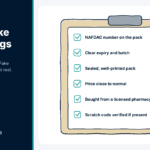
Consumers are advised to buy medicines only from licensed pharmacies and patent medicine stores, check for NAFDAC registration numbers and expiry dates, and avoid products sold in markets or by itinerant vendors without labels. Pharmacists can help patients verify products and report suspected fakes to NAFDAC.
Destroying seized products prevents them from being repackaged and resold, a common problem when expired goods are not disposed of properly. HealthCoach Africa has previously reported on a NAFDAC seizure of expired medicines in Rivers State, part of a pattern of enforcement actions across the country.
Each NAFDAC counterfeit products destruction exercise also sends a message to traders that seized goods will not find their way back to the market.
Experts say lasting progress will require stronger supply chain controls, traceability systems that allow medicines to be tracked from manufacturer to patient, and affordable access to genuine medicines so that patients are not driven to cheaper, unsafe alternatives.
Why it matters: Fake antibiotics, expired oxytocin and banned drugs can kill, and destroying them keeps them from being repackaged and sold to unsuspecting patients.
Professor Mojisola Adeyeye: The Pharmacist Who… When Professor Mojisola Adeyeye walked into NAFDAC headquarters in November 2017, she inherited an agency with a debt of more than three billion naira, laboratories that did not work and a reputation that its own…
NAFDAC Warns Imo Medicine Dealers Against Fake,… OWERRI, NIGERIA — The National Agency for Food and Drug Administration and Control (NAFDAC) has warned NAFDAC Imo medicine dealers against selling counterfeit, expired and unregistered drugs, saying violators face closure, forfeiture of products and…
Spotting Fake Malaria Drugs: How to Protect Your Family Imagine giving your child a full course of malaria medicine, only to find the fever getting worse. One reason this happens is fake or poor-quality medicine. Fake antimalarials may contain no active ingredient, too little…
NAFDAC Seals Kano Warehouses, Seizes N560m in Banned… KANO, NIGERIA — The National Agency for Food and Drug Administration and Control (NAFDAC) has sealed four warehouses and seized banned chemicals worth N560 million in a NAFDAC Kano paraquat seizure, arresting two people over the…