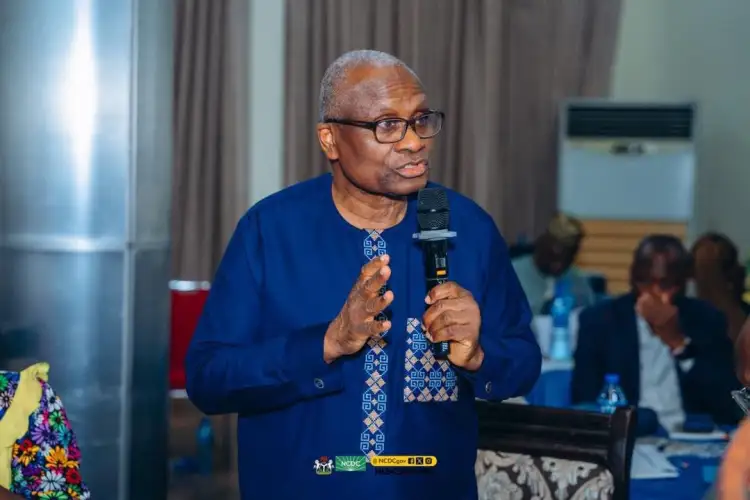
ABUJA, NIGERIA — The Nigeria health security plan for 2025 to 2029 will cost about N522 billion, or an average of N104.4 billion a year, the Nigeria Centre for Disease Control and Prevention (NCDC) told lawmakers, Premium Times reported on 3 November.
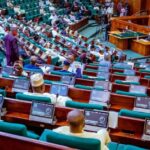
The figure was presented at the House of Representatives hearing on Ebola preparedness in Abuja. It refers to the second National Action Plan for Health Security (NAPHS 2.0), which sets out what Nigeria must do to prevent, detect and respond to outbreaks such as Ebola, Lassa fever, cholera and mpox.
“This translates to an average of about N104.4 billion annually,” the agency said, according to Premium Times.
The gap in the Nigeria health security plan
The cost of the Nigeria health security plan is far above what NCDC has received in recent budgets. According to the figures reported, the agency was allocated N4 billion in 2024 and N7 billion in 2025, plus a N5 billion intervention in 2025. The 2026 Appropriation Act provides N22 billion.
Even the 2026 allocation, the largest of the three years, covers only about a fifth of the average yearly cost. The difference would have to come from other federal lines, states, development partners or new sources of domestic health financing if the plan is to be delivered in full.
The Global Preparedness Monitoring Board, an independent body convened by WHO and the World Bank, has suggested that countries spend $1 to $2 per person a year on preparedness. For Nigeria, that benchmark translates to about $240 million to $480 million a year, according to Premium Times.
Where the N10bn emergency fund went
NCDC also addressed the N10 billion emergency fund approved in June after the Ebola risk rose in the region. The agency said the money was released to NCDC and not to the Presidential Task Force chaired by Femi Gbajabiamila.
NCDC has said the fund covers Ebola, Lassa fever and other emerging diseases. It is being used for surveillance, laboratory diagnosis, personal protective equipment and the rehabilitation of isolation facilities, according to a Premium Times review of October’s health developments.
The clarification matters because questions about the fund have circulated since Nigeria confirmed its imported Ebola case on 20 October. Lawmakers at the hearing said they would examine whether emergency funds were released promptly and spent transparently.
What a health security plan pays for
A national action plan for health security usually follows an assessment of a country’s capacities under the International Health Regulations. It covers areas such as disease surveillance, laboratory systems, the health workforce, emergency operations centres, points of entry, risk communication, immunisation and the control of diseases that pass from animals to people.
Much of this work is routine and invisible when it succeeds. It includes paying and training surveillance officers in every local government area, keeping laboratory reagents in stock, maintaining isolation wards and running drills. When money arrives only during an emergency, these systems are rebuilt in a hurry each time, which costs more and saves fewer lives.
Nigeria has strengthened parts of its system since 2014, including a national network of public health laboratories and emergency operations centres in many states. But outbreaks of Lassa fever, cholera and diphtheria in recent years have shown how stretched the system remains, especially at the state and local level.
The role of states and partners
Financing the Nigeria health security plan is not only a federal task. A Premium Times review of 2026 state budgets found that some states made large allocations for emergencies while others set aside very little, and that budget lines do not show whether money was released.
Development partners have also financed health security in Nigeria, but donor funding has become less predictable. Health economists have urged governments in the region to rely more on domestic revenue, including health taxes on tobacco, alcohol and sugary drinks, to fund prevention and preparedness.
For health workers and patients, the practical test is simple: whether a clinic can recognise a suspected case, isolate the patient safely, send a sample to a laboratory and receive a result quickly. Each step depends on steady funding long before an outbreak begins.
NCDC did not say how it plans to close the gap. The House hearing is expected to produce recommendations on emergency funding, which could influence the 2027 budget cycle and how much of the Nigeria health security plan is paid for from the country’s own resources.
Why it matters: Without steady funding for surveillance, laboratories and trained staff, Nigeria will keep rebuilding outbreak defences in a hurry each time.
Lassa Fever Warning Signs: Early Action Saves Lives Lassa fever is a viral illness that is found in West Africa, and Nigeria reports more cases than any other country. Each year, outbreaks peak during the dry season, from about December to April. In…
Cholera Symptoms and Prevention: A Practical Guide… ARTICLE TEXT Cholera outbreaks occur in Nigeria almost every year, often during the rainy season when floods contaminate wells and boreholes. Cholera can kill within hours if dehydration is not treated. Yet it is easy…
Ghana ENT Nurses Seek Inclusion in Free Primary… KOFORIDUA, GHANA — Ear, nose and throat (ENT) nurses in Ghana have called on the government to include them in its free primary healthcare policy, saying millions of people lack timely ear and hearing care…
House of Representatives Opens Probe of N10bn Ebola… ABUJA, NIGERIA — Nigeria’s House of Representatives has opened an Ebola emergency fund probe to examine how the N10 billion released for containment was managed, how federal agencies coordinated and how prepared the 36 states…