Every year, many people travel to Nigeria for business, holidays, weddings, funerals and family visits. These include Nigerians who live abroad and return home. Malaria is present throughout Nigeria, all year round. Travellers who have not been exposed to malaria for some time have little protection. Malaria prevention for travellers can prevent serious illness and death. This guide explains what to do before, during and after your trip.
Why travellers are at high risk
People who grow up in malaria areas develop partial immunity through repeated infections. This protection fades within a few years of living elsewhere. Children born and raised abroad have no immunity at all.
As a result, travellers can become seriously ill very quickly. In countries such as the United Kingdom, many imported malaria cases occur in people who travelled to visit friends and relatives in West Africa.
The ABCD of malaria prevention for travellers
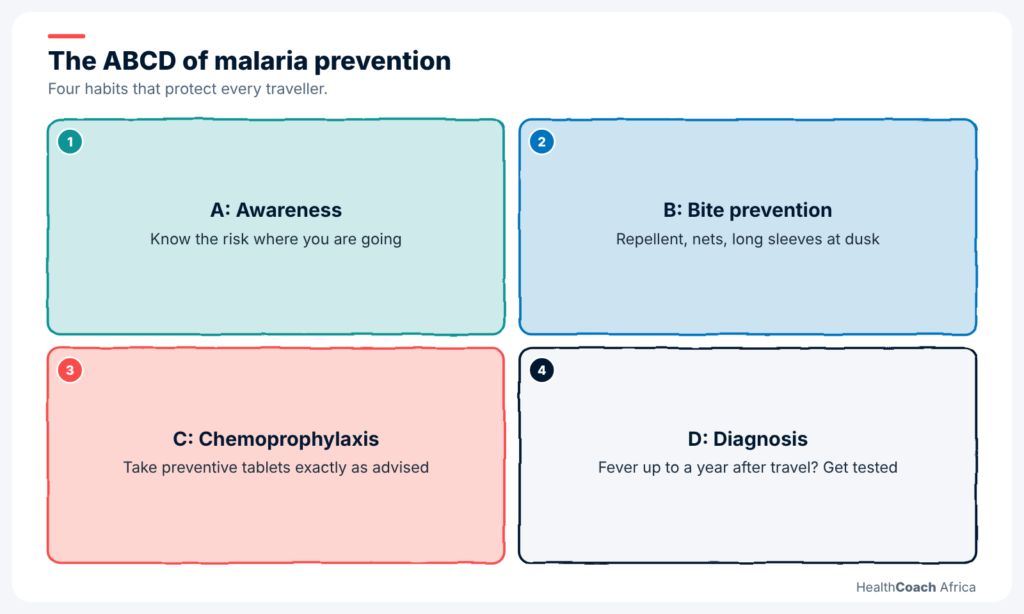
Health authorities use a simple guide:
A, Awareness: know the risk of malaria at your destination
B, Bite prevention: avoid mosquito bites
C, Chemoprophylaxis: take preventive antimalarial tablets correctly
D, Diagnosis: seek testing quickly if you develop symptoms, during or after travel
The ABCD of malaria prevention for travellers” section. Alt text: ABCD of malaria prevention for travellers: awareness, bite prevention, chemoprophylaxis and diagnosis
No tablet is 100% effective, so bite prevention matters every evening.
See a health professional before you travel
Book a travel health appointment four to six weeks before your trip if possible. A doctor, nurse or pharmacist will consider your destination, length of stay, medical history, age and pregnancy status. They will recommend the most suitable preventive tablets and any vaccines you need, such as yellow fever, which is required for entry to Nigeria.
Even last-minute travellers can still benefit from advice and tablets.
Preventive tablet options
Several medicines are used for malaria prevention for travellers. The right choice depends on your health and travel plans:
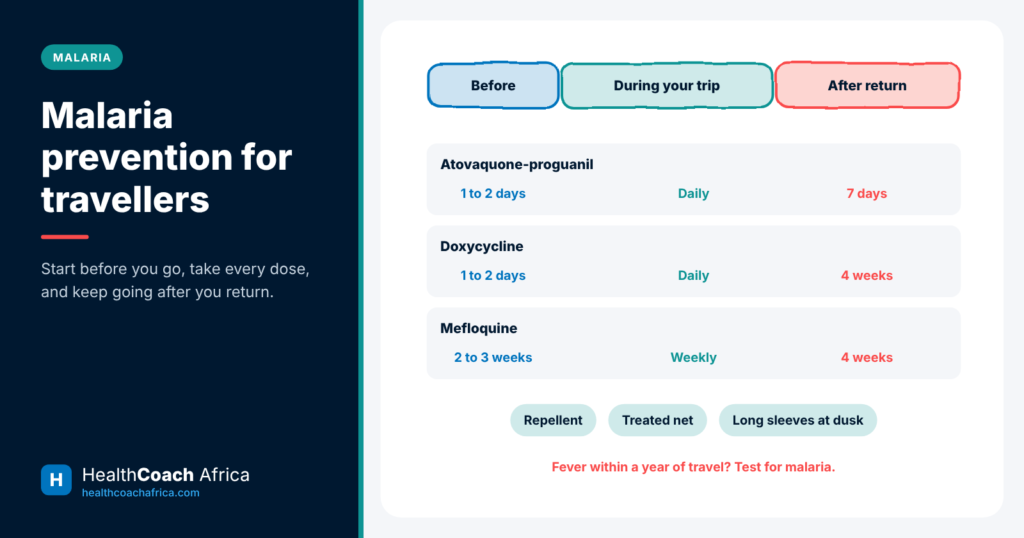
Atovaquone-proguanil 1 : started one to two days before travel, taken daily during the trip and for seven days after return
Doxycycline 2 : started one to two days before travel, taken daily during the trip and for four weeks after return. It can cause sun sensitivity and stomach upset, and is not suitable in pregnancy or for young children.
Mefloquine: taken weekly, started two to three weeks before travel and continued for four weeks after return. It is not suitable for people with certain mental health conditions or epilepsy.
No tablet is 100% effective, so bite prevention is still essential.
Malaria prevention for travellers: a pre-trip checklist
Book a travel health appointment four to six weeks before departure
Get your preventive tablets and check how to take them
Pack insect repellent containing DEET 3
Pack light, long-sleeved clothing for evenings
Confirm that your accommodation has nets, screens or air conditioning
Check your yellow fever vaccination certificate
Save the details of a reliable clinic or pharmacy at your destination
Ticking off this list makes malaria prevention for travellers simple and stress-free.
Take tablets correctly
Start at the right time before travel
Take them at the same time each day or week
Take them with food if advised
Continue for the full period after you return
Do not stop early, even if you feel well
Many travellers stop tablets as soon as they get home. This is a common reason for malaria after travel.
HUBPHARM PHARMACIST’S NOTE Visiting Nigeria and forgot your tablets, or ran out halfway through the trip? Do not stop. Genuine atovaquone-proguanil and doxycycline are available from licensed pharmacies. Message HubPharm on WhatsApp with your current tablet and dates, and a pharmacist will help you continue safely and deliver repellent and nets to where you are staying.
Avoiding mosquito bites
Malaria mosquitoes bite mainly between dusk and dawn. Reduce bites by:
Sleeping under an insecticide-treated net, even in air-conditioned rooms
Using insect repellent containing DEET on exposed skin, reapplied as directed
Wearing long sleeves and long trousers in the evening
Keeping windows and doors closed or screened
Using air conditioning or fans, which make it harder for mosquitoes to fly
Apply sunscreen first and repellent second. Repellents with DEET can be used in pregnancy and in children over two months, at appropriate strengths.
Business and short-stay travellers
Even a short trip carries risk. A single infected bite is enough to cause malaria. Business travellers often spend evenings at outdoor events, restaurants and hotels, when mosquitoes are active. Use repellent, wear long sleeves and take preventive tablets for the full course, including after you return home. Short stays are not a reason to skip malaria prevention for travellers.
Children and pregnant travellers
Children are at high risk of severe malaria. Doses of preventive tablets are based on weight. Some medicines are not suitable for very young children.
Pregnant women face a higher risk of severe malaria and pregnancy complications. Many health authorities advise pregnant women to avoid travel to malaria areas if possible. If travel is essential, seek specialist advice.
“I grew up in Nigeria, so I am immune”
This is one of the most dangerous myths. Immunity fades after a few years away. Many Nigerians living abroad become seriously ill with malaria after visiting home. Malaria prevention for travellers applies to you too.
Malaria prevention for travellers attending events
Weddings, funerals and festivals often run late into the night, outdoors. These are prime times for mosquito bites. Apply repellent before you leave, reapply as directed and wear long sleeves. Avoid sitting near bushes or standing water. Sleep under a net when you return, even if you are tired. Small habits during events are part of malaria prevention for travellers.
Medicines that interact
Some preventive tablets interact with other medicines, including certain blood thinners, epilepsy medicines and HIV treatments. Tell the health professional about everything you take. People with kidney or liver problems may need a different option.
After you return home
Keep taking your tablets for the full period after your trip. If you develop a fever, see a doctor the same day and say that you have been to Nigeria. Ask for a malaria test. Symptoms can appear weeks or even months later, especially with some types of malaria. Do not assume it is flu.
Long-stay travellers and expatriates
People staying in Nigeria for months or years face ongoing risk. Long-term use of preventive tablets may be advised, and the choice of medicine may change over time. Bite prevention, nets and prompt testing of any fever remain essential. Find a trusted local clinic soon after arrival. Malaria prevention for travellers who stay longer is a daily routine, not a one-off.
Recognising malaria during or after travel
Symptoms of malaria can start as early as seven days after the first bite, and sometimes months later. They include:
Fever, sweats and chills
Headache
Muscle aches
Tiredness
Nausea, vomiting or diarrhoea
Malaria can look like flu. If you develop a fever during your trip or within a year of returning, seek medical help urgently and tell the doctor you have been to Nigeria.
Emergency treatment
Some travellers going to remote areas far from medical care may be advised to carry an emergency treatment course. This is not a substitute for preventive tablets or for seeing a doctor.
Buying genuine medicines
Fake and substandard antimalarials are a risk in many countries. Buy preventive tablets from a reputable pharmacy before travel or from a licensed pharmacy at your destination. Check packaging and expiry dates.
Keeping records and staying insured
Keep a note of the tablets you took, the dates and where you travelled. Carry it with you for a year after the trip, because malaria can appear months later. Check that your travel insurance covers medical care abroad. Clear records make malaria prevention for travellers easier for any doctor to review if you fall ill.
Daily, from 1 to 2 days before travel until 7 days after return.
2
Doxycycline
Prescription only
Daily, continued for 4 weeks after return. Causes sun sensitivity.
3
DEET insect repellent
Over the counter
Apply to exposed skin after sunscreen and reapply as directed.
To order any of these, or to ask a pharmacist a question first, message HubPharm on WhatsApp or visit hubpharmafrica.com. Prescription medicines are supplied against a valid prescription.
Cholera Symptoms and Prevention: A Practical Guide… ARTICLE TEXT Cholera outbreaks occur in Nigeria almost every year, often during the rainy season when floods contaminate wells and boreholes. Cholera can kill within hours if dehydration is not treated. Yet it is easy…
Grief and Bereavement Support: Living Through Loss Losing someone we love is one of the hardest experiences in life. In Nigeria, families often come together quickly after a death, with visitors, prayers, ceremonies and long funeral preparations. When the crowds leave, many…
Severe Malaria in Children: 8 Danger Signs Every… Malaria killed an estimated 610,000 people worldwide in 2024, according to the World Health Organization. In Africa, about three out of every four of those deaths were children under five, and Nigeria carried close to…
Malaria Prevention in Pregnancy: Protecting Mother and Baby Pregnancy changes the body's defences, and malaria takes advantage of this. In Nigeria, where malaria is present all year round, pregnant women face a higher risk of infection and of serious complications. Fortunately, simple and…