Mosquitoes are more than a nuisance. In Nigeria, the Anopheles mosquito carries malaria, which kills many children every year. Other mosquitoes spread dengue, yellow fever and other infections. Much of the fight against mosquitoes happens in and around our homes. These practical steps for mosquito control at home can greatly reduce bites and lower your family’s risk of malaria.
Know your enemy
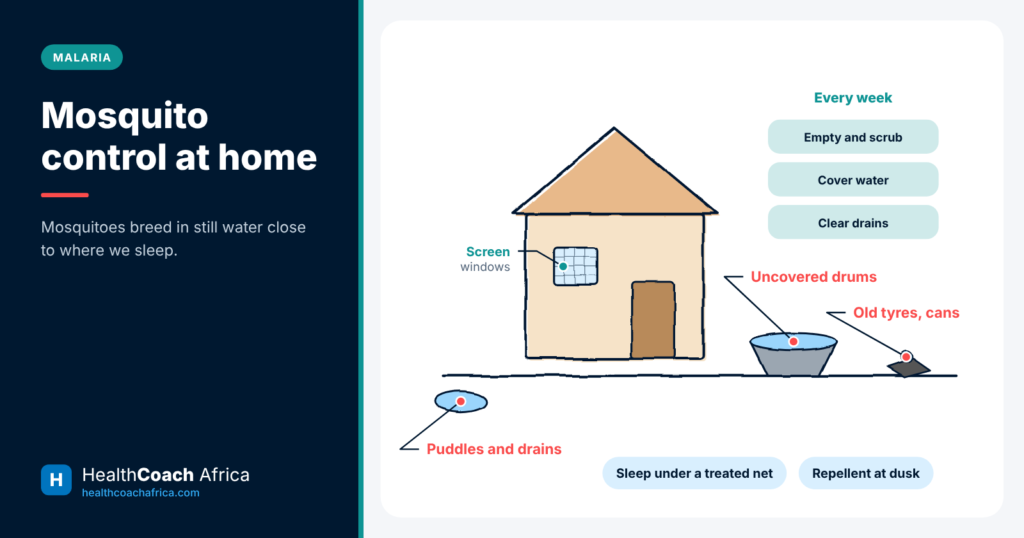
Mosquitoes lay their eggs in standing water. The eggs hatch into larvae, which live in the water for about a week before becoming adult mosquitoes. Anopheles mosquitoes, which carry malaria, mostly breed in clean, sunlit pools, puddles and containers. They bite mainly at night, from dusk to dawn, both indoors and outdoors.
Breaking the breeding cycle and preventing bites are the two main goals of mosquito control at home.
Find and remove breeding sites
Walk around your compound once a week, especially during the rainy season. Look for and remove standing water in:
Old tyres, buckets, tins, bottles and broken pots
Blocked gutters and drains
Flower pots and saucers
Water drums and tanks without lids
Puddles and potholes
Discarded containers and rubbish
Empty, scrub, cover or throw away anything that can hold water. Even a bottle cap of water can be enough for some mosquitoes to breed.
Cover water storage
Many homes store water because supply is irregular. Cover drums, tanks and buckets with tight-fitting lids or fine mesh. Change stored water regularly and scrub the inside of containers to remove eggs stuck to the sides.
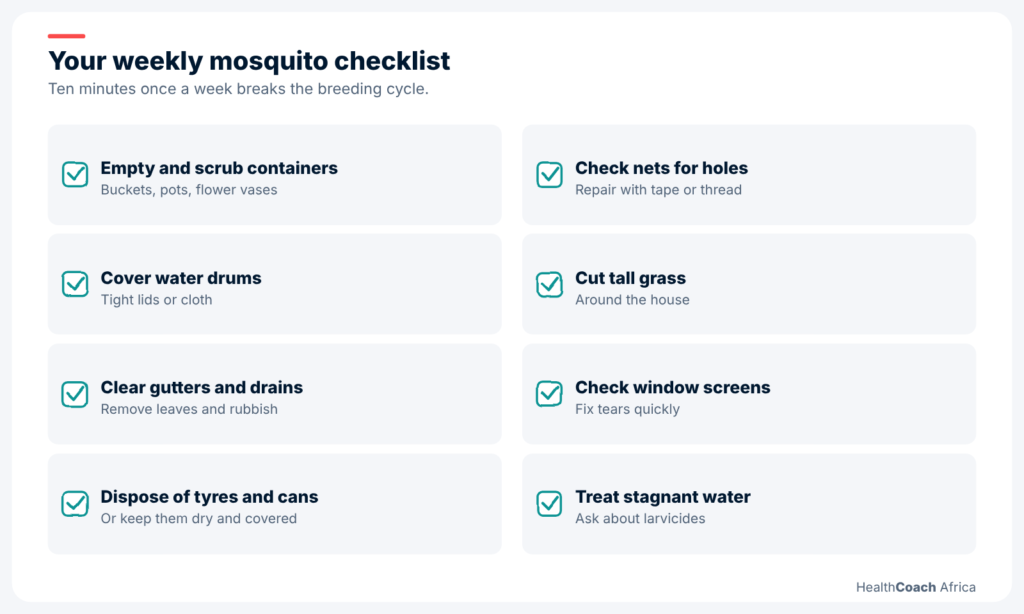
Mosquito control at home: a weekly checklist
Make these checks part of your weekend routine:
Empty and scrub any containers that hold water
Check that water drums and tanks are tightly covered
Clear gutters and drains
Remove rubbish and old tyres
Inspect nets and screens for holes
Cut back tall grass near the house
Fifteen minutes a week of mosquito control at home can make a big difference over a season.
Weekly checklist for mosquito control at home and around the compound
Mosquito eggs become adults in about a week, so weekly clean-ups work best.
Keep the surroundings clean
Clear bushes and tall grass near the house. Fill in holes and potholes that collect rainwater. Keep drains flowing freely. Dispose of rubbish properly. Community clean-ups, where neighbours work together, are more effective than one household alone.
Sleep under an insecticide-treated net
An insecticide-treated net is one 1 of the most effective tools for mosquito control at home. It protects people while they sleep, when Anopheles mosquitoes are most active. The insecticide also kills or repels mosquitoes that land on the net.
Use a net every night, all year round
Tuck the edges under the mattress
Repair holes promptly
Replace nets that are badly torn or very old
Children under five and pregnant women should always sleep under a net.
Protecting babies and young children
Babies and young children are most at risk from malaria. Put them to sleep under a treated net, including during daytime naps in the evening hours. Use cot nets for cots and prams. Dress children in light clothing that covers arms and legs in the evening. Use repellents suitable for their age. Keep coils and sprays away from where children sleep.
Screens on doors and windows
Fitting mesh screens to windows, doors and ventilation openings keeps mosquitoes out while letting air in. Check screens for holes regularly and repair them. Close doors in the evening, and consider screened doors for frequently used entrances.
Indoor residual spraying
In some areas, health programmes spray the inside walls of homes with long-lasting insecticides. Mosquitoes that rest on the walls are killed. If spraying teams visit your community, cooperate with them and follow their instructions, such as not washing or repainting the walls for some months.
HUBPHARM PHARMACIST’S NOTE Not every repellent suits every family member. Babies under two months should not use repellent on the skin, and strengths differ for older children and pregnant women. Ask a HubPharm pharmacist which repellent and net size suit each person in your home, and get a household mosquito kit delivered before the rains.
Repellents
Insect repellents applied to the skin help prevent bites, especially in the evening outdoors. Products containing DEET 2 , picaridin or IR3535 are effective. Follow the instructions, avoid the eyes and mouth, and use products suitable for children’s ages.
Coils and sprays: use safely
Mosquito coils and aerosol sprays are widely used. They can reduce bites, but they produce smoke or chemicals that may irritate the lungs, especially in children and people with asthma.
Use them in well-ventilated rooms
Never burn coils in a closed room where people sleep
Keep sprays and coils away from children and food
Do not rely on them alone
Plants and mosquitoes
Some people believe certain plants, such as lemongrass or neem, keep mosquitoes away. Their effect is weak and short-lived. They should never replace nets, screens and removing breeding sites.
Choosing and caring for nets
Buy nets from reliable sources, or collect free nets from health facilities and campaigns. Choose a size that covers the whole bed or sleeping mat. Air a new net in the shade for a day before use. Wash it gently by hand with mild soap, no more than every few months, and dry it in the shade. Direct sunlight and harsh detergents weaken the insecticide. Keep nets away from cooking fires and candles.
Mosquito control at home in schools and workplaces
Schools, hostels and workplaces can apply the same steps. Clear drains, cover water, fit screens and cut grass. Boarding schools should provide nets for every bed. Employers can include mosquito control at home and at work in staff health programmes, because malaria is a major cause of absence.
Working with neighbours
Mosquitoes do not respect fences. If your neighbour’s compound has breeding sites, mosquitoes will reach your home too. Talk to neighbours about joint clean-ups. Residents’ associations can organise monthly environmental sanitation days, clear drains and fill potholes. Schools and religious groups can teach children about mosquito breeding. Mosquito control at home works best when the whole street takes part.
Mosquito control at home and other diseases
Some mosquitoes that bite during the day, such as Aedes mosquitoes, can spread dengue and yellow fever. They often breed in small containers near the house. The same steps of removing standing water, covering containers and using repellents help protect against these diseases as well. Make sure your family is vaccinated against yellow fever, which is part of Nigeria’s routine immunisation programme.
Fans and air conditioning
Mosquitoes are weak flyers, so fans can reduce bites. Air conditioning also helps. However, they are not a substitute for nets.
Larviciding
Larvicides are products that kill mosquito larvae in water that cannot be drained, such as large ponds or drains. They are often applied by local health authorities. Do not use agricultural chemicals in household water.
Mosquito control at home during the rainy season
The rainy season brings more breeding sites and more malaria. Increase your weekly checks of the compound, ensure all nets are in good condition and be quick to test any fever. Seasonal campaigns, such as net distribution and seasonal malaria chemoprevention for children, also take place at this time.
Myths about mosquitoes
“Mosquitoes breed only in dirty water.” Malaria mosquitoes often prefer clean water.
“Nets are only needed in the rainy season.” Malaria occurs all year in Nigeria.
“Burning coils all night is safe.” Smoke in closed rooms can harm the lungs.
Protecting older relatives and visitors
Older people, pregnant women and visitors from abroad are more vulnerable to malaria. Give them a treated net and a room with screened windows. Remind them to use repellent in the evenings. Mosquito control at home should protect everyone under your roof.
For exposed skin in the evenings. Choose strengths suitable for age.
To order any of these, or to ask a pharmacist a question first, message HubPharm on WhatsApp or visit hubpharmafrica.com. Prescription medicines are supplied against a valid prescription.
Lassa Fever Warning Signs: Early Action Saves Lives Lassa fever is a viral illness that is found in West Africa, and Nigeria reports more cases than any other country. Each year, outbreaks peak during the dry season, from about December to April. In…
Zamfara Confirms Dengue Fever Outbreak as Deaths Rise to 46 GUSAU, NIGERIA — The Zamfara State Government has confirmed that a Zamfara dengue fever outbreak caused an illness that has killed 46 people in Shinkafi, Moriki and nearby communities, with 366 suspected cases recorded, AIT reported…
Ghana Says It Has Contained Yellow Fever Outbreak… ACCRA, GHANA — The Ghana Health Service (GHS) says it has contained a Ghana yellow fever outbreak that ran from September to mid-October, after laboratory tests confirmed four cases in the north of the…
Malaria Prevention for Travellers: Staying Safe on Your Trip Every year, many people travel to Nigeria for business, holidays, weddings, funerals and family visits. These include Nigerians who live abroad and return home. Malaria is present throughout Nigeria, all year round. Travellers who have…