Bacterial meningitis is a serious infection of the membranes that cover the brain and spinal cord. It can kill within hours and leave survivors with deafness, brain damage or limb loss. Northern Nigeria lies within the African meningitis belt, where large outbreaks occur in the dry season. Knowing the bacterial meningitis warning signs and acting fast can save lives.
What meningitis is
Meningitis means inflammation of the meninges, the protective layers around the brain and spinal cord. It can be caused by viruses, bacteria, fungi or parasites. Bacterial meningitis is the most dangerous form. The World Health Organization describes it as a disease with a high death rate that requires urgent treatment.
Common causes
The main bacteria that cause meningitis include:
Neisseria meningitidis (meningococcus), which causes epidemics in the meningitis belt
Streptococcus pneumoniae (pneumococcus)
Haemophilus influenzae type b (Hib)
Group B streptococcus, mainly in newborns
The meningitis belt and the dry season
The African meningitis belt stretches across the Sahel, from Senegal to Ethiopia, and includes many northern Nigerian states. Outbreaks usually occur during the dry season, from about December to June, when dust, dry air and crowding make infection more likely. Large epidemics have occurred in the past, and outbreaks continue.
Bacterial meningitis warning signs in adults and older children
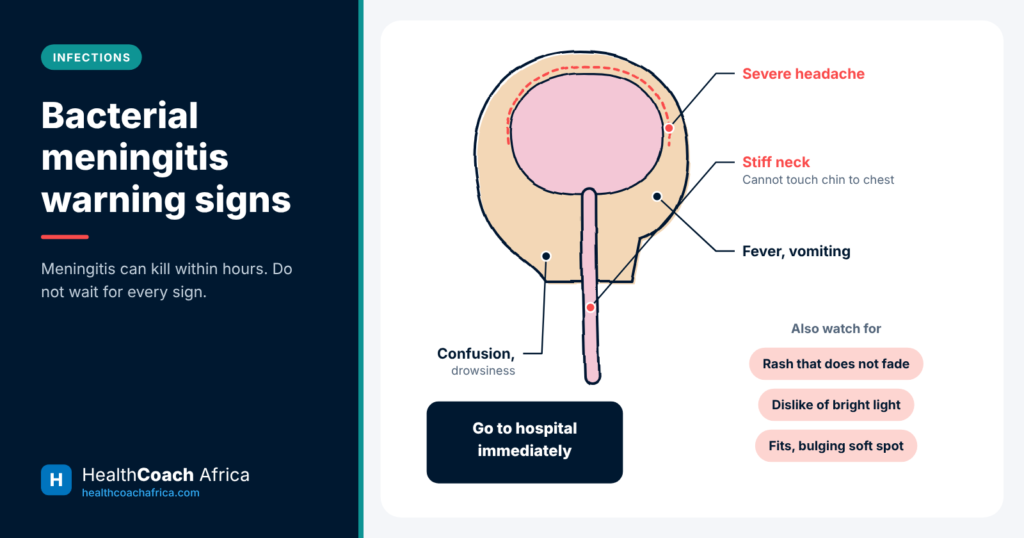
Symptoms often develop suddenly and include:
High fever
Severe headache
Stiff neck, making it hard to touch the chin to the chest
Sensitivity to light
Nausea and vomiting
Confusion, drowsiness or difficulty waking
Seizures
Not everyone has all these symptoms, and they can appear in any order.
Signs in babies and young children
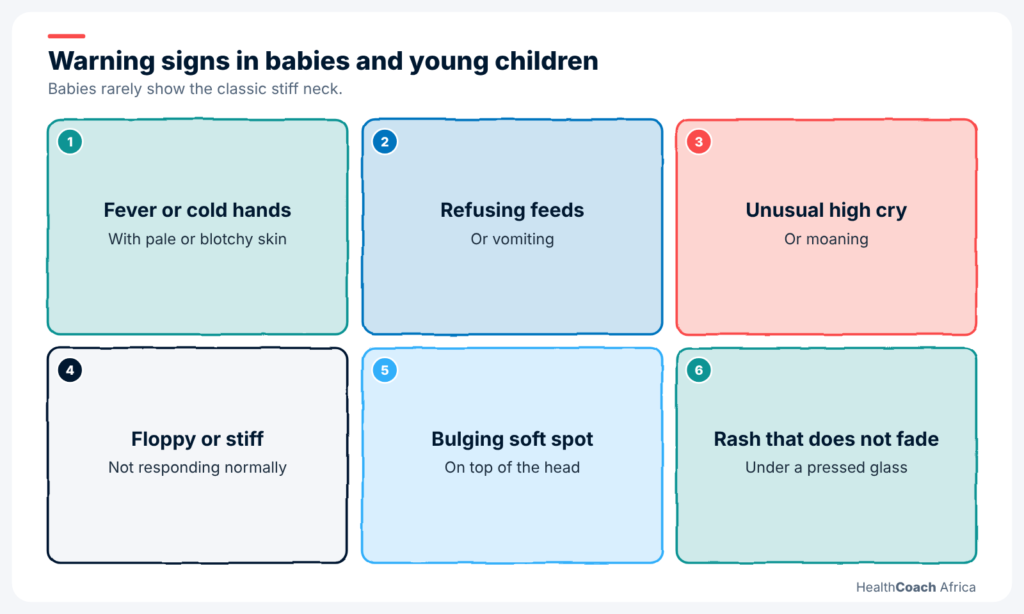
Babies may not show the classic signs. Look for:
Fever, or a low temperature
Refusing feeds or vomiting
Unusual crying, irritability or a high-pitched cry
Drowsiness or being floppy
A bulging soft spot on the top of the head
Stiff body or jerky movements
Pale, blotchy skin
Signs in babies and young children” section. Alt text: Bacterial meningitis warning signs in babies and young children
A baby who is unusually floppy or will not feed needs urgent care, even without a rash.
Bacterial meningitis warning signs: trust your instincts
Meningitis can look like flu or malaria at first. A person can become seriously ill within hours. If someone seems much sicker than you would expect with a simple fever, or gets worse quickly, trust your instincts. Do not wait for all the bacterial meningitis warning signs to appear. Go to hospital and tell the health worker that you are worried about meningitis.
The rash
Meningococcal infection can cause a rash of small red or purple spots that do not fade when pressed. A simple check is the glass test: press the side of a clear glass firmly against the rash. If the spots can still be seen through the glass, seek emergency care immediately. However, the rash may appear late or not at all, so do not wait for it.
Act within hours
Bacterial meningitis can progress very quickly. If you suspect it, go to the nearest hospital immediately. Do not wait to see if symptoms improve, and do not try home treatment first. Early antibiotics greatly increase the chance of survival and reduce complications.
Do not self-treat
Some people buy antibiotics from a chemist or try herbal remedies when they have fever and headache. This can delay proper care and hide symptoms, making diagnosis harder. Bacterial meningitis needs specific antibiotics in the right doses, given through a drip in hospital. If you notice bacterial meningitis warning signs, go straight to a hospital.
How meningitis is diagnosed
Doctors may perform a lumbar puncture, which takes a small amount of fluid from around the spinal cord to test for infection. Blood tests and other investigations help identify the cause. Treatment often begins before results are available because of the urgency.
Treatment
Bacterial meningitis is treated in hospital with strong antibiotics 1 , usually given through a drip. Patients may also need fluids, oxygen, medicines to control seizures and, sometimes, intensive care. Steroids are used in some cases to reduce inflammation.
HUBPHARM PHARMACIST’S NOTE If someone in your home has meningococcal meningitis, health workers may give the household a single dose of a preventive antibiotic, such as ciprofloxacin. It works best when taken quickly. Message a HubPharm pharmacist if you are unsure who should take it, or if a pregnant woman or young child is among the contacts.
Protecting close contacts
People who have had close contact with someone with meningococcal meningitis, such as household members, may be given a single dose of antibiotic 2 to prevent infection. Health workers will advise who needs it.
Bacterial meningitis warning signs in older people
Older adults may have less obvious symptoms. Confusion, drowsiness or a fall may be the main sign, sometimes without a stiff neck. People with diabetes, chronic illness or weakened immunity are also at higher risk. Families caring for older relatives should seek care quickly for any sudden confusion with fever.
Bacterial meningitis warning signs in students and hostels
Young people living in crowded hostels, boarding schools and barracks are at higher risk during outbreaks. Students should know the bacterial meningitis warning signs and look out for each other. A roommate who is unusually drowsy, confused or has a severe headache with fever should be taken to hospital immediately. Schools should have a plan for rapid transport to hospital and should support vaccination campaigns.
Myths about meningitis
“Meningitis only affects children.” People of all ages can be affected, especially in outbreaks.
“A stiff neck always appears.” Babies and older adults may not have a stiff neck.
“If there is no rash, it is not meningitis.” The rash may appear late or not at all.
“Meningitis is caused by the heat.” It is caused by infections. The dry season increases spread, but bacteria are the cause.
Preparing for the dry season
Before the dry season begins, check that the whole family’s vaccines are up to date. Keep emergency phone numbers and transport arrangements ready. Teach older children the warning signs. Preparation turns panic into prompt action.
A note for health workers
During outbreaks, health workers should have a high level of suspicion. Start antibiotics promptly when meningitis is suspected, rather than waiting for test results. Report suspected cases to the surveillance team immediately. Advise close contacts about preventive antibiotics, and encourage vaccination. Teaching families the bacterial meningitis warning signs helps patients arrive sooner.
Living with the effects
Recovery from meningitis can take weeks or months. Survivors may feel tired, have headaches, struggle to concentrate or have mood changes. Some need hearing aids, physiotherapy or educational support. Families should attend follow-up appointments and ask for help early. Support groups can connect survivors with others who understand.
Long-term effects
Even with treatment, some survivors have lasting effects, such as hearing loss, learning difficulties, seizures or limb loss. Children who recover should have a hearing test and follow-up.
Vaccines that prevent meningitis
Vaccines protect against the main causes of bacterial meningitis:
Pentavalent vaccine, which includes Hib, given to babies at 6, 10 and 14 weeks
Pneumococcal conjugate vaccine, also part of routine immunisation
Meningococcal vaccines. In 2024, Nigeria became the first country to introduce Men5CV 3 , a vaccine that protects against five strains of meningococcus, during campaigns in affected northern states.
Make sure your children’s vaccines are up to date, and take part in vaccination campaigns. Learn more in our article on vaccines every adult should take.
Reducing risk during the dry season
Avoid overcrowded, poorly ventilated rooms where possible
Open windows to allow fresh air
Cover your mouth and nose when coughing or sneezing
Seek care early for fever with headache or stiff neck
Travel and meningitis vaccines
Pilgrims travelling to Saudi Arabia for Hajj or Umrah must show proof of meningococcal vaccination. Students joining crowded hostels should also check their vaccine status. Plan vaccines at least two weeks before travel. Know the bacterial meningitis warning signs while you are away.
Getting help
Knowing the bacterial meningitis warning signs could save a life. Share them with your family, especially during the dry season. For advice on vaccines, antibiotics prescribed for close contacts or fever care, message a HubPharm pharmacist or ask Afiya on WhatsApp.
Medicines and products in this article
#
Medicine or product
What to know
1
Ceftriaxone
Hospital use
First-line antibiotic for suspected bacterial meningitis.
2
Ciprofloxacin (single dose)
Prescription only
Preventive antibiotic for close contacts of meningococcal disease.
3
Meningococcal vaccines
Free in campaigns
Men5CV and other vaccines protect against epidemic strains.
To order any of these, or to ask a pharmacist a question first, message HubPharm on WhatsApp or visit hubpharmafrica.com. Prescription medicines are supplied against a valid prescription.
Get Moving: World Spine Day 2023 Encourages Better… On World Spine Day 2023, people from all corners of the globe are coming together to promote better spinal health through the "Move Your Spine" campaign. This initiative aims to raise awareness about the importance…
Lassa Fever Warning Signs: Early Action Saves Lives Lassa fever is a viral illness that is found in West Africa, and Nigeria reports more cases than any other country. Each year, outbreaks peak during the dry season, from about December to April. In…
Cholera Symptoms and Prevention: A Practical Guide… ARTICLE TEXT Cholera outbreaks occur in Nigeria almost every year, often during the rainy season when floods contaminate wells and boreholes. Cholera can kill within hours if dehydration is not treated. Yet it is easy…
Fasting Safely With Diabetes: A Guide for Ramadan… Fasting is an important part of faith for millions of Nigerians. Muslims fast from dawn to sunset during Ramadan. Many Christians fast during Lent, at the start of the year or for special prayer periods,…