Epilepsy is one of the most common long-term brain conditions in the world. Around the world, tens of millions of people live with it, and most could live seizure-free with the right treatment. Yet in Nigeria, people with epilepsy often face stigma, and harmful myths about seizures put lives at risk. Knowing basic epilepsy seizure first aid allows anyone to help safely. This guide explains what to do, what not to do and when to call for help.
What epilepsy is
Epilepsy is a condition in which a person has repeated seizures. A seizure happens when there is a sudden burst of abnormal electrical activity in the brain. This can cause changes in movement, behaviour, awareness or feelings for a short time.
According to the World Health Organization, epilepsy affects people of all ages, and up to 70% of people with epilepsy could live seizure-free with appropriate medicine. It is not contagious, and it is not caused by evil spirits or curses.
Common causes
Epilepsy can have many causes, including:
Brain injury before, during or after birth
Head injuries
Infections of the brain, such as meningitis or cerebral malaria
Stroke
Brain tumours
Genetic factors
In many people, no specific cause is found.
Types of seizures
Seizures differ from person to person:
Tonic-clonic seizures cause the person to lose consciousness, stiffen and fall, then jerk rhythmically. Breathing may be noisy, and they may bite their tongue or lose bladder control.
Absence seizures cause brief staring spells, often in children, lasting a few seconds.
Focal seizures affect one part of the brain. The person may have twitching, unusual sensations, confusion or repeated movements such as lip-smacking.
Epilepsy seizure first aid: during a seizure
If someone has a tonic-clonic seizure:
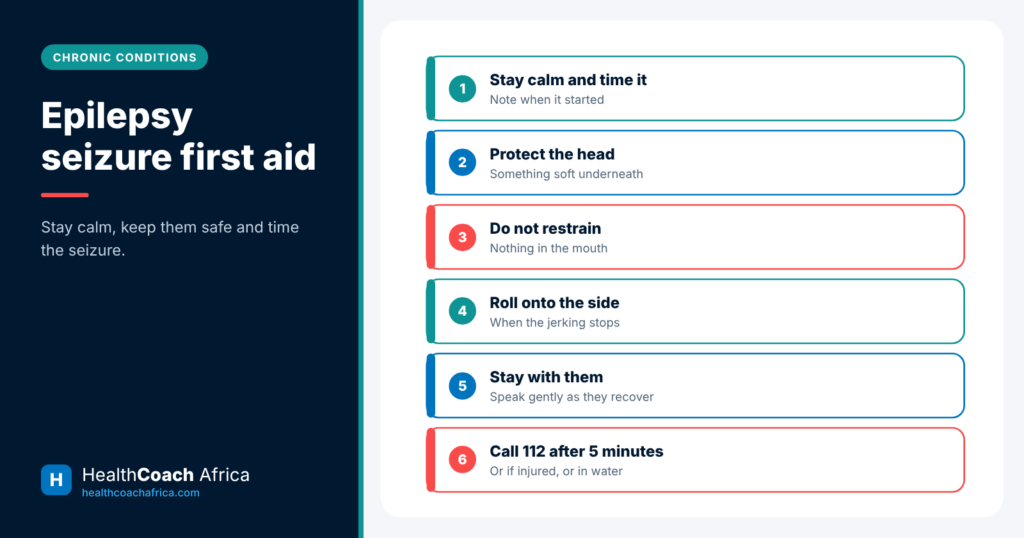
Stay calm and stay with the person.
Time the seizure using a watch or phone.
Protect them from injury. Move hard or sharp objects, furniture and hot items away.
Cushion their head with something soft, such as a folded jacket.
Loosen tight clothing around the neck.
Do not hold them down or try to stop the movements.
Do not put anything in their mouth.
Epilepsy seizure first aid: after the jerking stops
Gently roll them onto their side into the recovery position, so that saliva or vomit can drain from the mouth.
Check that they are breathing.
Stay with them until they are fully aware. They may be confused, sleepy or upset.
Talk calmly and reassure them. Tell them what happened.
Respect their dignity. Ask onlookers to move away, and cover them if they have lost bladder control.
Epilepsy seizure first aid at school
Teachers and classmates can play a vital role. Schools should know which pupils have epilepsy and keep a simple care plan. Teachers should learn epilepsy seizure first aid and know when to call for help. After a seizure, a child may need to rest before returning to class. Children with epilepsy should be included in school activities, with sensible safety measures for swimming and climbing. Classmates who understand epilepsy are less likely to tease or fear a child who has seizures.
When to call 112
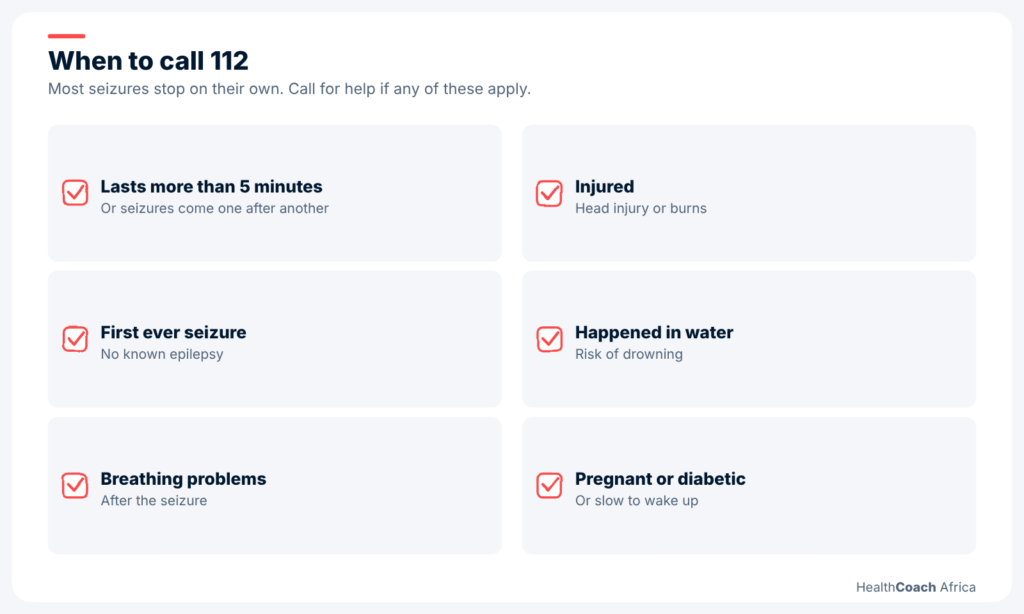
Call the emergency number 112 or arrange urgent transport to hospital if:
The seizure lasts more than five minutes
Another seizure starts soon after the first
The person does not wake up or breathe normally afterwards
It is their first seizure
They are injured
The seizure happened in water
They are pregnant or have diabetes
A seizure lasting more than five minutes, or repeated seizures without recovery in between, is a medical emergency called status epilepticus.
When to call 112, a key part of epilepsy seizure first aid
If in doubt, call. It is better to be safe.
What not to do
Many traditional responses to seizures are dangerous:
Never put a spoon, stick or finger in the mouth. People cannot swallow their tongue, and objects can break teeth or block the airway.
Never pour water on the person or give them anything to drink during or straight after a seizure, because they could choke.
Never burn, cut or beat the person, or hold fire or onions to their nose.
Never restrain them.
Epilepsy seizure first aid at work
Employers and colleagues should know what to do if a seizure happens at work. Keep the area clear, protect the person’s head and follow the steps above. Afterwards, allow the person to rest and arrange for someone to take them home if needed. People with epilepsy can work in most jobs. Some roles, such as driving or working at heights, may need adjustments until seizures are controlled.
Helping during focal or absence seizures
For seizures without falling, guide the person gently away from danger, such as roads, fire or water. Speak calmly. Do not restrain them. Stay until they are fully aware.
HUBPHARM PHARMACIST’S NOTE Switching between brands of some epilepsy medicines can change blood levels, and running out for even a day can trigger seizures. Ask HubPharm to keep your epilepsy medicine on a monthly refill with reminders. A pharmacist will also check new medicines, including antimalarials and antibiotics, for interactions.
Treatment for epilepsy
Most people with epilepsy can control their seizures with anti-seizure medicines, such as carbamazepine 1 , valproate, 2 lamotrigine, levetiracetam and phenobarbital. Medicines must be taken every day, at the same time. Missing doses is the most common cause of breakthrough seizures. Never stop suddenly, because this can trigger severe seizures.
Keeping a seizure diary
A seizure diary helps doctors adjust treatment. Record the date, time and length of each seizure, what happened before and after, and any possible triggers, such as missed doses, poor sleep or illness. Family members who witness seizures can help with descriptions. A short video, taken with the person’s permission, can be very useful for the doctor.
Common seizure triggers
Missing doses of medicine
Lack of sleep
Alcohol and recreational drugs
Fever and illness
Stress
Flashing lights, in a small number of people
Living safely with epilepsy
People with epilepsy can live full lives, attend school, work and raise families. Safety measures help:
Avoid swimming alone, and take showers rather than baths
Avoid cooking on open fires alone, or use a back burner
Do not drive until seizures have been controlled for the period required by law
Tell family, friends, teachers and colleagues what to do during a seizure
Women, pregnancy and epilepsy
Women with epilepsy can have healthy pregnancies, but planning is essential. Some medicines, especially valproate, can harm a developing baby. Never stop medicines without advice. Take folic acid 3 before and during pregnancy.
Epilepsy seizure first aid: quick summary
Stay calm and time the seizure
Protect the head and clear the area
Do not restrain or put anything in the mouth
Roll onto the side when the jerking stops
Stay until they recover
Call 112 if it lasts more than five minutes or other warning signs appear
Share this summary of epilepsy seizure first aid with family, friends, teachers and colleagues. It could save a life.
Fighting stigma
Stigma can be more harmful than the seizures themselves. Children with epilepsy are sometimes kept out of school, and adults may be denied work or marriage. Epilepsy is a medical condition, not a curse, and it cannot be caught by touching saliva. Sharing accurate information about epilepsy seizure first aid helps change attitudes.
Seizures with fever in young children
Some young children have a seizure when they have a high fever. These are called febrile seizures. Most are brief and do not cause lasting harm. The same steps of epilepsy seizure first aid apply: keep the child safe, place them on their side and time the seizure. Do not put the child in cold water. Take the child to a health facility to find the cause of the fever.
Common anti-seizure medicines. Take every day at the same time.
2
Valproate
Prescription only
Effective, but avoided in pregnancy because it can harm the baby.
3
Folic acid
Over the counter or prescription
Before and during pregnancy for women with epilepsy.
To order any of these, or to ask a pharmacist a question first, message HubPharm on WhatsApp or visit hubpharmafrica.com. Prescription medicines are supplied against a valid prescription.
Tramadol and Codeine Addiction: Signs, Dangers and… Tramadol and codeine are opioid medicines used to relieve pain and, in the case of codeine, to suppress coughs. Used correctly for a short time, they are helpful. However, misuse has become a serious problem…
Diabetes in Nigeria: Why Blood Sugar Control Fails Diabetes in Nigeria does not usually fail in the clinic. Among people who reach a specialist and stay in care, control is often reasonable. It fails in the years before anyone tests you, and it…
Mpox Symptoms and Prevention: A Clear Guide Mpox, formerly known as monkeypox, is a viral infection that has been reported in Nigeria for many years. Since 2017, cases have been recorded across many states, and the disease has gained global attention through…
Pre-eclampsia Signs in Pregnancy: When Blood… High blood pressure is one of the most serious problems a woman can face in pregnancy. It often causes no symptoms until it is advanced. In Nigeria, pre-eclampsia and eclampsia are among the leading causes…