People with albinism have little or no melanin, the pigment that colours skin and protects it from the sun. In a sunny country like Nigeria, this makes the skin very vulnerable. Skin cancer in albinism is one of the most serious health threats faced by people with the condition, and it often starts in young adulthood. The good news is that it is largely preventable, and early cancers can be cured. This guide explains why the risk is high, how to protect the skin every day and what changes to look for.
Why the risk is so high
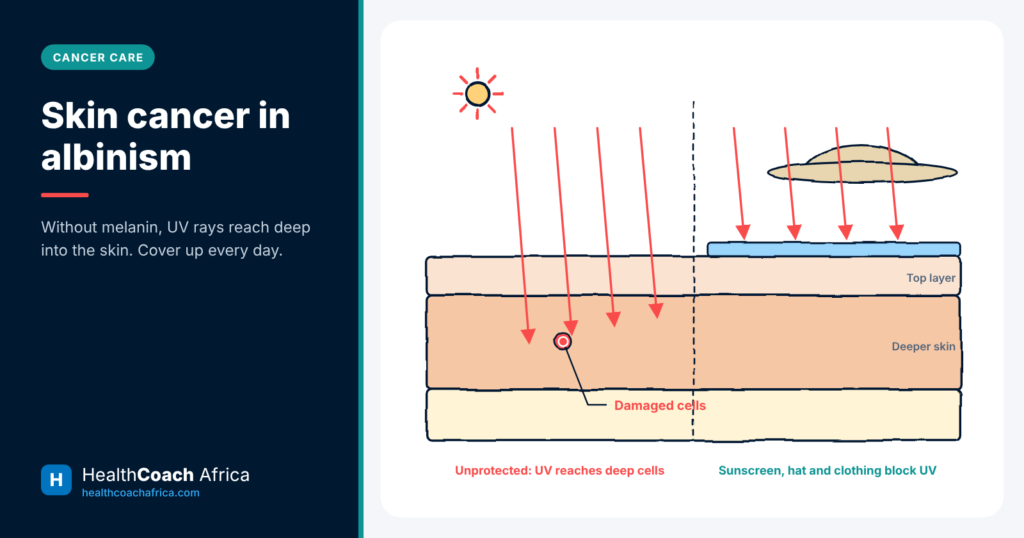
Melanin acts like a natural sunscreen. It absorbs ultraviolet (UV) rays from the sun before they damage skin cells. Without enough melanin, UV rays reach deeper layers of the skin and damage the DNA inside cells. Over time, this damage builds up and can lead to cancer.
Nigeria lies near the equator, where UV levels are high all year round. Many people with albinism work outdoors, travel on foot or cannot afford protective clothing and sunscreen. As a result, sun damage often starts in childhood.
Types of skin cancer
Three main types of skin cancer affect people with albinism:
Squamous cell carcinoma is the most common type in people with albinism in Africa. It often appears on the head, neck, face, ears and arms.
Basal cell carcinoma grows slowly and rarely spreads, but it can damage nearby tissue if not treated.
Melanoma is less common in albinism, but it can be more dangerous because it spreads quickly.
All three types are linked to sun exposure. All are easier to treat when found early.
Early signs of skin cancer in albinism
Check your skin regularly, and ask a family member to check areas you cannot see. Look for:
Rough, scaly patches that do not heal, often on the face, ears or hands
A sore that bleeds, crusts and does not heal within three to four weeks
A firm, raised lump, which may have a dip in the middle
A shiny, pearly bump, sometimes with small blood vessels
A new or changing dark or pink spot
A growth that is getting bigger or changing shape
Rough, scaly patches called actinic keratoses are common in people with albinism. They are not cancer, but they can turn into squamous cell carcinoma. A doctor can treat them early with freezing or creams.
Any sore that will not heal should be checked. Do not wait for it to become painful. Spotting skin cancer in albinism early makes treatment simpler and more successful.
Daily sun protection
Skin cancer in albinism is common but largely preventable. Learn the early signs, daily sun protection, skin checks and where to get support in Nigeria.
Start these habits in early childhood and keep them for life.
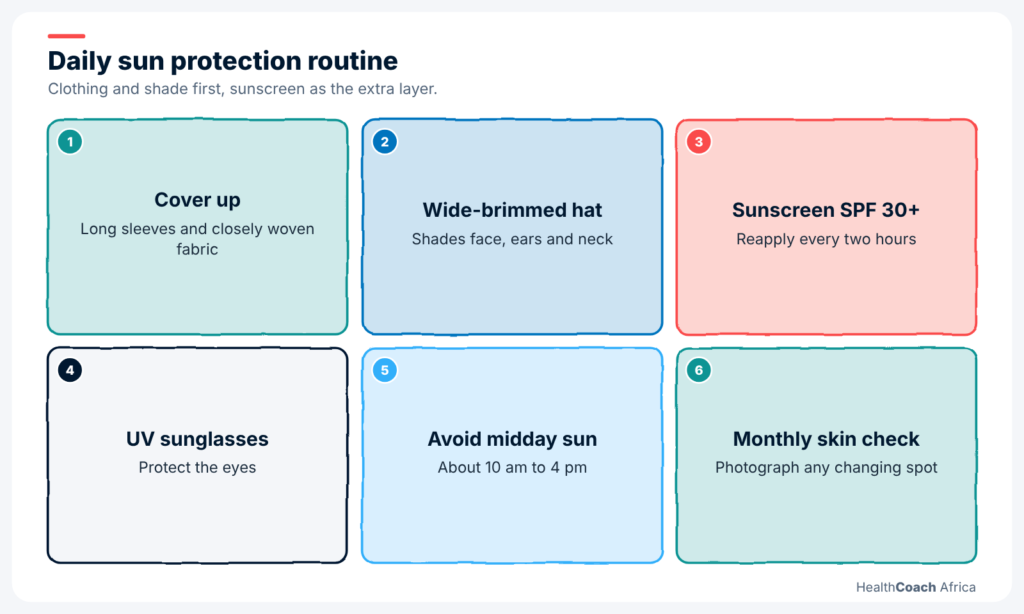
Prevention works best when it becomes a daily habit from early childhood. Protect the skin in these ways:
Cover up. Wear long sleeves, long trousers or skirts, and closely woven fabric.
Wear a wide-brimmed hat that shades the face, ears and neck.
Use sunscreen1 with SPF 30 or higher, labelled “broad spectrum”. Apply it generously 15 to 30 minutes before going out, and reapply every two hours.
Wear UV-blocking sunglasses to protect the eyes.
Avoid the midday sun, roughly between 10 am and 4 pm, where possible.
Seek shade and use an umbrella when walking.
Remember cloudy days. UV rays pass through clouds.
Sunscreen should not be the only protection. Clothing and shade block more UV and do not wear off.
Protecting children with albinism
Parents play a vital role. Start sun protection in infancy. Dress children in long sleeves and hats. Apply sunscreen before school and teach them to reapply it. Talk to teachers about letting the child play in shaded areas and sit away from windows with direct sun.
Children with albinism also often have poor vision. Regular eye checks, glasses and seating near the board help them learn. Schools that understand albinism make a big difference to a child’s confidence and safety.
HUBPHARM PHARMACIST’S NOTE
Sunscreen only protects when it is strong enough, applied thickly and reapplied every two hours. Many products sold in markets are diluted, expired or not broad spectrum. Ask a HubPharm pharmacist to recommend a genuine SPF 30 or higher sunscreen that suits your skin and budget. We can deliver it monthly, so you never run out, and send a simple reminder card for reapplying during the day. If a doctor prescribes a cream for rough, scaly patches, we will explain how to use it and what reaction to expect.
Choosing and using sunscreen
Look for a broad-spectrum sunscreen with SPF 30 or above. Lotions and creams usually give better coverage than sprays. Use about one teaspoon for the face and neck, and more for the arms and legs. Do not forget the ears, the back of the neck and the backs of the hands.
Store sunscreen in a cool place. Heat can reduce its strength. Check the expiry date and replace old bottles. Some organisations supporting people with albinism in Nigeria provide sunscreen free or at low cost. Ask local albinism associations about these programmes.
Treatment options
Most skin cancers in people with albinism can be cured if treated early. Options include:
Surgery to cut out the cancer, the most common treatment
Freezing (cryotherapy) for early lesions and actinic keratoses
Medicated creams2 for some early changes
Radiotherapy for cancers that cannot be removed with surgery
Advanced cancers may need larger operations, skin grafts or other treatment. That is why early checks are so important.
Protecting the eyes
Albinism affects the eyes as well as the skin. Many people with albinism have reduced vision, flickering eye movements and sensitivity to bright light. UV-blocking sunglasses and a hat reduce glare and protect the eyes from sun damage. Yearly eye checks help with glasses and other aids. Good vision also makes it easier to notice changes in the skin during self-checks.
Regular skin checks
People with albinism should have their skin checked by a health worker regularly, ideally every three to six months. Dermatology clinics at teaching hospitals and some albinism support programmes offer free or low-cost skin checks. Between visits, do a monthly self-check using a mirror, with help from a family member.
Photograph any spot that worries you. Comparing photos over weeks helps you and your doctor see changes.
Work and daily life
Outdoor work, such as farming, street trading and motorcycle transport, exposes the skin to strong sun for hours. Where possible, choose indoor work or work that allows shade. If outdoor work is unavoidable, cover the skin fully, take breaks in the shade and reapply sunscreen often. Employers can help by providing shade, protective clothing and flexible hours. These steps reduce skin cancer in albinism among working adults.
Emotional wellbeing and safety
People with albinism in Nigeria may face stigma, bullying and discrimination. These experiences can affect mental health and make people reluctant to seek care. Support groups connect people with albinism and their families. They offer advice, friendship and practical help, including sunscreen programmes. If you feel low or unsafe, reach out to a trusted person or support organisation.
Myths about albinism
“Albinism is a curse.” Albinism is a genetic condition. Both parents usually carry the gene.
“People with albinism are not affected by the sun if they are used to it.” The skin never adapts. Daily protection is always needed.
“Skin cancer in albinism cannot be prevented.” Consistent sun protection greatly reduces the risk.
“Sores on the skin are normal for people with albinism.” A sore that does not heal needs a check.
Daily protection for exposed skin. Reapply every two hours.
2
Prescription skin creams
Prescription only
Treat rough, scaly sun-damaged patches before they become cancer.
To order any of these, or to ask a pharmacist a question first, message HubPharm on WhatsApp or visit hubpharmafrica.com. Prescription medicines are supplied against a valid prescription.
Nutrition During Cancer Treatment: What to Eat and Why Cancer and its treatment place heavy demands on the body. Chemotherapy, radiotherapy and surgery all increase your need for energy and protein, while side effects such as nausea and mouth sores make eating harder. Good…
Diabetes in Nigeria: Why Blood Sugar Control Fails Diabetes in Nigeria does not usually fail in the clinic. Among people who reach a specialist and stay in care, control is often reasonable. It fails in the years before anyone tests you, and it…
ADHD Signs in Children: Understanding Restless and… Every child is restless and distracted sometimes. But some children find it much harder than others to sit still, focus and control their impulses. They may be labelled stubborn, troublesome or lazy, and punished again…
Tramadol and Codeine Addiction: Signs, Dangers and… Tramadol and codeine are opioid medicines used to relieve pain and, in the case of codeine, to suppress coughs. Used correctly for a short time, they are helpful. However, misuse has become a serious problem…