A painless lump in the neck is easy to ignore. Many people assume it is a swollen gland from an infection and wait for it to go away. Usually it does. But sometimes a lump that lasts for weeks is a sign of lymphoma, a cancer of the immune system. Understanding lymphoma symptoms and treatment helps you know when to see a doctor and what to expect. Many types of lymphoma respond very well to treatment, especially when found early.
What is lymphoma?
Lymphoma is a cancer that starts in lymphocytes, a type of white blood cell. Lymphocytes help the body fight infection. They live in the lymph nodes, also called glands, and in the spleen, bone marrow and other organs.
In lymphoma, lymphocytes grow out of control. They often collect in lymph nodes, causing them to swell. Lymphoma can start almost anywhere in the body, because lymphatic tissue is found throughout.
The two main types
Doctors divide lymphoma into two main groups:
Hodgkin lymphoma is less common. It often affects young adults and people over 60. It usually responds well to treatment.
Non-Hodgkin lymphoma is more common. It includes many different types. Some grow slowly over years, while others grow quickly and need urgent treatment.
Burkitt lymphoma, a fast-growing non-Hodgkin lymphoma, is an important childhood cancer in Nigeria and other parts of Africa. It often causes a rapidly growing swelling of the jaw or belly in children. It responds well to chemotherapy if treated quickly.
Common lymphoma symptoms
The most common sign is a painless swelling in the neck, armpit or groin. Other lymphoma symptoms include:
Night sweats that soak your clothes or bedding
Fever that comes and goes without an obvious infection
Unexplained weight loss
Persistent tiredness
Itching all over the body
Cough or breathlessness, if lymph nodes in the chest are swollen
A full or swollen belly, if the spleen or abdominal lymph nodes are enlarged
Doctors call the combination of fever, drenching night sweats and weight loss “B symptoms”. They can help guide treatment.
Lumps that need a check
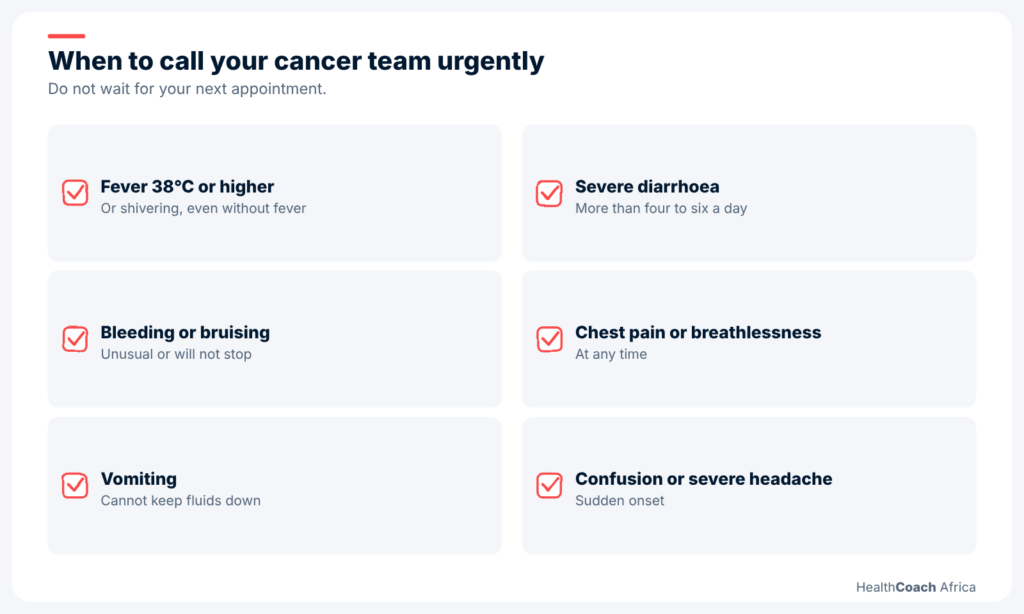
Urgent warning signs in a chemotherapy side effects guide, including fever, bleeding and breathlessness
A lump that lasts three weeks deserves a biopsy, not repeated antibiotics.
Most swollen glands are caused by infections and settle within two to three weeks. See a doctor if a lump:
Lasts longer than three weeks
Keeps growing
Is hard or does not move easily
Comes with fever, night sweats or weight loss
Appears in more than one area
Do not treat a persistent lump with repeated courses of antibiotics or herbal remedies. A lump that does not respond needs proper tests.
Lymphoma symptoms and treatment in people with HIV
People living with HIV have a higher risk of some types of lymphoma, because the immune system is weakened. Taking HIV treatment every day and keeping the viral load suppressed lowers this risk. If you live with HIV and notice swollen glands, fever or weight loss, tell your clinic promptly. Tuberculosis can cause similar symptoms, so tests are needed to tell them apart.
How lymphoma is diagnosed
Diagnosis requires a sample of the affected tissue. The main tests are:
Physical examination to check lymph nodes, the liver and the spleen.
Blood tests to check your blood count, liver and kidney function.
Biopsy, the key test. Usually a whole lymph node or part of it is removed and examined in a laboratory.
Scans, such as a CT scan or PET scan, to see where the lymphoma is in the body.
Bone marrow test in some cases, to check whether lymphoma has spread there.
A fine needle sample is sometimes taken first, but a larger biopsy is usually needed to identify the exact type. Knowing the type is essential, because treatment differs between types.
Lymphoma symptoms and treatment in children
Lymphoma in children often grows quickly. Burkitt lymphoma may cause a swelling of the jaw, face or belly that grows over days to weeks. Children may also have fever, weight loss or difficulty breathing. Any fast-growing swelling in a child needs urgent review at a hospital with a children’s cancer unit. With prompt treatment, many children recover fully.
Staging
Once lymphoma is confirmed, doctors work out its stage. Stage 1 means lymphoma is in one group of lymph nodes. Stage 4 means it has spread more widely, for example to the liver or bone marrow. Many people with stage 3 or 4 lymphoma can still be treated successfully, so a high stage does not mean there is no hope.
Lymphoma symptoms and treatment options
Treatment depends on the type, stage and your general health. Options include:
Chemotherapy, usually a combination of medicines given in cycles. This is the main treatment for most lymphomas.
Immunotherapy, such as rituximab1, which targets lymphoma cells. It is often combined with chemotherapy for some non-Hodgkin lymphomas.
Radiotherapy, often used for lymphoma in one area.
Steroids, which are part of many2 treatment combinations.
Watch and wait for some slow-growing lymphomas that cause no symptoms. Doctors monitor closely and start treatment when needed.
Stem cell transplant for lymphoma that returns after treatment, in specialist centres.
Hodgkin lymphoma and many fast-growing non-Hodgkin lymphomas can be cured. Slow-growing types may not be curable but can often be controlled for many years.
HUBPHARM PHARMACIST’S NOTE
Lymphoma treatment often combines chemotherapy, steroids and preventive medicines, each with its own schedule. Steroid doses in particular must be taken exactly as prescribed and never stopped suddenly. Send your treatment plan to a HubPharm pharmacist. We will build a clear medicine calendar, explain what each tablet does and how to manage common side effects, and check every new medicine, including antimalarials and herbal products, for interactions. We can also deliver anti-sickness tablets and a thermometer, so you are ready before your first cycle.
Coping with treatment
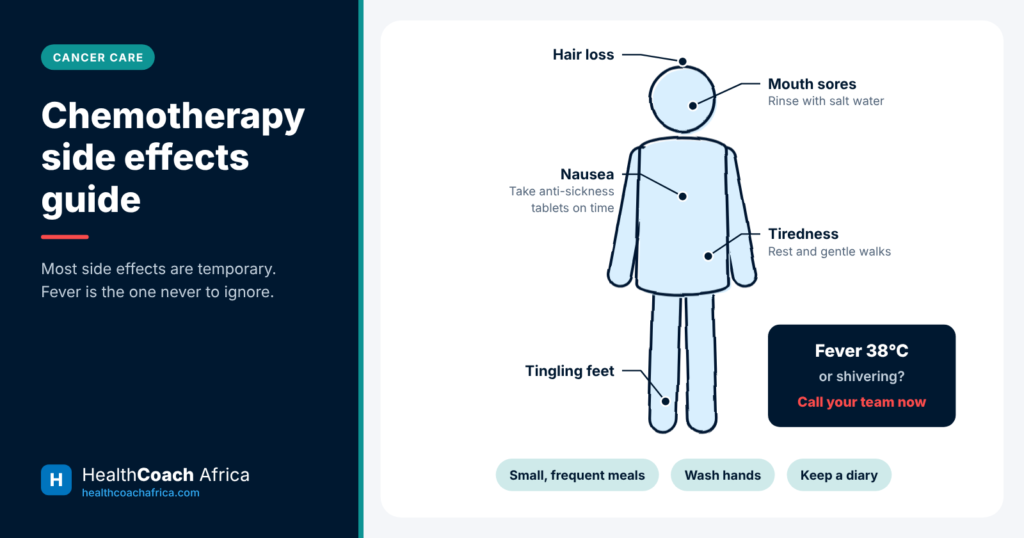
Treatment can cause tiredness, nausea, hair loss and a higher risk of infection. Your team will explain how to manage these. Keep a thermometer at home and call your team immediately if you develop a fever. Eat well, rest when needed and accept help from family.
Ask your team about vaccines, fertility and when you can return to work or school.
Life after treatment
After treatment ends, you will have regular follow-up visits. These check that the lymphoma has not returned and look for late effects of treatment. Report new lumps, fever, night sweats or weight loss promptly. Keep up with vaccines as advised, eat well, stay active and avoid smoking. Many people return to work, school and family life fully.
Questions to ask your doctor
What type of lymphoma do I have, and what stage is it?
What is the aim of my treatment?
Which side effects should I watch for?
How will treatment affect my fertility?
How often will I need follow-up checks?
Writing down answers helps you understand your lymphoma symptoms and treatment plan.
Myths about lymphoma
“A painless lump is harmless.” Painless lumps that persist need a check.
“Lymphoma is always fatal.” Many types are curable, and others can be controlled for years.
“Antibiotics will clear any swollen gland.” Glands that do not respond need further tests.
“Biopsy makes cancer spread.” A biopsy is necessary for diagnosis and does not cause spread.
Eating and staying active
Good nutrition helps you cope with treatment and recover afterwards. Eat small, frequent meals with protein, such as eggs, beans and fish. Drink plenty of clean water. Gentle activity, such as short walks, can ease tiredness and lift your mood. Rest when you need to, and build up slowly.
Getting help
Knowing lymphoma symptoms and treatment options helps you act quickly. If you have a lump that lasts more than three weeks, or night sweats and weight loss, see a doctor. The NHS guide to non-Hodgkin lymphoma has more detail, and our cancer care articles cover related topics.For help with your treatment medicines or side effects, message a HubPharm pharmacist or chat with Afiya on WhatsApp.
Medicines and products in this article
#
Medicine or product
What to know
1
Rituximab
Hospital use
Immunotherapy given by drip, often with chemotherapy.
2
Steroids
Prescription only
Part of many lymphoma regimens. Do not stop suddenly.
To order any of these, or to ask a pharmacist a question first, message HubPharm on WhatsApp or visit hubpharmafrica.com. Prescription medicines are supplied against a valid prescription.
Neck Pain Relief Tips: Easing a Stiff, Sore Neck Neck pain is very common. Long hours on phones and laptops, poor sleeping positions, heavy loads carried on the head and long journeys in traffic all strain the neck. Most neck pain is not serious…
Malaria and Sickle Cell: Why Prevention Matters So Much Nigeria has more people living with sickle cell disease than any other country. It also has the highest malaria burden in the world. For families affected by both, malaria is not just a fever. It…
Thyroid Nodules and Cancer: What a Neck Lump Means Finding a lump in your neck can be frightening. Many people immediately fear cancer. In fact, thyroid nodules are very common, and most of them are harmless. Only a small minority turn out to be…
Goitre Causes and Treatment: A Clear Guide A goitre is an enlargement of the thyroid gland, which sits at the front of the neck below the Adam's apple. It may be a small, painless swelling noticed in a photograph, or a large…